Mast cell tumors are one of the most common skin tumors found in French Bulldogs, and they can range from a minor nuisance to a serious health threat depending on their grade. If you just found a lump on your Frenchie and you’re spiraling at 11pm, take a breath — catching this early makes a real difference.
This guide covers everything you need to know about mast cell tumors in French Bulldogs: grades, treatment, and what to expect as you move through diagnosis and recovery.
What Are Mast Cell Tumors in French Bulldogs?
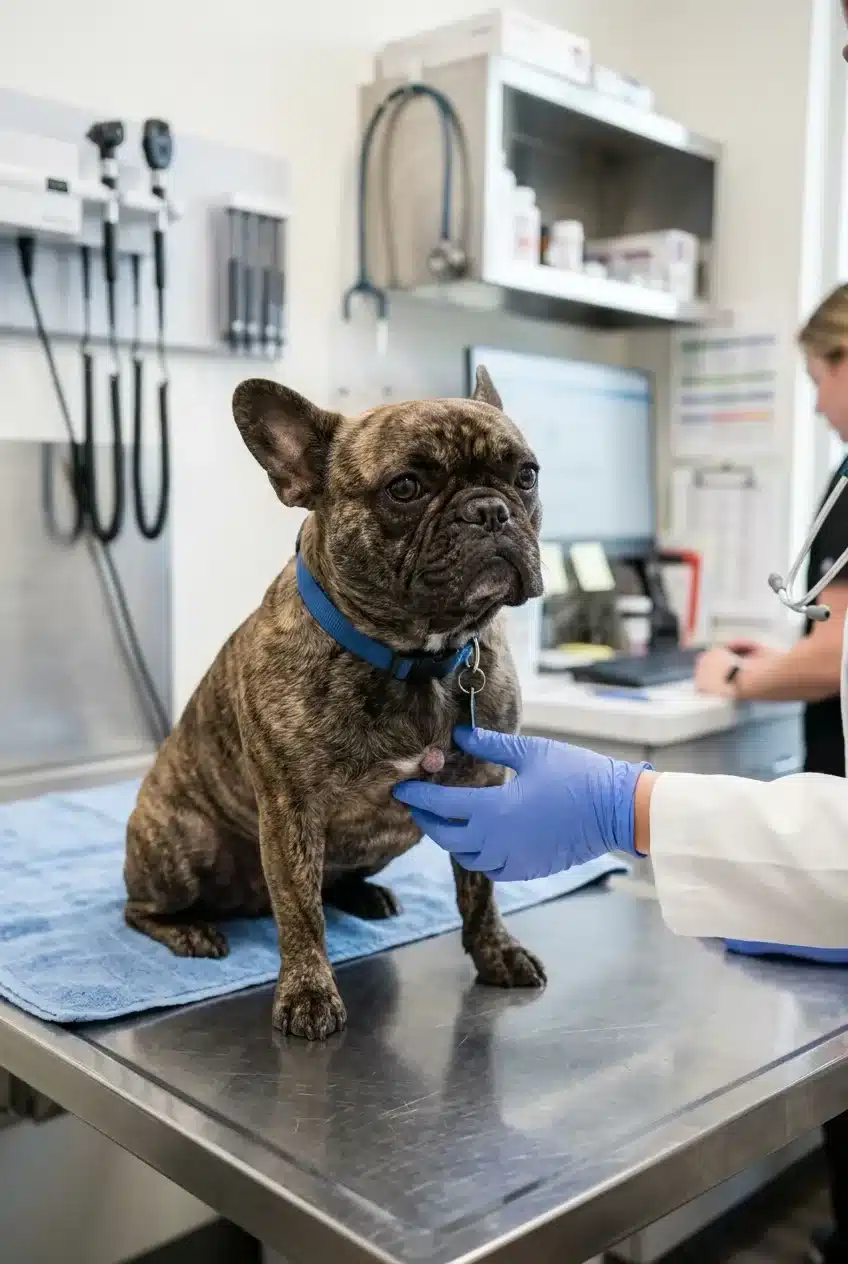
Mast cell tumors (MCTs) in French Bulldogs are cancerous growths that develop from mast cells, a type of immune cell found in skin tissue. They can appear anywhere on the body and vary wildly in appearance — from a harmless-looking bump to an angry, ulcerated lesion.
French Bulldogs are considered a higher-risk breed for MCTs compared to the general dog population. Their compromised immune genetics and brachycephalic breeding history may contribute to this increased susceptibility.
According to the American College of Veterinary Internal Medicine, mast cell tumors account for approximately 20% of all skin tumors diagnosed in dogs, making them the most common malignant skin tumor in the species.
MCTs release histamine and other chemicals when disturbed or as they grow. This is why a mast cell tumor can suddenly swell, redden, or cause systemic symptoms like vomiting or hives.
How Are Mast Cell Tumors Graded?
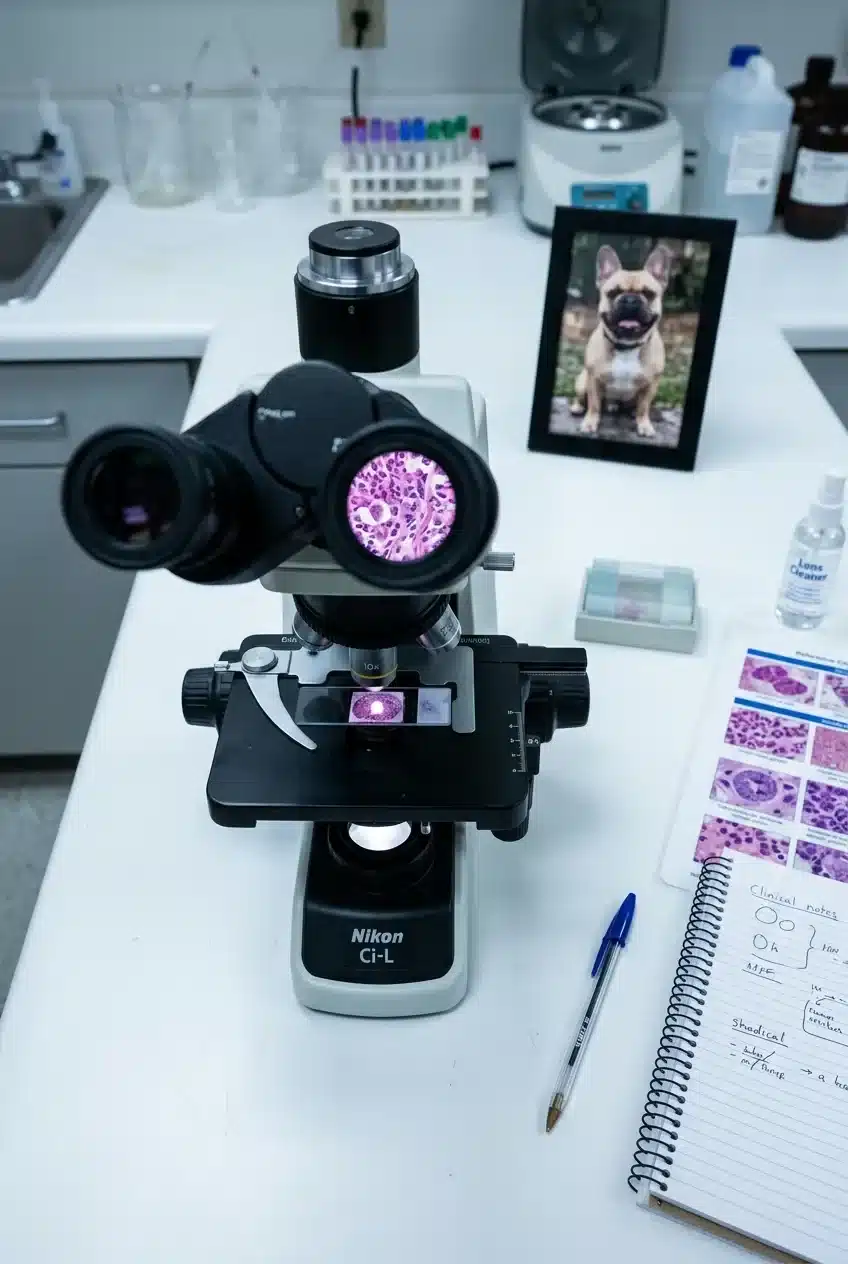
Mast cell tumors in French Bulldogs are graded to predict how aggressive they will behave. The grade determines everything from surgery approach to whether chemotherapy is needed.
| Grade | Behavior | Spread Risk | Outlook |
|---|---|---|---|
| Grade I (Low) | Well-differentiated, slow-growing | Low | Excellent with surgery |
| Grade II (Intermediate) | Moderately differentiated | Moderate | Good with wide excision |
| Grade III (High) | Poorly differentiated, aggressive | High — may spread to lymph nodes and organs | Guarded; chemo often needed |
Most veterinary oncologists now use the Kiupel two-tier system alongside the traditional Patnaik three-tier grading. The newer system classifies tumors as simply “low grade” or “high grade” and has shown stronger predictive accuracy in published studies.
Get Free Dog Health Tips!
Weekly guides on keeping your dog healthy & happy
🔒 No spam. Unsubscribe anytime.
The grade is not something you can determine by looking at the lump — a biopsy is always required.
Why French Bulldogs Develop Mast Cell Tumors
The exact cause of mast cell tumors is not fully understood, but several factors are known to increase risk. French Bulldogs carry a combination of genetic and physical traits that make them more vulnerable.
- KIT gene mutations: A mutation in the c-KIT proto-oncogene is found in many canine MCTs. This gene controls mast cell growth and is frequently dysregulated in affected dogs.
- Breed genetics: Brachycephalic breeds including French Bulldogs, Boxers, and Boston Terriers are statistically over-represented in MCT diagnoses.
- Chronic skin inflammation: Frenchies prone to French Bulldog skin conditions may have chronically activated mast cells, which increases mutation risk over time.
- Age: Most MCTs appear in dogs aged 8–10 years, though younger dogs can be affected.
- Immune dysfunction: Chronic allergies and immune dysregulation, common in Frenchies, are associated with higher MCT incidence.
There is no single trigger. In most cases, MCTs result from a combination of inherited predisposition and accumulated cellular changes over the dog’s life.
MOST POPULAR THIS WEEK
Vet-Recommended Articles: 👇
👉 Why Does My Dogs Skin Turn Dark And Thick After Years Of Allergy Treatment
👉 Best Home Remedies For Arthritis In Dogs With Limping
👉 How Long Does An Elimination Diet Take For Dogs With Skin Allergies
Signs of Mast Cell Tumors in French Bulldogs
Mast cell tumors are sometimes called “the great pretenders” because they can look like almost anything. A lump that looks harmless one week may double in size the next.
- Raised skin lump or bump — may be soft, firm, or rubbery, and can change size day to day. (Monitor – watch for 24-48 hours, then see a vet)
- Redness or swelling around a lump — caused by histamine release; often mistaken for an insect bite. (Monitor – watch for 24-48 hours)
- Ulcerated or open sore on skin — a tumor that has broken through the skin surface. (Emergency – see a vet immediately)
- Sudden swelling after touching the lump — called Darier’s sign; a hallmark of MCT. (Emergency – see a vet immediately)
- Vomiting or diarrhea without obvious cause — systemic histamine release can affect the GI tract. (Monitor – watch for 24-48 hours)
- Hives or widespread skin flushing — sign of significant histamine release. (Emergency – see a vet immediately)
- Lethargy or loss of appetite — more common with high-grade tumors. (Monitor – watch for 24-48 hours)
If your Frenchie is itching intensely around a skin lump, that warrants a vet call sooner rather than later.
When To See a Vet About a Lump on Your French Bulldog
If a lump on your French Bulldog swells suddenly, ulcerates, or causes vomiting and hives, go to an emergency vet tonight — do not wait.
Knowing when to act is genuinely hard when you are staring at a bump that looks benign. Here is a clear breakdown:
- Emergency vet tonight: Sudden swelling after touching the lump, open sores, hives, vomiting, difficulty breathing, or collapse.
- Regular vet within 48 hours: Any new lump that has changed size, changed color, or appeared quickly on an adult Frenchie.
- Regular vet within one week: A stable, small lump that has been present for more than two weeks without change — still needs a fine needle aspirate.
- Monitor at home: Lumps under 0.5cm that are clearly superficial and have not changed in 2–3 weeks — but log photos with dates and report at your next scheduled visit.
If you are in a rural area without overnight vet access, call the nearest 24-hour animal hospital by phone. Many will advise you remotely on whether to drive in or wait until morning based on your description of symptoms.
If your dog is also showing signs of ear infections or other concurrent issues, mention all symptoms together — your vet needs the full picture.
What You Can Do at Home While Waiting for a Vet
Home care for a suspected mast cell tumor is about preventing irritation and gathering information. You cannot treat an MCT at home, but you can absolutely help your dog stay comfortable and give your vet useful data.
- Stop touching the lump. Repeated pressure or squeezing triggers histamine release and can make your dog feel genuinely unwell. Tell family members and children the same.
- Photograph it daily. Take photos in consistent lighting from the same angle. Date each photo. Size changes are often what prompt a vet to prioritize biopsy.
- Use an e-collar to prevent scratching. An inflatable or soft e-collar stops your Frenchie from licking or scratching the area, which can cause secondary infection.
- Avoid medicated shampoos near the lump. Fragrant or active-ingredient shampoos can irritate the skin around the tumor. Use a gentle, fragrance-free hypoallergenic dog shampoo for routine bathing.
- Keep a symptom log. Note any vomiting, lethargy, appetite changes, or behavioral shifts. Your vet will ask for this timeline.
Do not give your dog antihistamines, steroids, or human medications without direct veterinary instruction. Dosing errors in brachycephalic breeds can cause serious complications.
Treatment Options for Mast Cell Tumors in French Bulldogs
Treatment depends almost entirely on the tumor grade, location, and whether it has spread. Most Grade I and II tumors have excellent outcomes with prompt treatment.
| Treatment | What It Does | When It Is Used |
|---|---|---|
| Surgical excision | Removes the tumor with wide margins of healthy tissue | First-line for Grade I and II; sometimes Grade III |
| Radiation therapy | Targets remaining cancer cells after incomplete excision | When surgery cannot achieve clean margins |
| Chemotherapy | Systemic treatment to reduce spread and tumor burden | Grade III or metastatic tumors |
| Tyrosine kinase inhibitors (TKIs) | Oral targeted therapy blocking tumor cell signaling | KIT-mutated tumors; often used alongside surgery |
| Antihistamines and stomach protectants | Control histamine-related side effects | Supportive care before surgery and during chemo |
Most dogs treated surgically for Grade I MCTs are considered cured if clean margins are achieved. Grade II dogs have a good prognosis with appropriate follow-up. Grade III carries a more guarded outlook, but targeted therapies have significantly improved survival times in recent years.
Recovery from mast cell tumor surgery typically takes 10–14 days for the incision to heal. Full staging results and post-op pathology usually come back within one to two weeks of surgery.
If your older dog has been through a mast cell diagnosis, the approach for a senior dog with mast cell tumors may differ based on overall health and anesthetic risk — your veterinary oncologist will weigh this carefully.
Why French Bulldogs Are Especially Prone to Mast Cell Tumors
Brachycephalic breeds are disproportionately affected by mast cell tumors. French Bulldogs sit near the top of that list alongside Boxers, Boston Terriers, and Pugs.
- French Bulldogs: Breeding-related immune dysregulation and high prevalence of c-KIT mutations make them a statistically high-risk breed.
- Boxers: Considered the classic high-risk MCT breed; genetic predisposition is well-documented in veterinary oncology literature.
- Boston Terriers: Share the brachycephalic profile and similar skin immune challenges as Frenchies.
- Pugs: Chronic skin fold inflammation increases lifetime mast cell activation in this breed.
Being a flat-faced breed is not a death sentence for skin health, but it does mean regular skin checks should be a non-negotiable part of your Frenchie’s care routine.
Common Mistakes Pet Parents Make With Mast Cell Tumors
- Waiting too long to get a lump checked. It is easy to assume a bump is a cyst or lipoma. Any lump on a French Bulldog that persists beyond two weeks deserves a fine needle aspirate — this is a simple, low-cost in-office test that can rule out MCT within hours.
- Repeatedly touching or squeezing the lump. This triggers histamine release, causes swelling, and can make staging more difficult. Point it out to your vet and then leave it alone.
- Stopping medication too early. If your vet prescribes antihistamines or steroids before surgery, completing the full course matters. Stopping early can cause a rebound reaction.
- Skipping post-surgical follow-up. Margins matter enormously with MCTs. If your vet recommends a recheck at 4–6 weeks, keep that appointment even if the dog looks completely fine.
- Assuming a “low grade” diagnosis means no action needed. Low grade still means surgical removal is almost always recommended. Low grade describes behavior, not whether treatment can be skipped.
Prevention Tips for French Bulldog Pet Parents
- Do a monthly skin check. Run your hands over your Frenchie’s entire body on the same day each month. Use a grooming massage glove to help you feel lumps through the coat while also desensitizing your dog to being handled.
- Control chronic skin inflammation early. Allergies and skin irritation keep mast cells in a persistently activated state. Managing your Frenchie’s skin health proactively may reduce cumulative cellular stress.
- Schedule annual vet exams — not just vaccination visits. A hands-on annual physical exam with your regular vet gives the best chance of catching a new lump before it has time to progress.
- Support immune health with veterinarian-approved supplements. Ask your vet about omega-3 fish oil supplements for dogs, which have documented anti-inflammatory effects in peer-reviewed veterinary research.
- Photograph any new lump immediately and date it. Having a timestamped record of when a lump first appeared is genuinely useful clinical information — not just peace of mind for you.
Frequently Asked Questions About Mast Cell Tumors in French Bulldogs: Grades, Treatment, and What to Expect
How much does mast cell tumor treatment cost for a French Bulldog?
Mast cell tumor treatment costs for French Bulldogs typically range from $500–$2,000 for surgery alone on a low-grade tumor. High-grade tumors requiring chemotherapy or radiation can run $3,000–$10,000 or more depending on the treatment plan and geographic location.
Can a mast cell tumor go away on its own without treatment?
Mast cell tumors in French Bulldogs do not resolve on their own. Without treatment, even low-grade tumors can grow, ulcerate, or progress to a higher grade over time. Surgical removal remains the standard of care.
How long can a French Bulldog live after a mast cell tumor diagnosis?
A French Bulldog diagnosed with a Grade I or II mast cell tumor that is fully removed with clean margins can live a normal lifespan. Grade III tumors carry a more guarded outlook, but median survival times have improved significantly with targeted therapies.
Is there anything safe to put on a mast cell tumor at home?
There is nothing safe to apply to a suspected mast cell tumor at home before diagnosis. Do not use topical treatments, essential oils, or home remedies on any undiagnosed skin lump — contact your regular vet for a fine needle aspirate first.
What does a mast cell tumor look like on a French Bulldog?
A mast cell tumor on a French Bulldog can look like almost any skin lump — a raised pink bump, a soft nodule under the skin, or a red ulcerated sore. The only reliable way to identify one is through a fine needle aspirate or biopsy.
How quickly do mast cell tumors grow in French Bulldogs?
Growth rate varies by grade. Low-grade tumors can remain stable for months or years. High-grade tumors can double in size within days or weeks. Any lump that changes rapidly should be evaluated by a vet within 48 hours.
The Bottom Line for Worried Frenchie Pet Parents
Finding a lump on your French Bulldog is scary, but mast cell tumors caught at a low grade are among the most treatable cancers in dogs. The single most important thing you can do right now is get any persistent lump tested with a fine needle aspirate — it is quick, affordable, and gives your vet real information to work with.
Book that vet appointment today. If the lump is changing fast or your dog seems unwell, call an emergency vet tonight. Early action is the difference between a straightforward surgery and a much harder road.
If you want to stay on top of your Frenchie’s overall skin and health monitoring, understanding why French Bulldogs itch and what to do about it is a solid next step in keeping their skin in the best shape possible.