Building confidence in a fearful foster dog means moving at the dog’s pace, using positive reinforcement, and creating a predictable environment from day one. Most dogs show measurable progress within four to six weeks when given consistent structure and low-pressure interactions.
Fearful foster dogs are more common than many people expect. Understanding how to build confidence in a fearful foster dog week by week helps you give that dog a real shot at adoption — and a life without constant anxiety.
What Is the Fastest Way to Build Confidence in a Fearful Foster Dog?
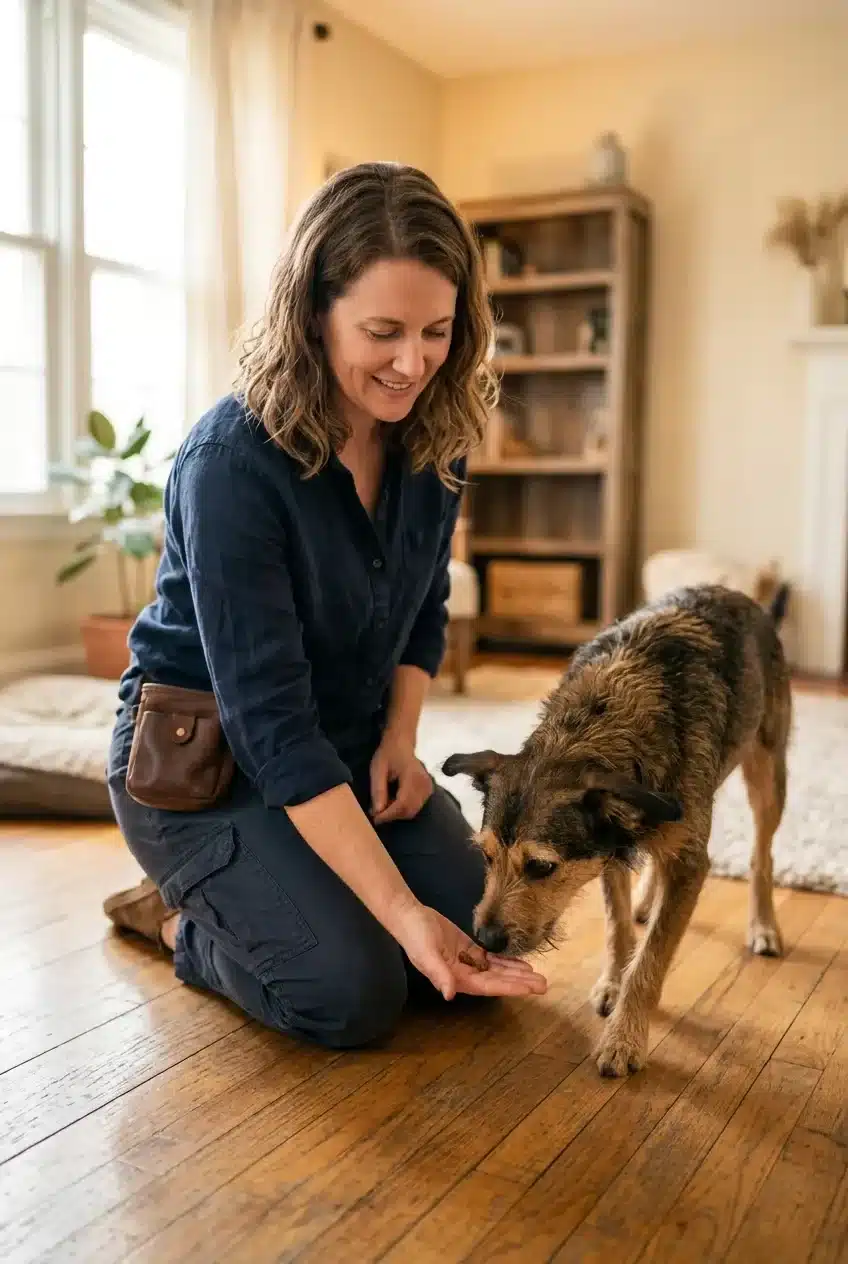
The fastest way to build confidence in a fearful foster dog is through a structured desensitization routine paired with high-value treats and zero forced interaction. Research published by the American Veterinary Society of Animal Behavior (AVSAB) confirms that positive reinforcement — not flooding or forced exposure — produces the most durable behavior change in fearful dogs.
- Start with a single safe room, not free roam of the whole house.
- Use high-value food rewards like boiled chicken or commercial freeze-dried treats.
- Let the dog approach you — never pull, drag, or lure aggressively.
- Keep sessions short: 5–10 minutes of structured interaction, multiple times a day.
- Track progress weekly using a simple fear scale (1–10) so you spot real change.
Week 1: The Decompression Phase
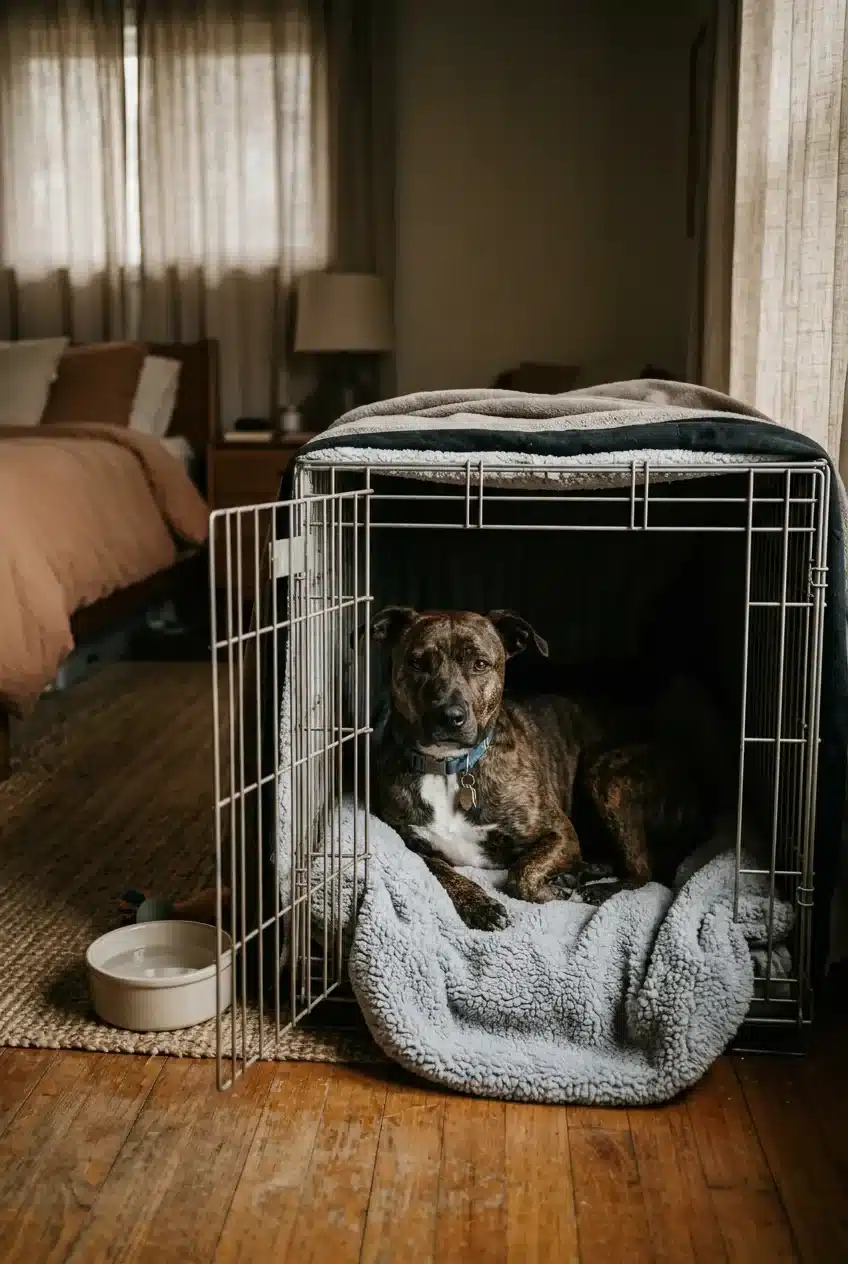
The first week is not about training. It is about survival — the dog’s nervous system needs time to downregulate after shelter stress.
Give the dog one quiet room with a crate or covered den area as its anchor point.
Limit visitors. Avoid loud music or TV at high volume. Sudden sounds can spike cortisol levels and set progress back significantly. If you want to understand how sound affects dogs, the research on whether dog barking can hurt ears gives useful context on canine sound sensitivity.
What to Do in Week 1
- Set up a safe space — a crate with a blanket draped over three sides gives a den-like feel. A dog crate cover designed for anxious dogs blocks visual stimuli effectively.
- Sit near the dog without making eye contact — read a book, work on a laptop, just exist nearby.
- Drop high-value treats without bending over the dog — toss them gently near the dog’s paws.
- Establish a routine — feed, walk, and rest at the same times every day.
What success looks like: By day 5–7, most dogs will stop trembling at your presence and may take food from the floor near you.
Week 2: First Voluntary Contact
Get Free Dog Health Tips!
Weekly guides on keeping your dog healthy & happy
🔒 No spam. Unsubscribe anytime.
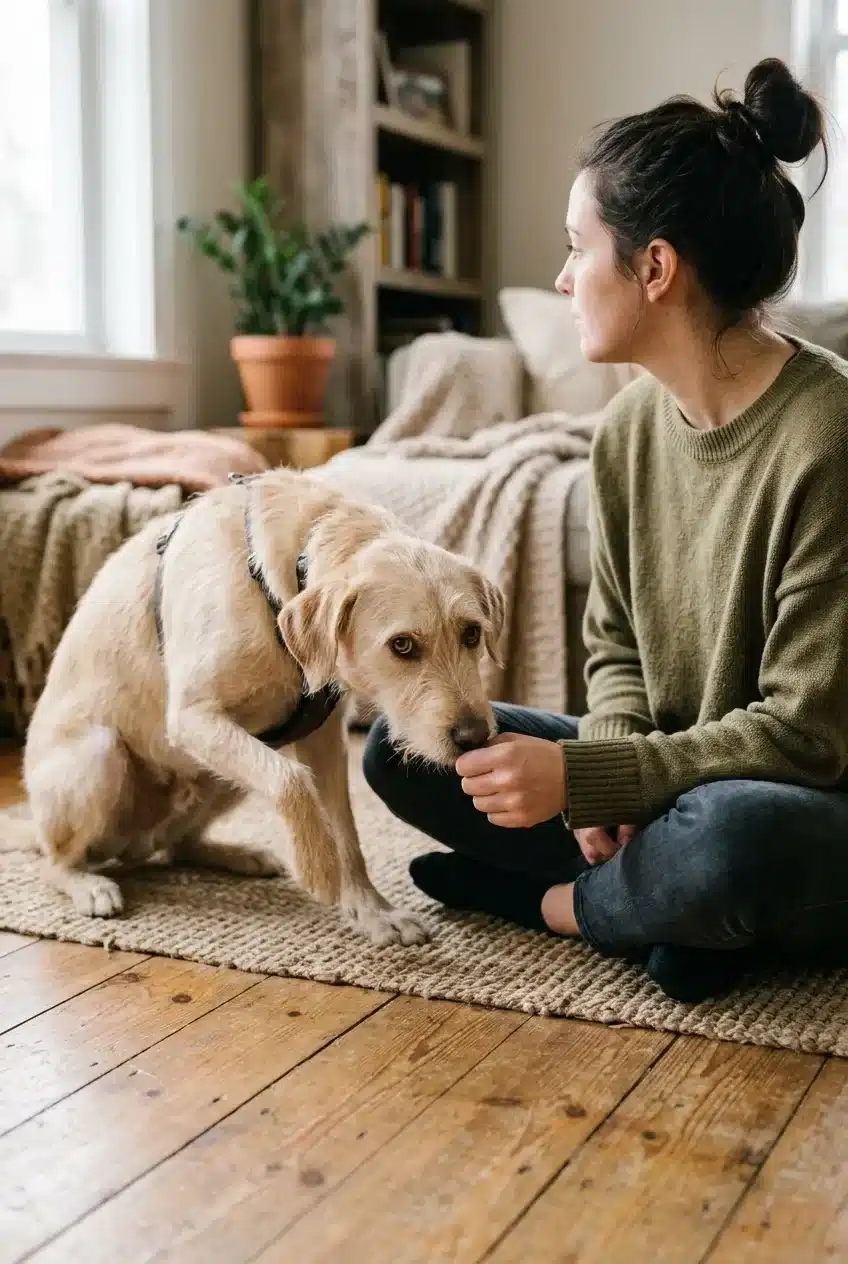
Week two is when you begin inviting — not demanding — interaction. The dog should always choose to engage first.
Sit on the floor and extend a closed fist. Wait. If the dog sniffs your hand, that is a breakthrough worth celebrating with a calm, quiet “yes” and a treat.
“Fear in dogs is not stubbornness — it is a neurological response. Every forced interaction teaches the dog that its signals are ignored.” — Dr. Karen Overall, veterinary behaviorist and author of Manual of Clinical Behavioral Medicine for Dogs and Cats
Building Positive Associations
Pair everything slightly unfamiliar with food. You walk into the room? Treat appears. You reach toward the dog? Treat appears. The dog’s brain starts to predict good things from your presence.
MOST POPULAR THIS WEEK
Vet-Recommended Articles: 👇
👉 Why Does My Dogs Skin Turn Dark And Thick After Years Of Allergy Treatment
👉 Best Home Remedies For Arthritis In Dogs With Limping
👉 How Long Does An Elimination Diet Take For Dogs With Skin Allergies
Introduce simple types of dog toys that encourage independent play. A rubber Kong stuffed with peanut butter builds positive associations with the environment — not just with you.
Avoid: looming, staring, or reaching over the dog’s head. These are threatening gestures in canine body language, even when you mean well.
Week 3: Controlled Exposure and Short Walks
By week three, most foster dogs are ready for short outdoor walks in low-stimulation environments. Early morning or late evening walks in quiet areas reduce the chance of overwhelming encounters.
Use a no-pull harness for anxious dogs — it gives you control without neck pressure, which fearful dogs find threatening.
The 3-3-3 Rule
| Time Frame | What the Dog Is Processing | Your Goal |
|---|---|---|
| Days 1–3 | Complete shutdown or panic | Safety and silence |
| Days 4–21 | Observing, testing boundaries | Routine and low-pressure presence |
| Days 22–90 | Beginning to trust and relax | Gentle exposure and skill-building |
This 3-3-3 framework is widely used by rescue organizations including Best Friends Animal Society to set realistic expectations for fosters.
On walks, let the dog sniff freely. Sniffing activates the parasympathetic nervous system and genuinely lowers arousal. A 20-minute sniff walk is more calming than a 20-minute brisk walk for an anxious dog.
Week 4: Adding Enrichment and Basic Cues
Week four is when light training begins. Keep sessions to five minutes maximum. End every session on success — even if that means finishing with something the dog already knows.
Start with “sit” using a lure, not a verbal command. Fearful dogs often shut down when they feel pressure from a human voice. The physical lure is gentler and faster.
Enrichment Ideas That Build Confidence
- Snuffle mats encourage foraging behavior, which is naturally calming.
- Puzzle feeders slow eating and give the dog a “job” to solve.
- Homemade dog toys made from household items — like a rolled towel with treats inside — cost nothing and work well.
- Cardboard box mazes give fearful dogs a low-stakes way to explore.
- Scatter feeding in grass taps into natural foraging instincts.
A snuffle mat for dog enrichment is one of the highest-value tools you can use at this stage. It keeps the dog’s brain busy while reducing stress hormones.
Weeks 5–8: Socialization and Expanding the World
Weeks five through eight focus on carefully expanding what the dog considers “safe.” This is not the time for dog parks or busy streets. It is time for controlled, positive introductions.
Introduce one new person per week. Brief visits work better than long ones. Ask visitors to ignore the dog completely and drop treats on the floor as they walk past.
How to Introduce Other Dogs
Parallel walking — two dogs walking side-by-side without direct face contact — is the safest first introduction method. It mimics how dogs naturally approach in the wild.
If your foster is one of the small hypoallergenic dog breeds often seen in foster programs, be aware that small dogs can mask fear with defensive barking, which gets misread as aggression.
Never force a dog greeting. A dog that greets on its own terms is building real social confidence. A forced greeting teaches it that fear leads to more fear.
Signs of Real Progress
- Loose, wiggly body on approach instead of a frozen or crouched posture.
- Taking treats from your hand without snatching and retreating.
- Sleeping in an exposed area rather than only in the crate.
- Offering play bows or bringing you a toy.
- Making sustained, soft eye contact — not hard or avoidant staring.
A calming supplement treat for anxious dogs can support this phase, though always check ingredients with your vet before adding anything new to the diet.
Common Mistakes When Fostering a Fearful Dog
- Flooding the dog with new experiences too fast. Consequence: re-traumatization and regression. Fix: one new experience per week, max.
- Comforting excessive fear with baby talk and prolonged petting. Consequence: accidentally reinforcing the fear response. Fix: stay calm and neutral, then redirect to an activity.
- Skipping the safe-room phase to speed up socialization. Consequence: the dog never gets a baseline of safety to return to. Fix: always have one guaranteed safe space available.
- Expecting linear progress. Consequence: frustration when the dog regresses after a stressful event. Fix: track weekly averages, not daily moods.
- Using punishment for fear-based behavior. Consequence: suppresses warning signals and increases bite risk. Fix: redirect and reward incompatible behaviors instead.
For a deeper look at how fear-related vocalizations affect both dogs and the people around them, see this resource on how dog barking affects hearing — it matters for both human and canine wellbeing in a foster home.
The AVSAB position statement on humane training is the clearest professional guidance available on why punishment-free methods are the standard of care for fearful animals.
Frequently Asked Questions About How to Build Confidence in a Fearful Foster Dog: Week by Week
How long does it take for a fearful foster dog to trust you?
Most fearful foster dogs begin showing measurable trust within two to four weeks of consistent, low-pressure interaction. Full comfort with a new person can take three to six months depending on the dog’s history.
Should I force my foster dog to interact with people?
You should never force a fearful foster dog to interact with people. Forced interaction overrides the dog’s fear signals and can slow progress significantly or trigger defensive aggression.
Is it normal for a foster dog to hide for the first week?
Hiding during the first week is completely normal for a fearful foster dog. It is a healthy coping response — provide a safe den space and allow the dog to emerge at its own pace.
What treats work best for fearful dogs?
High-value, soft treats like small pieces of boiled chicken, turkey, or commercial freeze-dried meat work best for fearful dogs. The higher the value, the more effectively it can override a mild fear response.
Can a fearful foster dog become a confident pet?
Yes — many fearful foster dogs become confident, happy pets with the right support. The timeline varies, but consistent routine, positive reinforcement, and patient socialization produce lasting behavioral change in most dogs.
What if my foster dog is not improving after several weeks?
If your foster dog shows no improvement after four to six weeks, contact your rescue organization and request a veterinary behavioral consult. Some dogs have anxiety levels that respond well to short-term medication alongside behavior work.
The One Thing That Makes the Biggest Difference
Every technique in this guide works — but only if the dog feels safe first. Safety comes before socialization, before training, before enrichment.
Today’s action: set up a covered crate or quiet corner in one room, establish a feeding schedule, and commit to sitting near the dog for ten minutes without asking anything of it.
That single act of patient presence is where every fearful dog’s recovery begins. And knowing you gave that dog its first real sense of safety? That is the whole point of fostering.