To treat a hot spot on your dog at home without a vet, clip the fur around the area, gently clean it with a mild antiseptic, keep it dry, and prevent your dog from licking it. Most mild hot spots respond well to this approach within three to seven days.
Hot spots appear fast — sometimes within hours — and the itching drives dogs to lick and scratch, making things worse. Knowing exactly what to do at home can stop a small patch from turning into a serious infection.
How Do I Treat a Hot Spot on My Dog at Home Without a Vet?
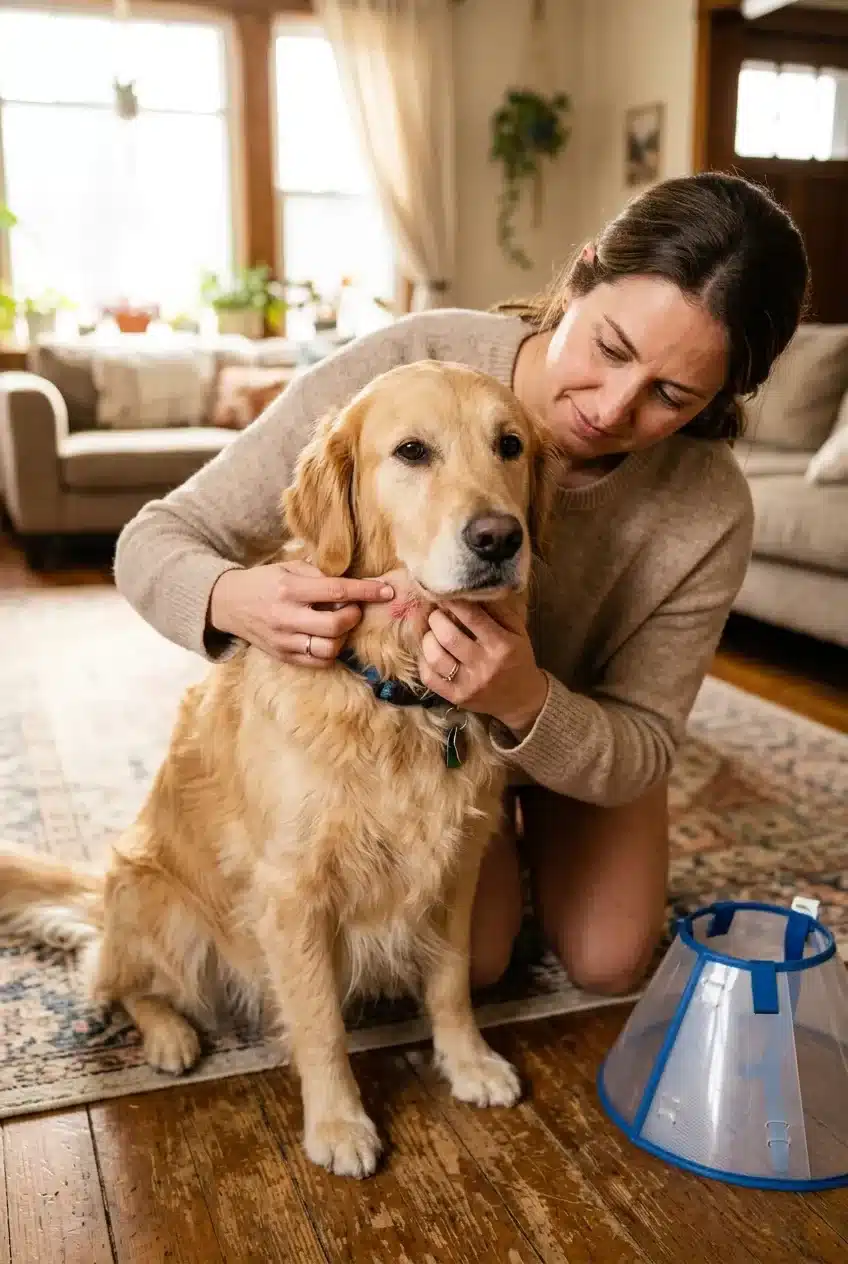
Treating a hot spot at home means clipping the hair, cleaning the wound with a diluted antiseptic solution, applying a soothing topical treatment, and blocking access with an Elizabethan collar. This process reduces moisture, stops bacterial growth, and gives the skin a chance to heal.
- Clip fur around the hot spot to expose it to air — moisture feeds bacteria.
- Clean gently with diluted chlorhexidine or saline solution, not hydrogen peroxide.
- Apply a veterinarian-recommended hydrocortisone spray to reduce itch and inflammation.
- Use an e-collar immediately — licking is the number one reason hot spots worsen.
- Keep the area dry; reapply topical treatment twice daily for at least five days.
- Monitor for spreading redness, odor, or swelling — those signs need vet attention.
What Exactly Is a Hot Spot and Why Does It Happen?
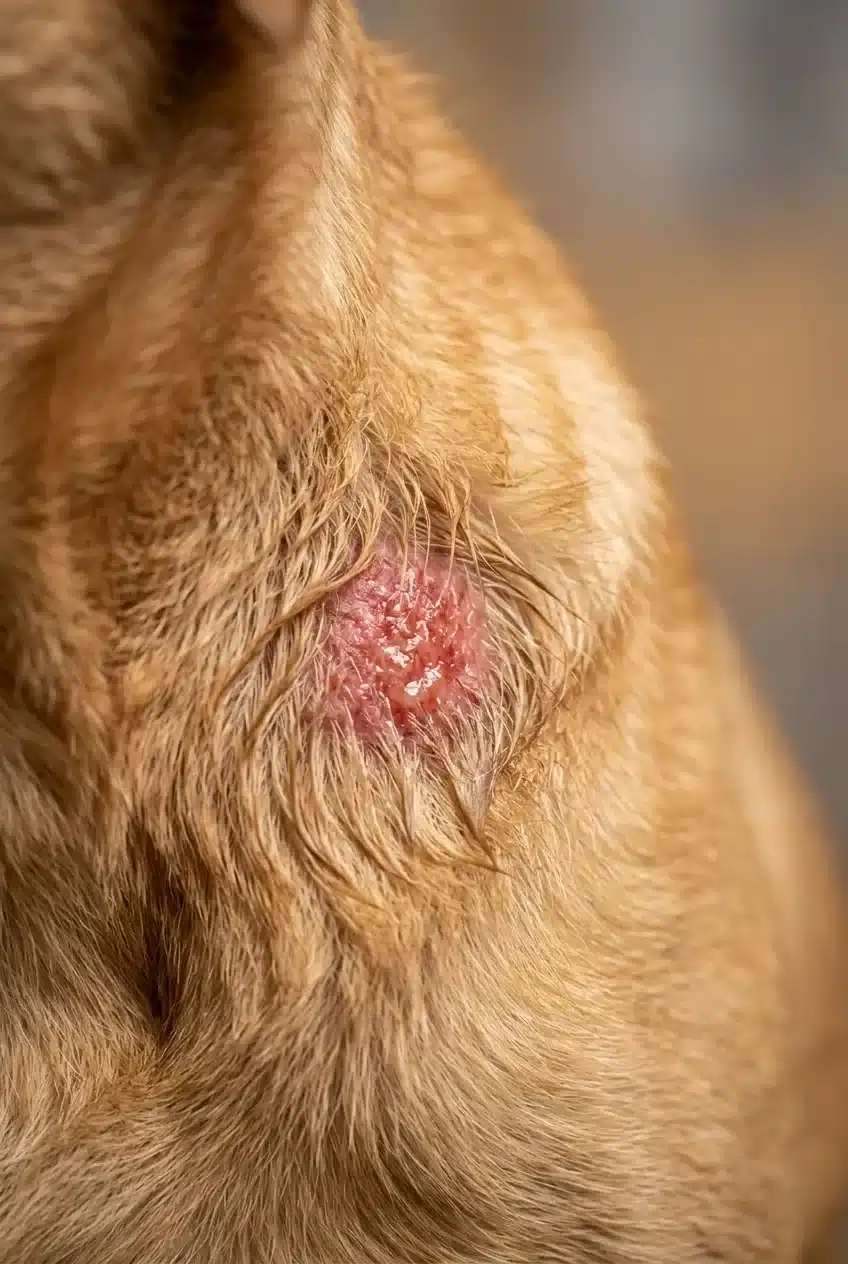
A hot spot — medically called acute moist dermatitis — is a localized area of inflamed, infected skin. It starts when a trigger causes your dog to scratch or chew one spot repeatedly, breaking the skin barrier and allowing bacteria, most often Staphylococcus species, to colonize.
The American Kennel Club notes that hot spots are especially common in dogs with thick or long coats, where moisture gets trapped close to the skin.
Common triggers include:
- Flea bites or other insect stings
- Allergies (food, environmental, or contact)
- Moisture trapped after swimming or bathing
- Anxiety or boredom-driven licking — dogs dealing with stress, like those adjusting to a new home, are more prone to compulsive licking
- Matted fur that holds heat and dampness against the skin
Any breed can get a hot spot, but Golden Retrievers, German Shepherds, and Saint Bernards are among the most commonly affected.
Step-by-Step Home Treatment for a Dog Hot Spot
Get Free Dog Health Tips!
Weekly guides on keeping your dog healthy & happy
🔒 No spam. Unsubscribe anytime.
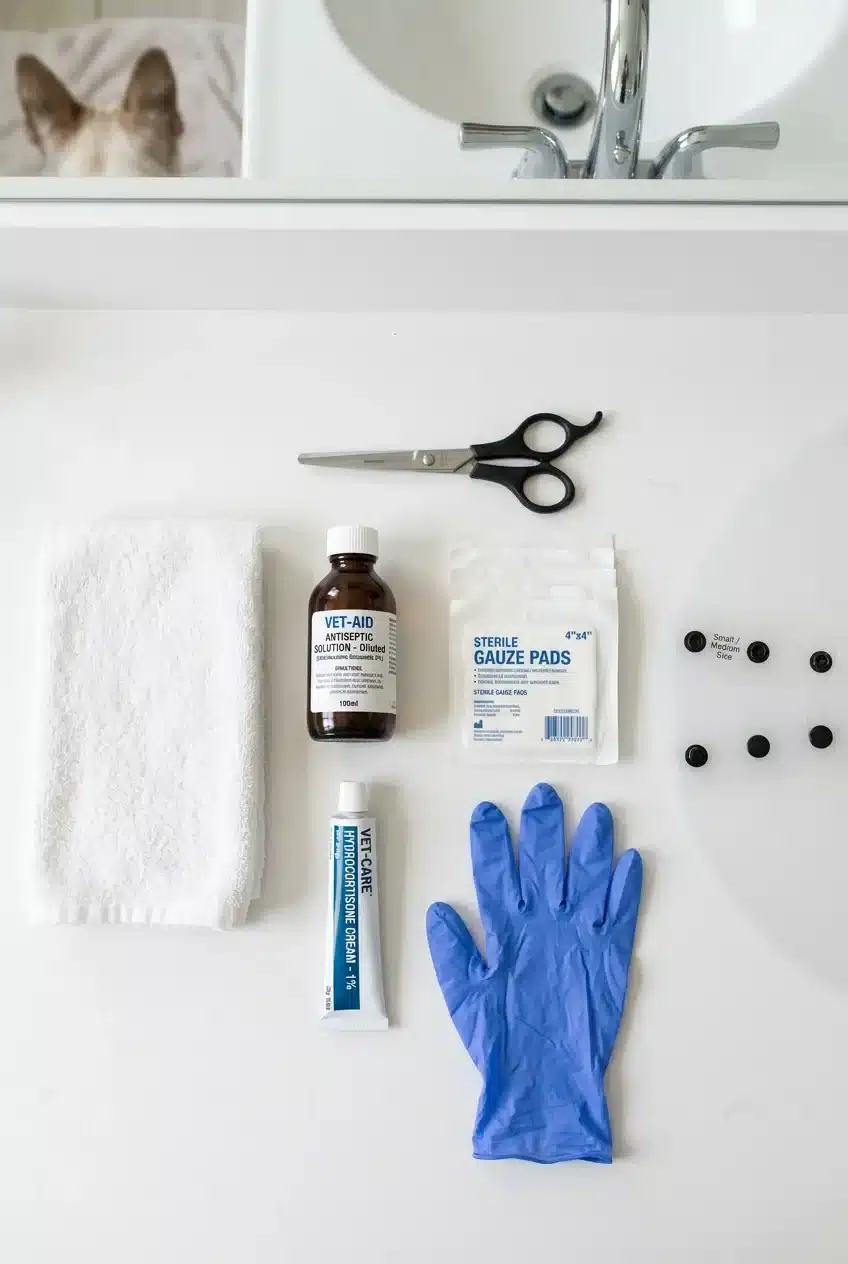
Follow these steps in order. Skipping steps — especially clipping and drying — is the most common reason home treatment fails.
- Gather your supplies first. You will need blunt-tipped scissors or a pet clipper, dog grooming clippers, sterile saline or a chlorhexidine 2% solution, clean gauze pads, and a topical hydrocortisone spray.
- Carefully clip the hair around the hot spot. Clear at least one inch of fur beyond the visible edge of the sore. This exposes the wound to air — the single most important step for drying it out.
- Clean the wound gently. Soak a gauze pad with saline or diluted chlorhexidine and dab — do not scrub. Remove crust and discharge without reopening the skin. Success looks like a clean, pink (not bleeding) surface.
- Pat completely dry. Use a clean dry gauze pad. Air-dry for two to three minutes before applying anything else.
- Apply a topical treatment. A hydrocortisone spray for dogs reduces inflammation and itch quickly. Apply a thin layer — do not soak the skin, as excess moisture slows healing.
- Fit an Elizabethan collar immediately. Even five minutes of licking undoes your work. A comfortable e-collar is non-negotiable until the hot spot is fully healed.
- Repeat cleaning and treatment twice daily. Each session, check whether the edges are drying and shrinking. A healing hot spot gets smaller, drier, and less red after 48 to 72 hours.
If the hot spot is not visibly improving after 72 hours of consistent treatment, contact your vet.
What Products Actually Help — and What to Avoid
Choosing the right product makes a real difference. Some common household items people reach for can actually delay healing or cause chemical burns.
MOST POPULAR THIS WEEK
Vet-Recommended Articles: 👇
👉 Why Does My Dogs Skin Turn Dark And Thick After Years Of Allergy Treatment
👉 Best Home Remedies For Arthritis In Dogs With Limping
👉 How Long Does An Elimination Diet Take For Dogs With Skin Allergies
Products That Help
| Product | Why It Works | How to Use |
|---|---|---|
| Chlorhexidine 2% solution | Broad-spectrum antibacterial, gentle on skin | Dilute to 0.05% with water; dab with gauze |
| Saline solution | Cleanses without irritating tissue | Apply with gauze pad; safe for daily use |
| Hydrocortisone 1% spray | Reduces itch and inflammation | Thin layer twice daily; keep dog from licking |
| Veterinary antiseptic wipes | Convenient for cleaning on the go | Single wipe per clean; do not reuse |
Products to Avoid
- Hydrogen peroxide — damages healthy cells and slows healing, per guidance from the Merck Veterinary Manual.
- Rubbing alcohol — causes chemical burns on broken skin and intense pain.
- Neosporin (triple antibiotic ointment) — the greasy base traps moisture and makes hot spots worse, even though it is safe for minor cuts.
- Tea tree oil — toxic to dogs if licked; not appropriate for open skin wounds.
If your dog has recurring skin rashes alongside hot spots, that pattern often points to an underlying allergy worth investigating.
How to Stop Hot Spots From Coming Back
Treating the current hot spot is only half the job. Without addressing the trigger, most dogs develop another one within weeks or months.
Fleas are the leading cause of hot spots in dogs, according to the American Animal Hospital Association. A consistent flea prevention program eliminates the most common trigger entirely.
“The most effective way to prevent hot spots is to control the underlying cause — whether that is parasites, allergies, or excess moisture — rather than just treating the lesion itself.” — Merck Veterinary Manual, Dermatology section
Key prevention habits include:
- Keep your dog on a year-round flea and tick preventative
- Dry your dog thoroughly after baths or swimming — waterless cleaning methods reduce how often wet bathing is needed
- Brush regularly to prevent matting in long-coated breeds
- Address anxiety and boredom, which drive compulsive licking
- Talk to your vet about allergy testing if hot spots keep returning despite prevention
A monthly flea and tick preventative is one of the cheapest and most effective investments for dogs prone to hot spots.
Common Hot Spot Treatment Mistakes
These five mistakes are the most frequent reasons a treatable hot spot turns into a vet visit.
- Skipping the hair clip. Leaving fur over the wound traps moisture and bacteria. You cannot effectively clean or dry a hot spot covered in hair — always clip first.
- Using hydrogen peroxide or alcohol. Both damage tissue at the cellular level. The Merck Veterinary Manual specifically lists these as counterproductive for wound care in dogs.
- Letting the dog lick freely. One licking session can re-infect a wound you just cleaned. The e-collar stays on until full healing, not just until it looks better.
- Applying thick ointments. Products like petroleum jelly or triple antibiotic ointment seal in moisture, creating the warm, wet environment bacteria love.
- Waiting too long to call a vet. If the hot spot is larger than two inches, has a strong odor, or is not improving after 72 hours, it likely needs prescription antibiotics. Delaying makes treatment harder and more expensive. Dogs with chronic skin changes are at higher risk for deep infections that need professional care.
When a Hot Spot Needs a Vet — Not Home Treatment
Some hot spots go beyond what home care can handle. Recognizing the line early saves your dog pain and you money.
Seek veterinary attention if any of these are present:
- The lesion is larger than two inches in diameter
- There is a foul smell indicating deep infection
- Your dog has a fever, lethargy, or loss of appetite
- The hot spot is near the eye, ear, or paw and spreading fast
- No improvement after 72 hours of consistent home treatment
After any stressful vet visit, helping your dog decompress at home speeds overall recovery. A calm dog heals faster.
For reference on wound-care standards for dogs, the Merck Veterinary Manual’s hot spot guidance is a reliable, freely available resource written for both vets and informed pet owners.
Frequently Asked Questions About How do I treat a hot spot on my dog at home without a vet?
Can I put Neosporin on a dog hot spot?
Neosporin is not recommended for hot spots. Its thick, greasy base traps moisture against the skin, which worsens the warm, wet conditions that allow bacteria to thrive. Use a diluted chlorhexidine solution instead.
How long does a hot spot take to heal at home?
A mild hot spot treated correctly typically starts improving within 48 to 72 hours and heals fully in seven to ten days. Larger or infected hot spots take longer and usually need prescription antibiotics.
Should I let a hot spot dry out or keep it moist?
Let a hot spot dry out. Moisture is what allows the bacterial infection to spread and deepen. Clean it twice daily, apply a thin topical spray, and keep the area open to air rather than covered.
Will a hot spot heal on its own if I leave it alone?
A hot spot will not heal on its own without intervention. Dogs continue licking and scratching the area, which spreads bacteria and enlarges the wound. Active treatment — clipping, cleaning, and blocking access — is always needed.
Can I use coconut oil on a dog hot spot?
Coconut oil is not a good choice for hot spots. Like thick ointments, it seals in moisture and can worsen bacterial growth. Stick to veterinary-approved antiseptic solutions and hydrocortisone sprays designed for broken skin.
Is a hot spot the same as mange or ringworm?
Hot spots, mange, and ringworm look different and have different causes. Hot spots are moist, red bacterial lesions; mange involves mites; ringworm is a fungal infection with circular scaly patches. A vet can confirm the diagnosis if you are unsure.
The Bottom Line on Treating a Dog Hot Spot at Home
The most important step is also the first one: clip, clean, dry, and block access immediately. Every hour of unchecked licking makes the hot spot harder to treat at home.
Start today by gathering your supplies — blunt scissors, a chlorhexidine antiseptic solution, and an e-collar — and treat the affected area before your dog gets another chance to lick it. Most mild hot spots respond quickly when you act fast and stay consistent.
Your dog is counting on you to catch this early. A small red patch today does not have to become an expensive vet visit tomorrow.