The best probiotic for a Doberman puppy with an extremely sensitive stomach is one that contains multiple strains of Lactobacillus and Bifidobacterium, is formulated specifically for puppies, and is free from artificial fillers that can trigger flare-ups.
If your Doberman puppy is having repeated bouts of loose stool, gas, or vomiting, you are not overreacting. Sensitive stomachs are genuinely common in Doberman puppies, and the right probiotic can make a real difference.
What Is the Best Probiotic for a Doberman Puppy With a Sensitive Stomach?
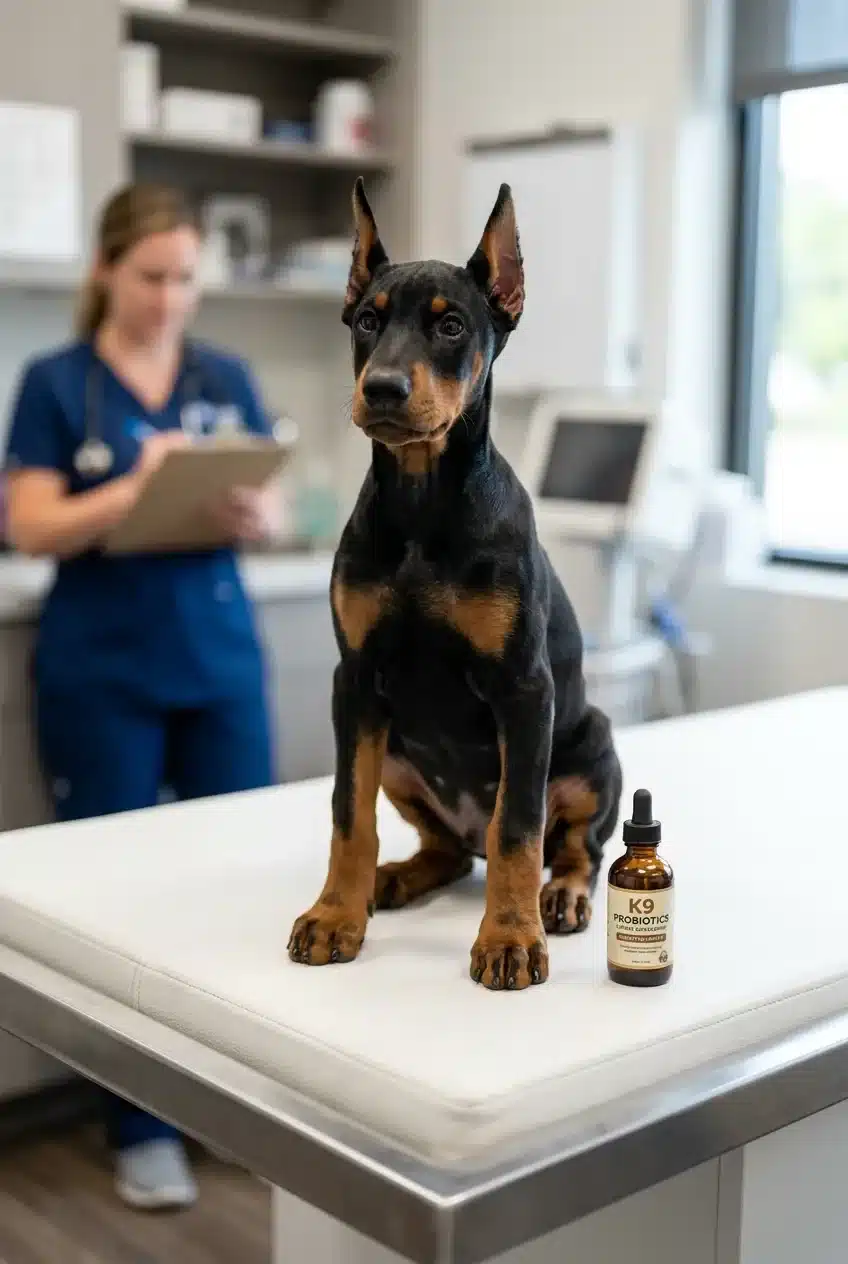
The best probiotic for a Doberman puppy with an extremely sensitive stomach contains multiple bacterial strains, has at least one billion CFUs (colony-forming units) per dose, and is specifically formulated for growing dogs. Look for products that have passed third-party testing and contain no artificial colors or preservatives.
- Choose a puppy-specific formula — adult dog probiotics often have higher doses than puppies need.
- Look for Lactobacillus acidophilus and Bifidobacterium animalis on the label.
- Avoid products with wheat, soy, or dairy if your puppy has food sensitivities.
- Powder or chew formats are easier to dose accurately for puppies than capsules.
- CFU count matters — most vets recommend at least 1 billion CFUs for small to medium puppies.
- Prebiotics (like inulin or FOS) paired with probiotics improve gut colonization rates.
Why Doberman Puppies Have Such Sensitive Digestive Systems
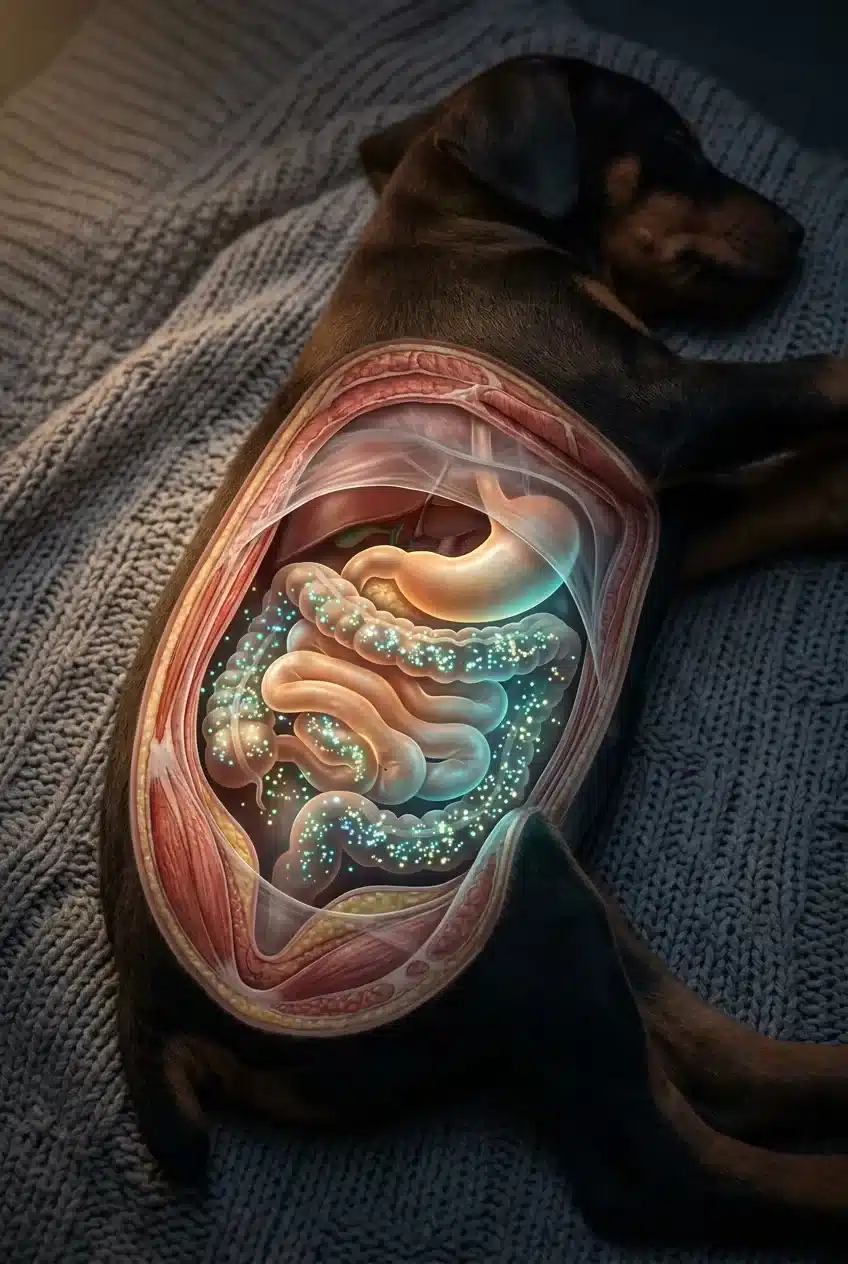
Doberman puppies are genetically predisposed to digestive sensitivity more than many other breeds. Their gut flora is still developing during the first year of life, which makes them especially reactive to dietary changes, stress, and environmental shifts.
A young Doberman’s gastrointestinal tract is longer relative to body size compared to smaller breeds, meaning food spends more time in transit. This increases the window for fermentation, gas, and irritation.
Dobermans also carry a higher rate of inflammatory bowel disease (IBD) and protein-losing enteropathy (PLE) than the average dog population, according to the American Kennel Club’s breed health documentation. These conditions often show up first in puppyhood as recurring stomach upset.
The gut microbiome of a Doberman puppy is fragile — and probiotics are one of the most evidence-backed tools for supporting it.
Why Does a Doberman Puppy Get an Extremely Sensitive Stomach?
Get Free Dog Health Tips!
Weekly guides on keeping your dog healthy & happy
🔒 No spam. Unsubscribe anytime.
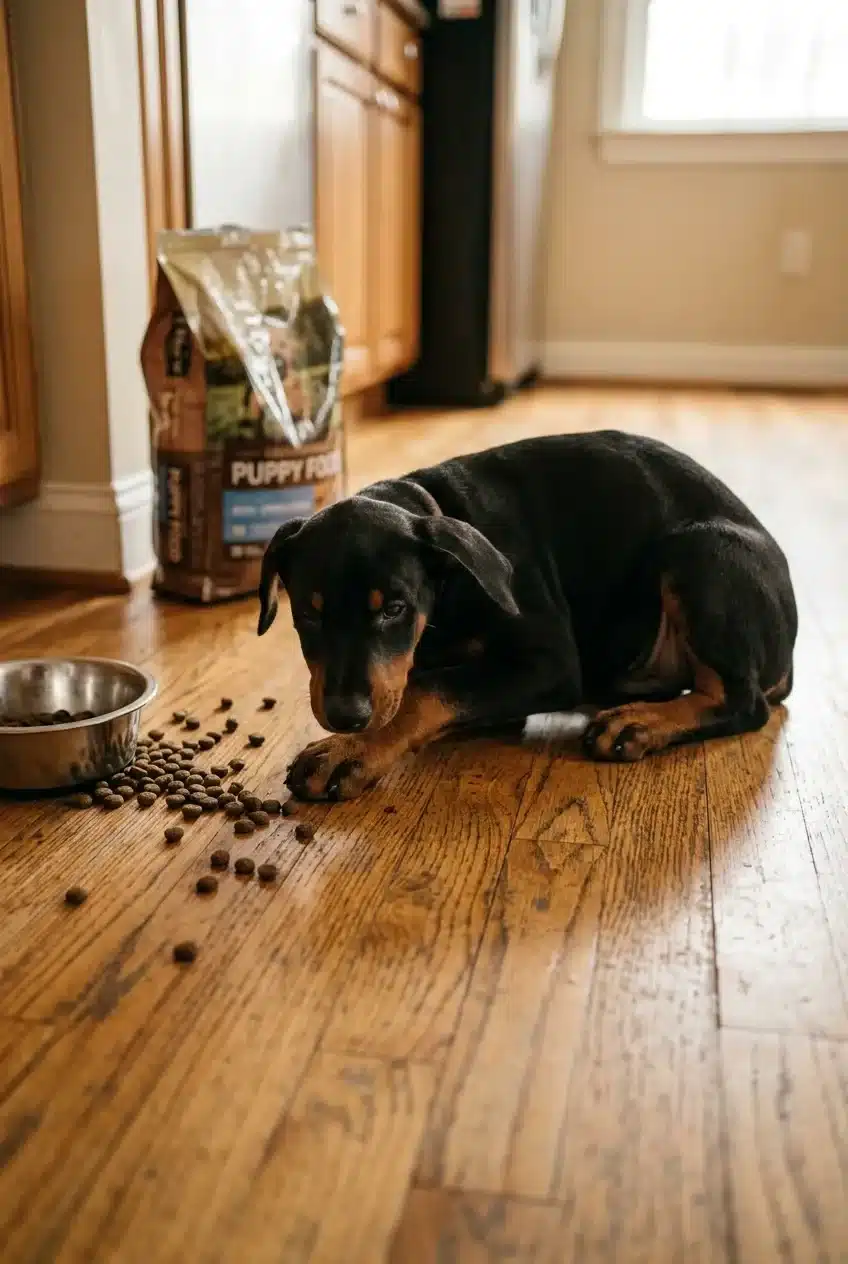
Several root causes can drive digestive sensitivity in Doberman puppies. Some are breed-specific, some are management-related, and a few require veterinary diagnosis to rule out.
- Diet transitions done too quickly — switching foods over fewer than 7-10 days disrupts the gut microbiome. This is the most common cause.
- Low-quality protein sources — cheap by-products and rendered meals are harder for puppies to digest and can inflame the gut lining.
- Stress-induced dysbiosis — rehoming, vaccination visits, or changes in routine can alter gut bacteria within 24-48 hours in Doberman puppies.
- Parasites — Giardia and roundworms are common in puppies and mimic food sensitivity symptoms almost exactly.
- Food allergies or intolerances — beef, chicken, wheat, and dairy are the most common canine food allergens, per the American Kennel Club.
- Von Willebrand’s disease — a clotting disorder common in Dobermans that sometimes presents alongside GI complications.
- Antibiotic disruption — any prior antibiotic use strips beneficial bacteria and can cause persistent stomach issues in puppies.
Signs Your Doberman Puppy Has a Sensitive Stomach
Watch for these symptoms carefully. Some are manageable at home, but a few need a vet the same day.
- Loose or watery stool lasting more than 48 hours — suggests gut dysbiosis or infection. (Monitor – watch for 24-48 hours)
- Mucus or blood in stool — can indicate colitis, parasites, or hemorrhagic gastroenteritis. (Emergency – see a vet immediately)
- Vomiting more than twice in one day — signals that the stomach is significantly irritated or obstructed. (Emergency – see a vet immediately)
- Excessive gas and bloating — especially concerning in Dobermans due to breed-level bloat risk. (Monitor – watch for 24-48 hours)
- Distended, hard abdomen — a potential sign of gastric dilatation-volvulus (GDV), which is life-threatening in Dobermans. (Emergency – see a vet immediately)
- Eating grass frequently — often self-soothing behavior related to stomach discomfort. (Normal variation – not a cause for concern)
- Weight loss despite eating normally — a red flag for malabsorption or protein-losing enteropathy. (Emergency – see a vet immediately)
- Occasional soft stool after a new food — common during transitions. (Normal variation – not a cause for concern)
When to See a Vet About Your Doberman Puppy’s Stomach
If your Doberman puppy has a bloated, hard abdomen or is retching without vomiting, go to an emergency vet tonight — do not wait.
MOST POPULAR THIS WEEK
Vet-Recommended Articles: 👇
👉 Why Does My Dogs Skin Turn Dark And Thick After Years Of Allergy Treatment
👉 Best Home Remedies For Arthritis In Dogs With Limping
👉 How Long Does An Elimination Diet Take For Dogs With Skin Allergies
Dobermans are a deep-chested breed at elevated risk for GDV (bloat), which can kill within hours. Any sign of abdominal distension combined with restlessness requires immediate emergency veterinary care.
Call an emergency vet immediately if you see:
- Blood in the stool or vomit
- Vomiting more than twice in a single day
- Lethargy combined with stomach symptoms
- A hard or visibly swollen belly
- Pale gums or signs of weakness
Schedule a regular vet appointment within 48-72 hours for:
- Loose stool lasting more than two days with no improvement
- Suspected food allergy or ongoing digestive sensitivity
- Weight loss or poor growth in a puppy under 12 months
If you are in a rural area without 24-hour vet access, call the ASPCA Animal Poison Control Center (888-426-4435) or the Pet Poison Helpline for immediate guidance while arranging transport.
According to the American Veterinary Medical Association, gastrointestinal disease is one of the top five reasons dogs visit veterinary clinics annually — and prompt intervention consistently leads to better outcomes.
What You Can Do at Home for a Doberman Puppy With a Sensitive Stomach
Before starting any probiotic, stabilize your puppy’s gut environment. A probiotic dropped into an already inflamed system will have limited effect.
- Temporarily switch to a bland diet — boiled chicken and white rice (50/50) for 24-48 hours gives the gut a rest. Avoid seasoning of any kind.
- Introduce a puppy probiotic powder — sprinkle it directly onto food once the puppy is eating again. A puppy probiotic powder with multiple strains is the easiest format to control dosage in a young dog.
- Slow down food transitions — always take at least 10 days to switch foods. Mix 10% new food with 90% old on day one, and increase gradually.
- Eliminate training treats that contain fillers — many standard treats contain wheat and artificial flavors that worsen sensitive stomachs. Check the best training treats for puppies with sensitive stomachs to find cleaner options.
- Reduce stress triggers — keep feeding times consistent, avoid loud environments after meals, and limit rough play directly after eating.
- Keep fresh water available at all times — diarrhea dehydrates puppies fast, especially Doberman puppies who are already growing rapidly.
Do not give human antidiarrheal medications like Pepto-Bismol or Imodium to your puppy without direct veterinary guidance. These can be harmful or mask symptoms that need diagnosis.
Probiotic and Treatment Options for Doberman Puppies With Sensitive Stomachs
Here is a clear comparison of the main options — both vet-prescribed and home-supported — so you can make an informed decision.
| Treatment | What It Does | When It Is Used |
|---|---|---|
| Multi-strain puppy probiotic (over-the-counter) | Restores beneficial bacteria and improves stool consistency over time | Mild to moderate ongoing digestive sensitivity |
| Prescription veterinary probiotic (e.g., FortiFlora by Purina Pro Plan Veterinary) | Higher-potency single-strain probiotic designed for clinical GI support | Post-antibiotic recovery or vet-diagnosed dysbiosis |
| Hydrolyzed or limited-ingredient puppy food | Removes common allergens to reduce gut inflammation at the source | Suspected food allergy confirmed by elimination diet |
| Veterinary-prescribed metronidazole | Antibiotic/antiprotozoal that treats bacterial and parasitic GI infections | Confirmed Giardia, bacterial overgrowth, or colitis |
| Bland diet protocol | Rests the GI tract and reduces inflammation short-term | Acute flare-ups and vomiting recovery periods |
Most puppies show measurable improvement in stool quality within 7-14 days of consistent probiotic use, when the underlying cause is dietary rather than infectious.
Why Doberman Puppies Are More Prone to Digestive Issues Than Other Breeds
Dobermans are one of several large, deep-chested breeds with documented breed-specific gastrointestinal vulnerabilities. Understanding this helps set realistic expectations for management.
- Doberman Pinschers — higher rate of protein-losing enteropathy and IBD than the general dog population; gut flora disruption hits them harder.
- Great Danes — extreme bloat risk due to chest depth; often share feeding protocols used for Dobermans.
- German Shepherds — prone to exocrine pancreatic insufficiency (EPI), which causes similar symptoms and is worth ruling out in any large breed puppy with chronic loose stool.
- Weimaraners — share the deep-chest GDV risk and similar digestive sensitivity patterns seen in Dobermans.
If your Doberman puppy’s symptoms are not improving after two weeks of consistent probiotic use and dietary management, ask your vet to screen specifically for IBD or EPI.
Common Mistakes Pet Parents Make With Doberman Puppy Stomach Issues
- Switching probiotics too frequently. It takes at least 2-3 weeks for a probiotic to colonize and produce results. Changing products every few days means you never see what works — stay consistent and give it time.
- Choosing a probiotic marketed for all life stages. Puppy guts need different strains and lower doses than adult dogs. An adult formula can cause temporary worsening before it helps.
- Ignoring the food label. Even a great probiotic cannot overcome a food packed with cheap fillers. Check the first three ingredients — they should be a named protein source, not a by-product or grain.
- Skipping the vet visit when symptoms persist. Parasites like Giardia look identical to food sensitivity. Without a fecal test, you may spend months managing what is actually a treatable infection.
- Feeding large meals twice a day. Three smaller meals daily reduces fermentation time in the gut and lowers bloat risk — both important for a growing Doberman.
Prevention Tips for a Doberman Puppy With a Sensitive Stomach
- Transition all foods over 10-14 days — never switch cold turkey, even between varieties of the same brand.
- Use a slow-feeder bowl — Dobermans eat fast by nature, which increases swallowed air and bloat risk; a slow feeder bowl for large breed puppies can reduce this significantly.
- Keep a food and symptom diary — log every ingredient change and any GI symptoms for the first six months; patterns become visible fast.
- Ask your vet about annual fecal testing — catching Giardia or worms early prevents months of unnecessary digestive distress.
- Avoid raw bones or high-fat table scraps — these are among the most common triggers for acute pancreatitis and gastroenteritis in Doberman puppies.
For overall puppy care, choosing the right grooming products also matters — harsh shampoos can stress sensitive dogs. If your puppy also has skin sensitivity alongside stomach issues, see the best shampoos for dogs with sensitive skin for guidance on keeping bath time stress-free.
Frequently Asked Questions About Best Probiotic for a Doberman Puppy With an Extremely Sensitive Stomach
How long does it take for a probiotic to work in a Doberman puppy?
Most Doberman puppies show improved stool consistency within 7-14 days of consistent daily probiotic use. Full gut microbiome stabilization typically takes 4-6 weeks of uninterrupted supplementation.
Can I give my Doberman puppy human probiotics like Culturelle?
Human probiotics are not formulated for canine gut pH or bacterial strains. A puppy-specific dog probiotic is a safer and more effective choice than human supplements not designed for dogs.
How much does a good puppy probiotic cost?
Quality puppy probiotics typically range from $20 to $45 for a 30-day supply over the counter. Prescription veterinary probiotics can run $30-$60 per month and require a vet recommendation.
What home treatment can I use while waiting for a vet appointment?
A bland diet of boiled chicken and plain white rice, paired with fresh water, is the safest home approach. Avoid any supplements or medications not specifically cleared by your vet.
Is diarrhea in a Doberman puppy always serious?
A single day of soft stool after a food change is not automatically serious. But diarrhea lasting more than 48 hours, or any stool with blood or mucus, requires a veterinary evaluation.
Should I give my Doberman puppy a probiotic every day?
Daily use is generally recommended for puppies with a confirmed sensitive stomach. Your vet can advise whether long-term daily use or periodic short courses make the most sense for your individual puppy.
The Bottom Line on Probiotics for a Doberman Puppy With a Sensitive Stomach
The single most important step you can take today is choosing a multi-strain, puppy-specific probiotic and pairing it with a slow, deliberate approach to feeding. Do not rush food transitions, and do not dismiss persistent symptoms as normal growing pains.
If your puppy has had loose stool or vomiting for more than two days, book a vet appointment now — not to rule out your probiotic plan, but to rule out parasites and conditions that look exactly like food sensitivity.
Your Doberman puppy’s gut health sets the foundation for everything — energy, immune function, and long-term wellbeing. A little consistency now prevents a lot of veterinary bills later. For additional help choosing low-irritant foods and treats that support sensitive Doberman puppies, the guide to training treats for puppies with sensitive stomachs is a practical next read.