Your cat has been diagnosed with hyperthyroidism, and now you are staring at the food aisle wondering if you have been making things worse. It is a genuinely stressful spot to be in. Knowing what not to feed a cat with hyperthyroidism can be just as powerful as knowing what to give them.
Diet does not cure hyperthyroidism, but the wrong foods can interfere with treatment, worsen symptoms, and put extra strain on your cat’s heart and kidneys. Getting this right matters from day one.
What Should a Cat With Hyperthyroidism Not Eat?
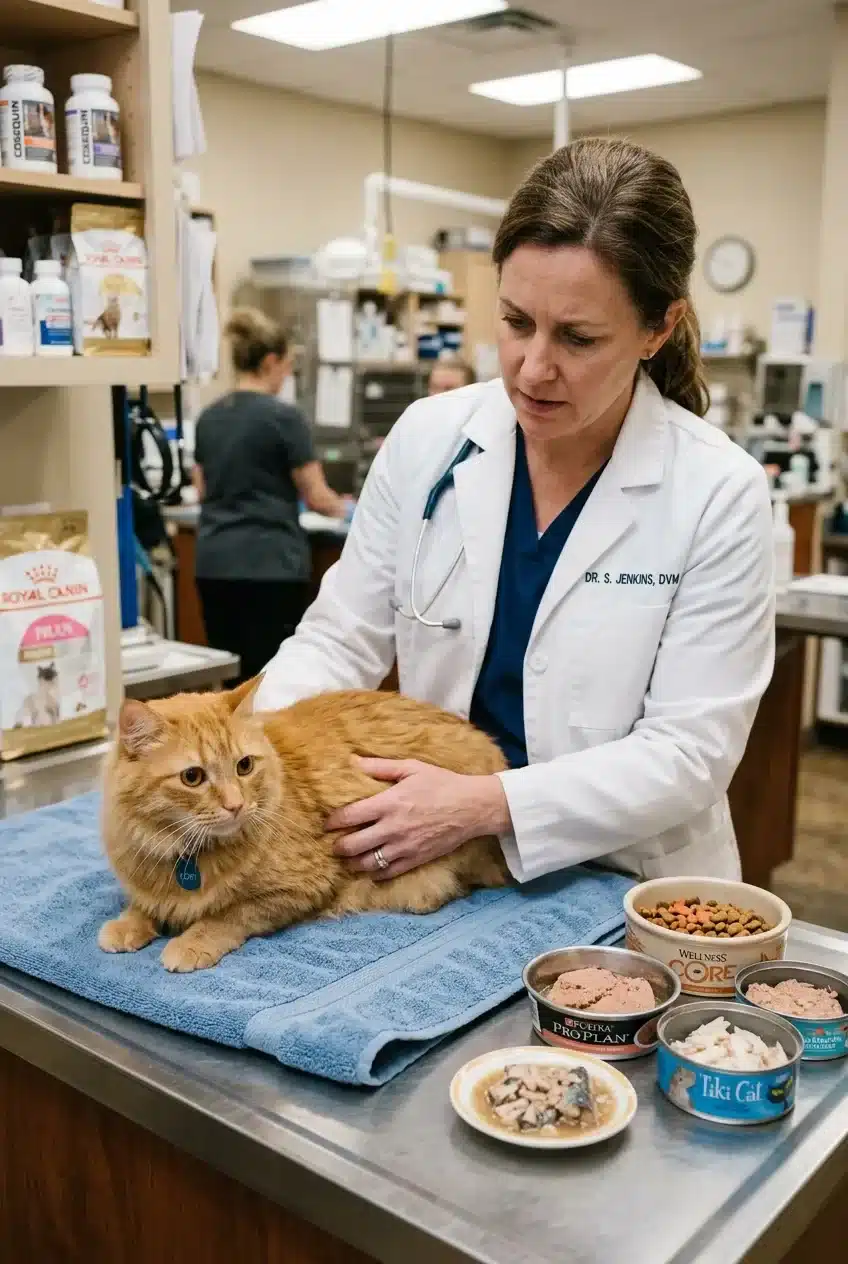
Cats with hyperthyroidism should avoid high-iodine foods, fish-heavy diets, soy-based ingredients, and any food that stresses an already-overworked thyroid. Iodine is the key mineral the thyroid uses to produce hormones, so excess iodine directly fuels the problem. Goitrogens — compounds in certain vegetables — can also disrupt thyroid function when fed regularly.
- Avoid fish-based cat foods as a daily staple — especially tuna, sardine, or mackerel flavors.
- Skip foods with seaweed, kelp, or carrageenan listed in the ingredients.
- Do not feed soy-based cat foods or treats — soy contains goitrogens.
- Avoid raw fish and raw liver, which are high in iodine and vitamin A.
- Steer clear of human-grade tuna, which is extremely high in iodine.
- Check for artificial preservatives like BHA and BHT — some researchers link these to thyroid disruption in cats.
Why Iodine Is the Number-One Concern
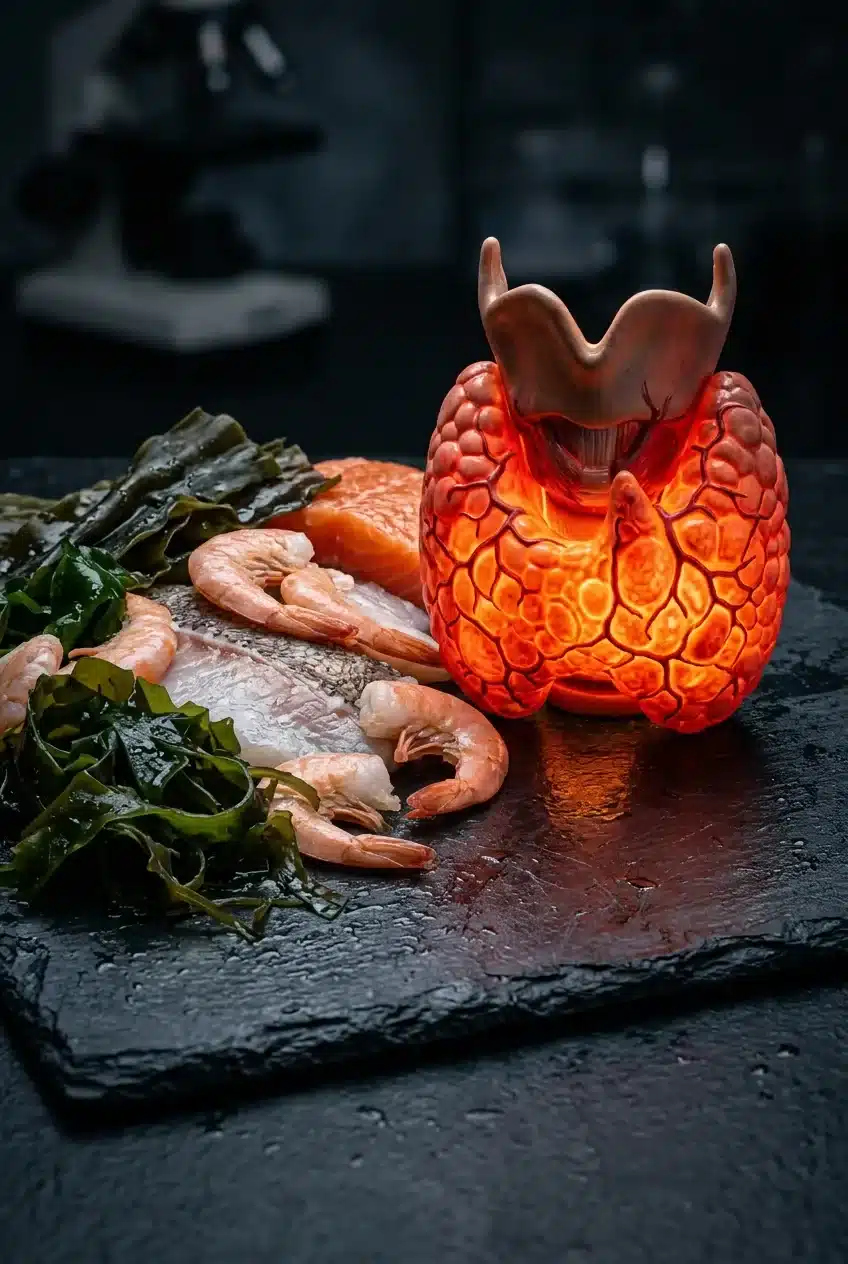
Iodine is the building block of thyroid hormones T3 and T4. In a hyperthyroid cat, the thyroid gland is already overproducing these hormones — feeding extra iodine is like adding fuel to a fire.
Hill’s Pet Nutrition developed a prescription diet (Hill’s y/d) specifically designed to control feline hyperthyroidism by severely restricting dietary iodine. According to Hill’s published research, restricting iodine to less than 0.32 parts per million (ppm) in the diet can normalize thyroid hormone levels in most cats within weeks.
BEFORE YOU SCROLL PAST
Cat Owners Also Read:
👉 Why Does My Cat Bite My Kittens Neck
Get FREE Guide Every Week
Join 10,000+ dog & cat owners. Vet-approved advice every week
🔒 No spam. Unsubscribe anytime.
👉 Why Does My Cat Pee On The Carpet
👉 Cute White Cats Who Hide Their Real Intentions Behind Their Beautiful Looks
Key insight: If your cat is on an iodine-restricted prescription diet, even small amounts of high-iodine treats or table scraps can undo weeks of progress.
This is why consistency matters so much. One tin of tuna or a few fishy treats can spike iodine intake dramatically and derail a carefully managed plan.
Foods Highest in Iodine to Avoid
- Canned tuna (human grade) — one of the highest iodine sources available
- Sardines, mackerel, and cod — commonly found in commercial cat foods
- Seaweed-derived ingredients like carrageenan, agar, and kelp
- Shellfish, including shrimp-flavored treats
- Dairy products, including milk and cheese — moderate iodine levels
Fish-Based Cat Foods: Why They Are Problematic
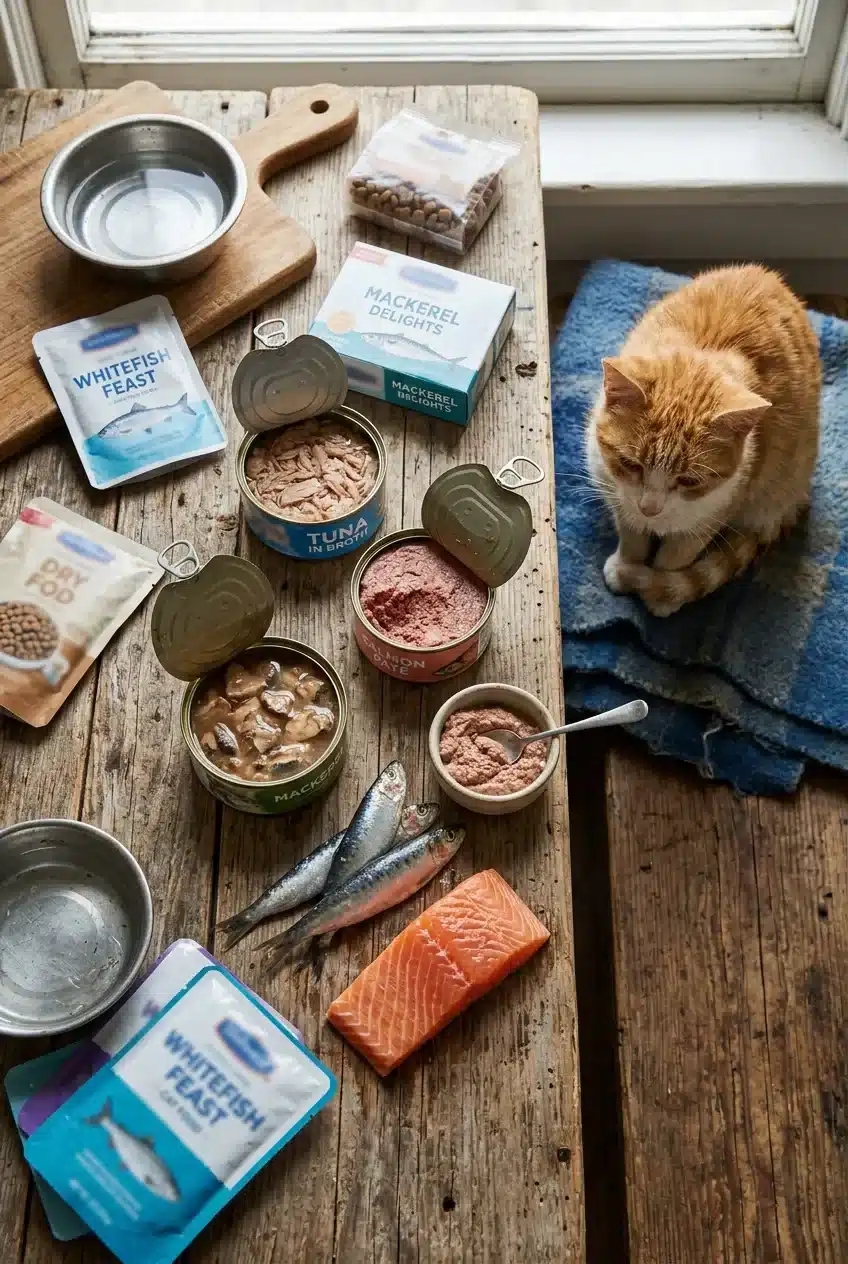
Fish-flavored cat foods are popular, and most cats love them. But for a cat with hyperthyroidism, fish-heavy diets are one of the worst choices you can make on a daily basis.
A 2015 study published in the Journal of Feline Medicine and Surgery identified fish-based diet as one of several factors associated with increased hyperthyroid risk in cats. The high iodine content in marine fish is a central concern, but fish-based foods also often contain higher levels of phosphorus — a mineral that matters because hyperthyroid cats are at elevated risk for chronic kidney disease.
Switching away from fish as the primary protein source is one of the most straightforward dietary changes you can make.
What to Look for on the Label
Ingredients are listed by weight on cat food labels. If tuna, salmon, mackerel, or sardine appears in the first three ingredients, the food is fish-heavy. Look for poultry-based or rabbit-based alternatives instead, and pair that label check with a look at the reasons a cat may refuse new food — transitions need to be gradual.
Also watch for hidden fish ingredients. Names like “ocean whitefish,” “seafood blend,” or “fish meal” all count. A low-iodine prescription cat food prescribed by your vet is currently the most reliable way to control iodine intake precisely.
Soy, Goitrogens, and Thyroid-Disrupting Ingredients
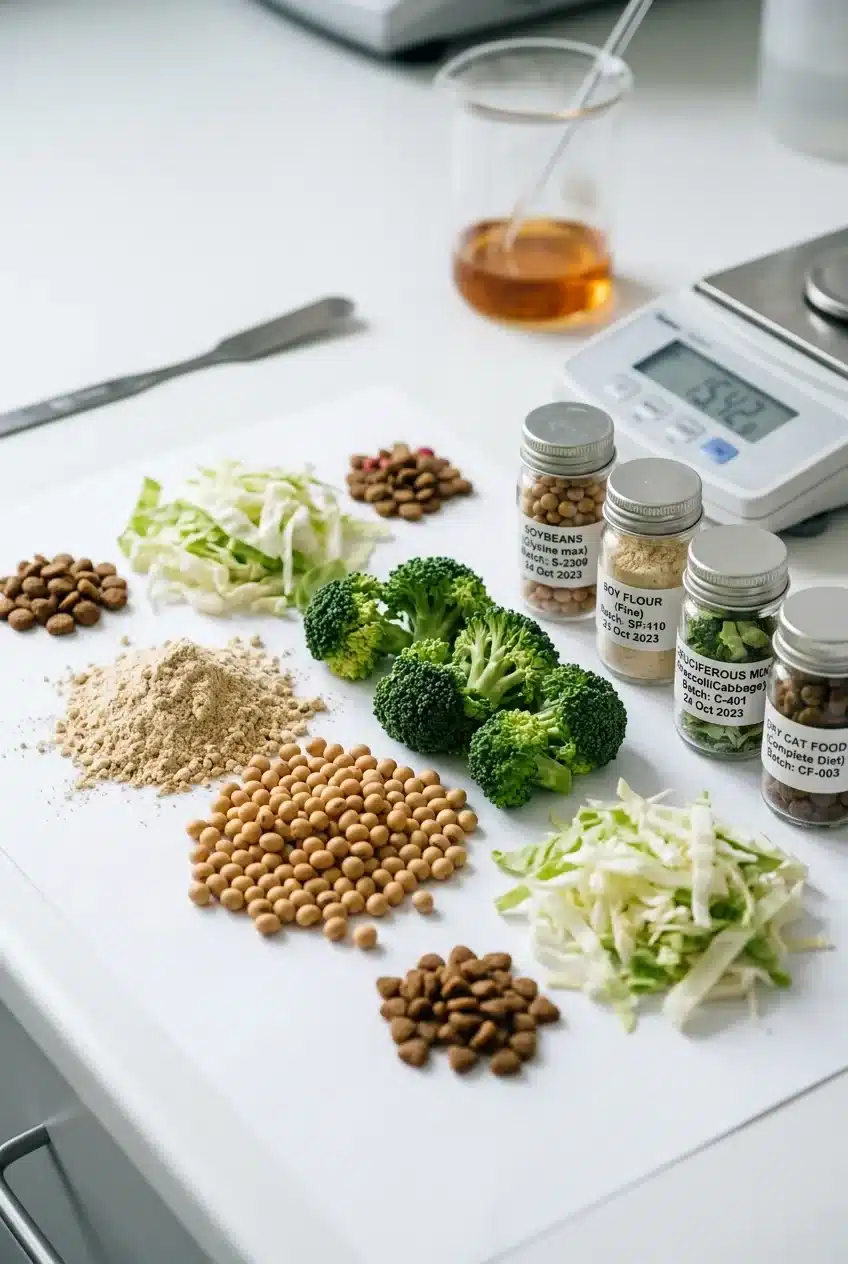
Goitrogens are natural compounds that interfere with the thyroid’s ability to use iodine and produce hormones. While this sounds helpful for a hyperthyroid cat, the interference is unpredictable and can cause erratic hormone swings rather than controlled reduction.
Soy is the most common goitrogen found in commercial cat food, often listed as soy protein isolate or soybean meal. It appears frequently in budget dry foods as a cheap protein source. Avoiding soy-based formulas is wise for any cat with a thyroid condition.
- Soy protein isolate — common in dry kibble as a filler protein
- Soybean meal — found in lower-cost formulas
- Flaxseed — a mild goitrogen sometimes added for omega-3s
- Cruciferous vegetable ingredients — broccoli or cabbage extracts occasionally appear in “natural” formulas
Raw cruciferous vegetables fed directly as treats — broccoli, cabbage, kale — also carry goitrogenic compounds. Cats rarely eat these willingly, but it is worth knowing if you are experimenting with home-cooked diets.
Dry Food Versus Wet Food for Hyperthyroid Cats
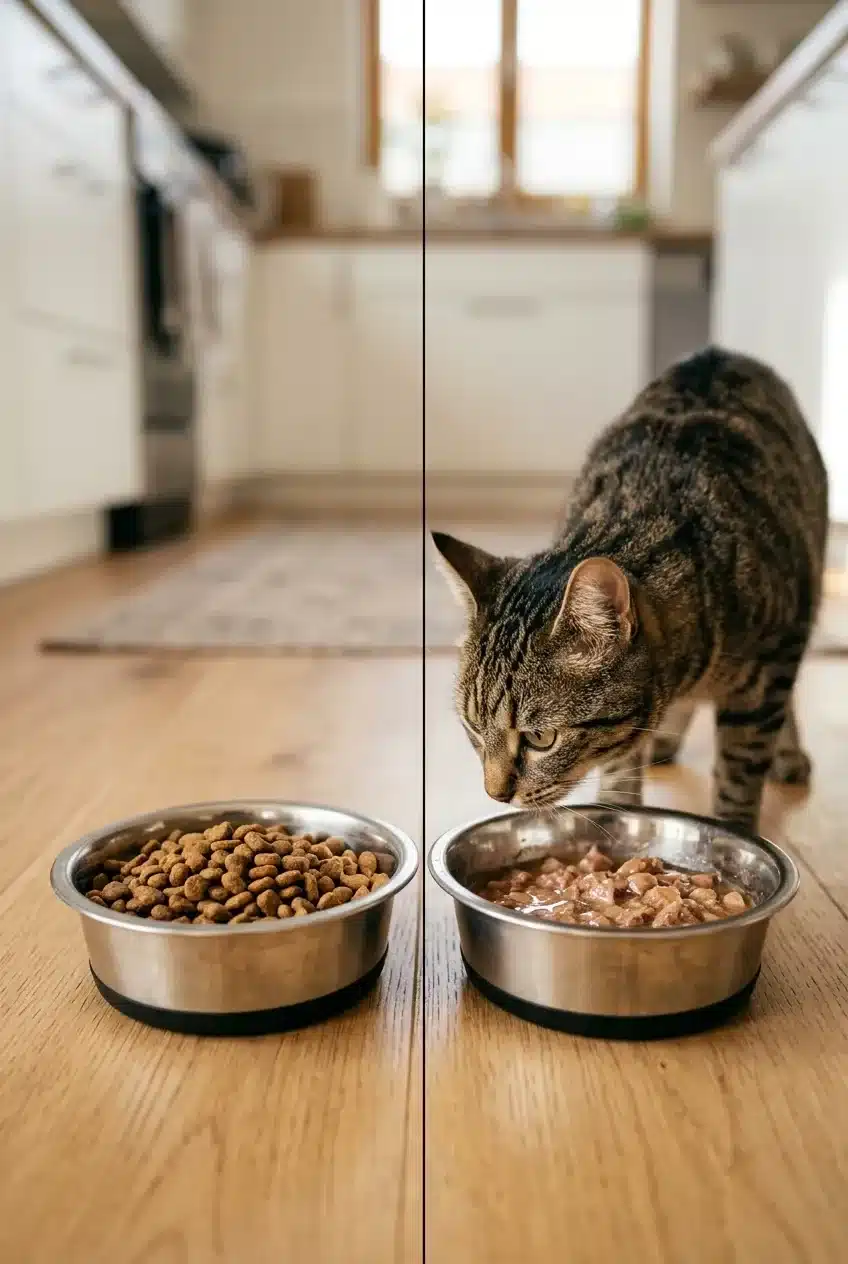
Cats with hyperthyroidism often lose weight rapidly because their metabolism is running too fast. Wet food generally supports better hydration and provides more calories in a more digestible form — both important factors for a cat already losing body condition.
| Factor | Dry Food | Wet Food |
|---|---|---|
| Hydration support | Low | High |
| Iodine control | Varies widely | Easier to find controlled options |
| Caloric density | High but often poorly absorbed | Moderate, well absorbed |
| Kidney strain risk | Higher (low moisture) | Lower (high moisture) |
| Palatability for sick cats | Lower | Generally higher |
Hyperthyroid cats are prone to concurrent kidney disease — a condition that worsens when the cat is dehydrated. Prioritizing moisture-rich food is not just about thyroid management; it protects the kidneys at the same time.
A poultry-based wet cat food without fish gives you a reasonable starting point before your vet finalizes a prescription diet plan.
Human Foods That Are Off the Table
Some pet owners try to supplement their cat’s diet with wholesome human foods, which is understandable. With a hyperthyroid cat, however, several common human foods actively cause harm.
- Tuna in water or oil — extremely high iodine, also linked to steatitis in cats when fed regularly
- Deli meats — high sodium strains the heart, already under pressure in hyperthyroid cats
- Dairy (milk, cheese, yogurt) — moderate iodine, plus most cats are lactose intolerant
- Raw egg whites — contain avidin, which blocks biotin absorption over time
- Liver (more than occasional) — very high in vitamin A and iodine; toxic in large amounts
- Onions and garlic — toxic to all cats, but worth restating clearly
Table scraps in general are a problem because they introduce uncontrolled iodine and sodium at unpredictable levels.
If your cat is on an iodine-controlled prescription diet, every bite of off-plan food matters. Talk to your vet about approved treats — options do exist, they just need to match the diet’s iodine limits. A low-iodine cat treat that fits within a prescription diet plan is worth sourcing if your cat needs positive reinforcement during medication time.
How to Transition Your Cat to a New Diet Safely
Changing a hyperthyroid cat’s food overnight often leads to refusal, stress, and weight loss — none of which help. A slow transition gives the digestive system time to adjust and increases the chance your cat actually eats the new food.
- Start with 10% new food mixed into 90% old food for days one and two. Success looks like your cat eating the bowl without hesitation.
- Increase to 25% new food by days three and four. Watch for loose stools, which signal the switch is moving too fast.
- Move to 50/50 by day seven. Most cats tolerate this ratio without trouble if the earlier steps went smoothly.
- Reach 75% new food by day ten. Monitor weight — hyperthyroid cats should not be losing additional weight during the transition.
- Complete the switch by day fourteen. If your cat is still resisting, try warming the new food slightly to enhance aroma.
Some cats — especially older ones — are stubborn about food changes. If your cat is refusing the new diet entirely, your vet may need to prescribe medication first to stabilize appetite before the dietary switch succeeds. Understanding why cats stop eating and how to respond can help you troubleshoot refusal during the transition.
Common Mistakes Pet Owners Make With Hyperthyroid Cats
- Mistake: Continuing fish-based food because the cat loves it. Consequence: Persistent high iodine intake undermines medication and prescription diet. Fix: Switch to a poultry or rabbit protein base and introduce it gradually.
- Mistake: Giving tuna as a medication treat. Consequence: Even a small spoonful delivers a large iodine spike. Fix: Use a vet-approved low-iodine treat or a tiny piece of plain cooked chicken instead.
- Mistake: Assuming “natural” or “grain-free” means thyroid-safe. Consequence: Many grain-free foods use fish as the primary protein and are high in iodine. Fix: Read the full ingredient list, not just the front-of-bag claims.
- Mistake: Feeding multiple cats the same food when only one has hyperthyroidism. Consequence: The prescription diet may be too restrictive for healthy cats long-term. Fix: Work with your vet on a feeding routine that separates the hyperthyroid cat at mealtimes.
- Mistake: Stopping the prescription diet once thyroid levels normalize. Consequence: Hormone levels often creep back up without ongoing dietary control or medication. Fix: Treat the diet as an ongoing management tool, not a short-term fix.
For broader context on how diet affects feline health, the Cornell Feline Health Center maintains detailed resources on hyperthyroidism that are worth bookmarking alongside your vet’s guidance.
Frequently Asked Questions About What Not to Feed a Cat With Hyperthyroidism
Can I feed my hyperthyroid cat treats?
Yes, but treats must align with your cat’s iodine-controlled diet. Small pieces of plain cooked chicken or a vet-approved low-iodine treat are the safest choices. Avoid fish-based treats entirely.
Is grain-free food good for cats with hyperthyroidism?
Grain-free does not automatically mean hyperthyroid-safe. Many grain-free formulas use fish as the primary protein, which is high in iodine. Always check the protein source, not just the grain content.
Can my cat eat chicken if they have hyperthyroidism?
Plain cooked chicken is generally a low-iodine, safe protein source for hyperthyroid cats. Avoid seasoned or processed chicken products, which often contain added salt and flavorings.
Does dry food make hyperthyroidism worse?
Dry food itself does not worsen hyperthyroidism directly, but most dry foods contain uncontrolled iodine levels and low moisture. Wet food is usually the better choice for hydration and iodine management.
Can a hyperthyroid cat eat raw food?
Raw diets carry risks for hyperthyroid cats, including inconsistent iodine levels and bacterial contamination. Raw fish and organ meats are particularly high in iodine and should be avoided. Discuss raw diet plans carefully with your vet.
How long does it take for a low-iodine diet to work?
According to Hill’s Pet Nutrition research on their y/d diet, thyroid hormone levels can normalize within four to eight weeks on a strictly iodine-restricted diet, provided no off-plan food is given.
The Bottom Line on Feeding a Hyperthyroid Cat
The single most important rule is this: reduce iodine, remove fish, and stay consistent. Every deviation from a controlled diet — a spoonful of tuna here, a fish-flavored treat there — can chip away at weeks of careful management.
Today, check every ingredient label in your cat’s current food for fish proteins, seaweed-derived additives, soy, and carrageenan. Then book a conversation with your vet about whether a prescription iodine-controlled diet like Hill’s y/d is the right fit for your cat’s treatment plan.
Managing hyperthyroidism takes patience, but diet is one area where you have real control. Your choices at the food bowl make a measurable difference to your cat’s quality of life — and that is worth taking seriously.