Your older cat has been eating constantly yet losing weight. Maybe they’re restless at night, drinking more water, or their coat looks rough. These are classic signs of feline hyperthyroidism — and if your vet has confirmed it, you’re now facing a real decision about treatment.
The good news: treatment for hyperthyroidism in cats is well-established, and most cats respond well. There are four main approaches, each with different costs, commitments, and outcomes.
This article breaks down every option clearly so you can have a confident conversation with your vet.
What Is the Best Treatment for Hyperthyroidism in Cats?
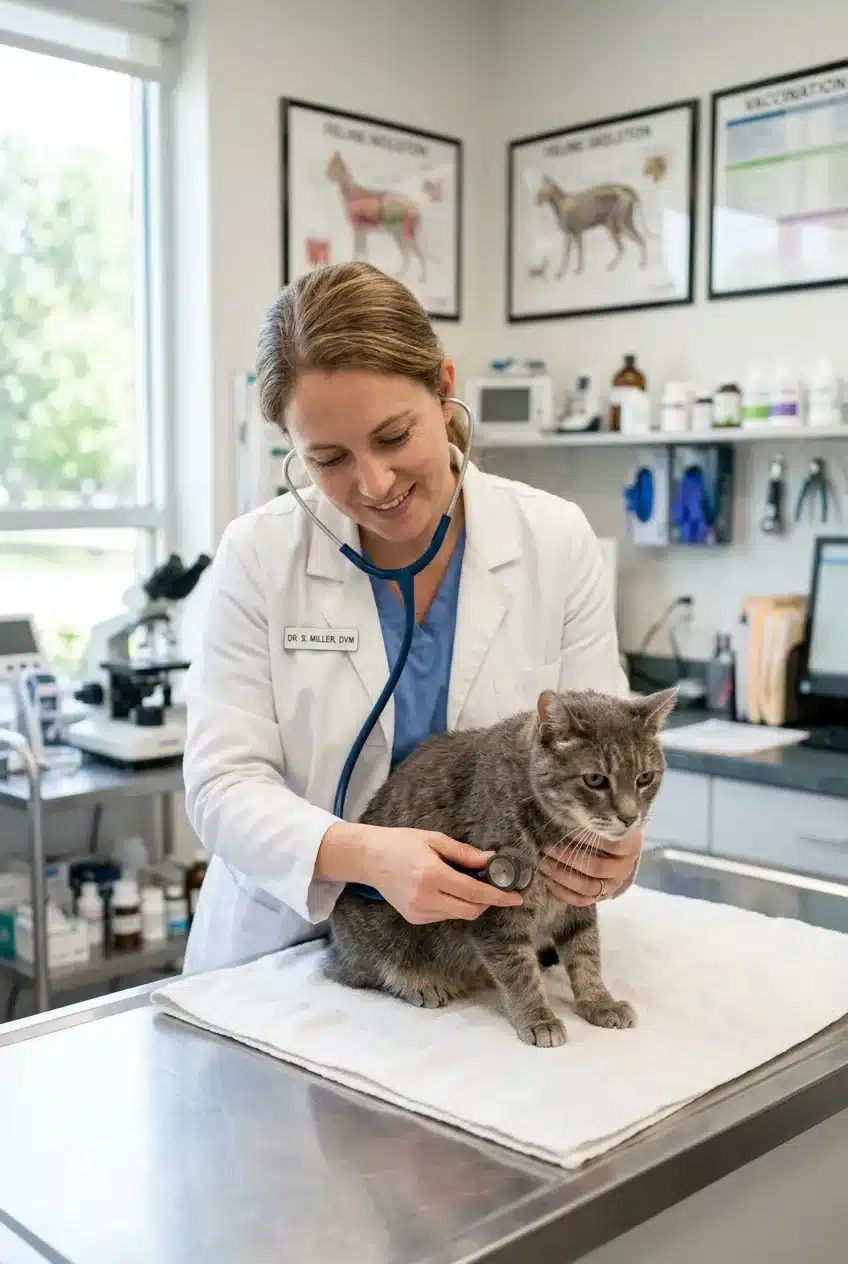
The best treatment for hyperthyroidism in cats depends on your cat’s age, kidney health, and your circumstances. The four options are daily medication, radioactive iodine therapy, surgery, and a prescription iodine-restricted diet. Radioactive iodine (I-131) is widely considered the most effective long-term cure, with success rates above 95% in a single treatment according to the American Association of Feline Practitioners (AAFP).
- Radioactive iodine (I-131) is a one-time cure with a 95%+ success rate.
- Daily medication (methimazole) controls the condition but does not cure it.
- Surgery removes the thyroid gland but carries anesthetic risks in older cats.
- A prescription iodine-restricted diet can normalize thyroid levels without drugs.
- Kidney function must be evaluated before choosing any permanent treatment.
- Most cats with hyperthyroidism are over 10 years old at diagnosis.
Understanding Why Treatment Choices Matter So Much
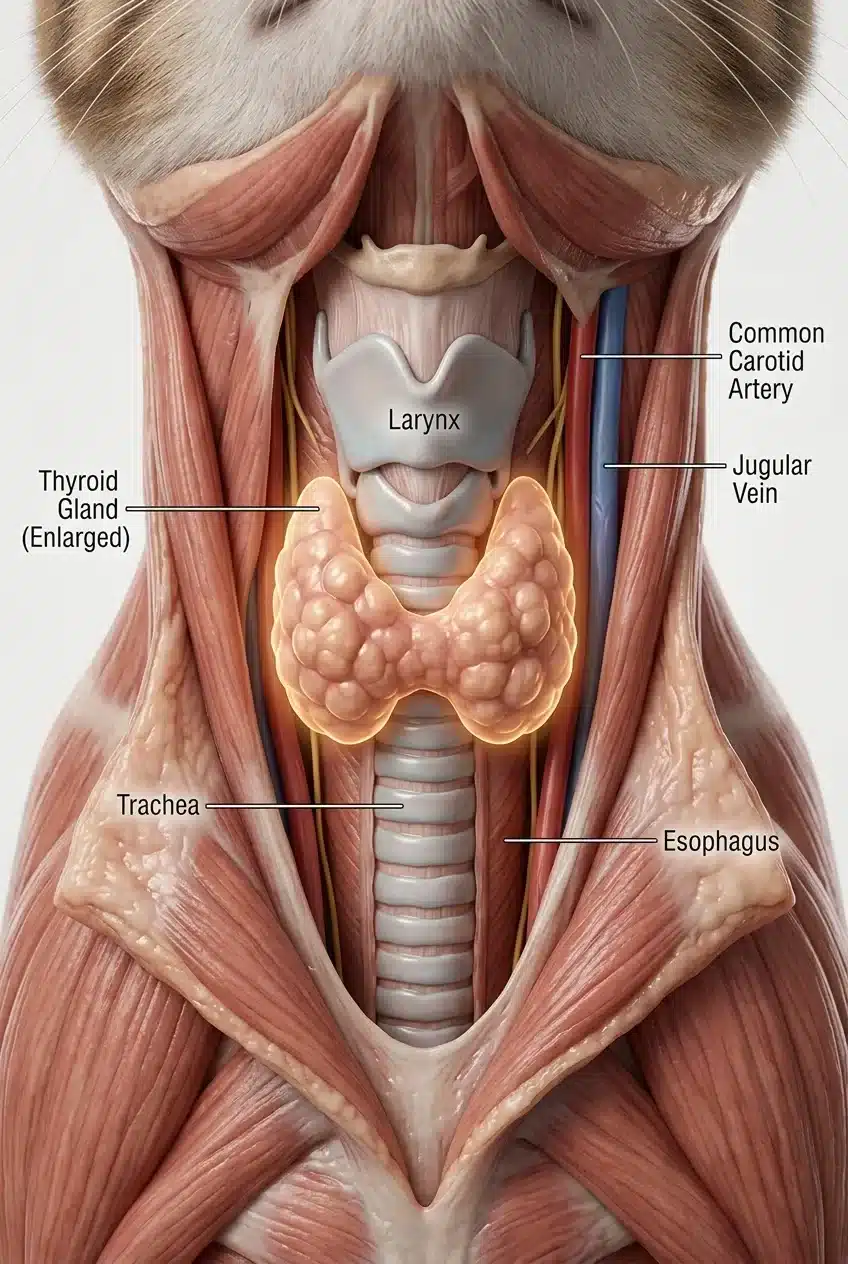
Feline hyperthyroidism is caused by a benign overgrowth of thyroid tissue that produces excess thyroid hormone. Left untreated, it leads to heart disease, high blood pressure, and kidney failure, according to the Cornell Feline Health Center.
BEFORE YOU SCROLL PAST
Cat Owners Also Read:
👉 Why Does My Cat Bite My Kittens Neck
Get FREE Guide Every Week
Join 10,000+ dog & cat owners. Vet-approved advice every week
🔒 No spam. Unsubscribe anytime.
👉 Why Does My Cat Pee On The Carpet
👉 Cute White Cats Who Hide Their Real Intentions Behind Their Beautiful Looks
The thyroid condition can actually mask underlying kidney disease — and this changes everything about your treatment plan.
When thyroid hormone levels are high, blood flow to the kidneys increases artificially. Correcting the thyroid too quickly can reveal chronic kidney disease (CKD) that was previously hidden. This is why vets often stabilize cats with medication first before committing to a permanent option.
The AAFP guidelines recommend a methimazole trial of 4–8 weeks before pursuing radioactive iodine or surgery, specifically to assess kidney function after thyroid levels normalize.
If kidney disease surfaces during the trial, your vet will weigh the risks and benefits carefully before proceeding. It’s a step worth taking, not skipping.
Daily Medication: The Most Common Starting Point
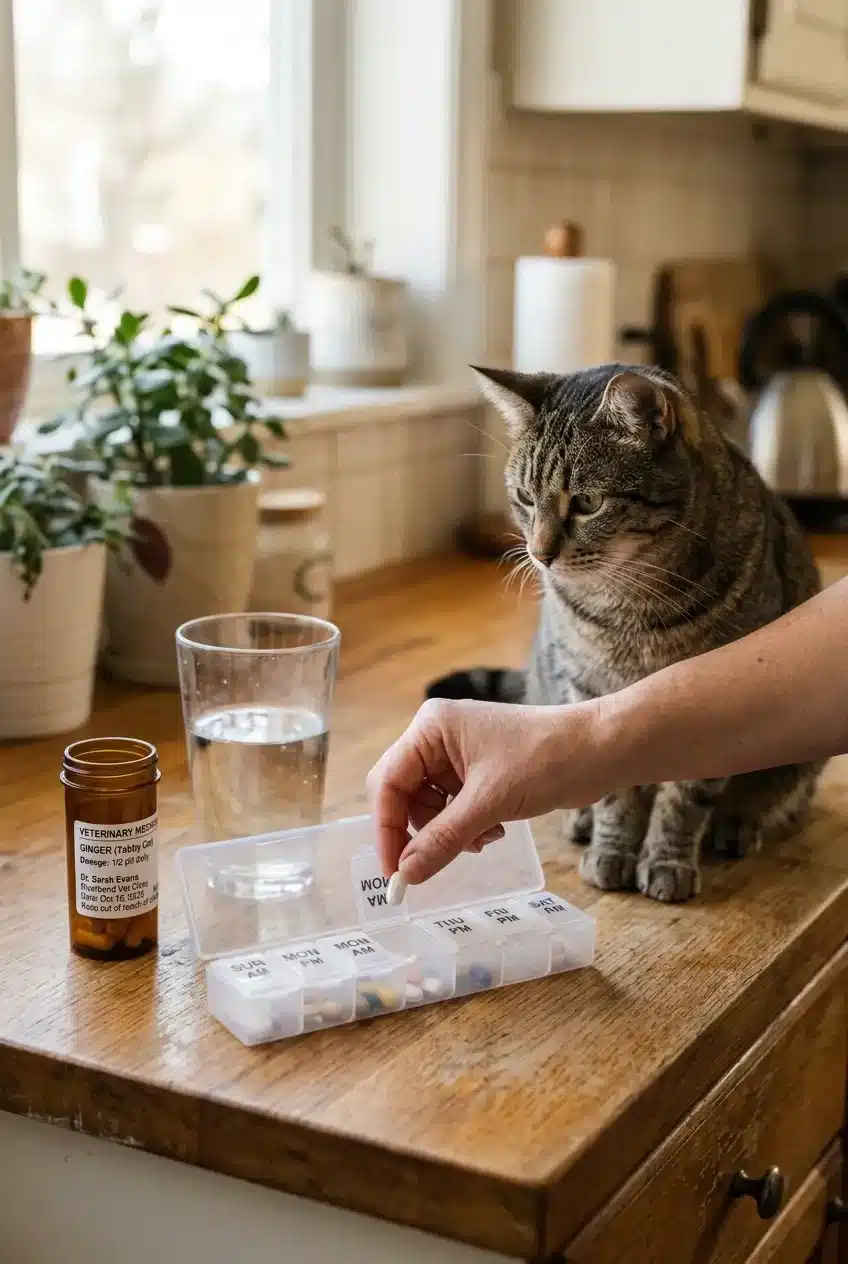
Methimazole (brand name Felimazole or Tapazole) is the most commonly prescribed medication for feline hyperthyroidism. It works by blocking the production of thyroid hormone rather than destroying the gland itself.
How Methimazole Is Given
Methimazole comes in tablet form, a liquid, or as a transdermal gel applied to the inner ear flap. The transdermal version — applied with a transdermal gel applicator — is useful for cats who resist oral dosing, though it absorbs slightly less reliably than tablets.
Dosing is typically twice daily, and regular blood tests every 3–6 months are needed to monitor thyroid levels and kidney function. This is a lifelong commitment.
Side Effects to Watch For
- Facial itching or skin irritation (most common, usually in the first three months)
- Vomiting or reduced appetite
- Rarely, serious blood disorders — routine monitoring catches these early
- Liver enzyme elevation in some cats
According to a study published in the Journal of Veterinary Internal Medicine, roughly 15–20% of cats experience some side effect, but most are mild and manageable with dose adjustment.
Radioactive Iodine Therapy: The Gold Standard Cure
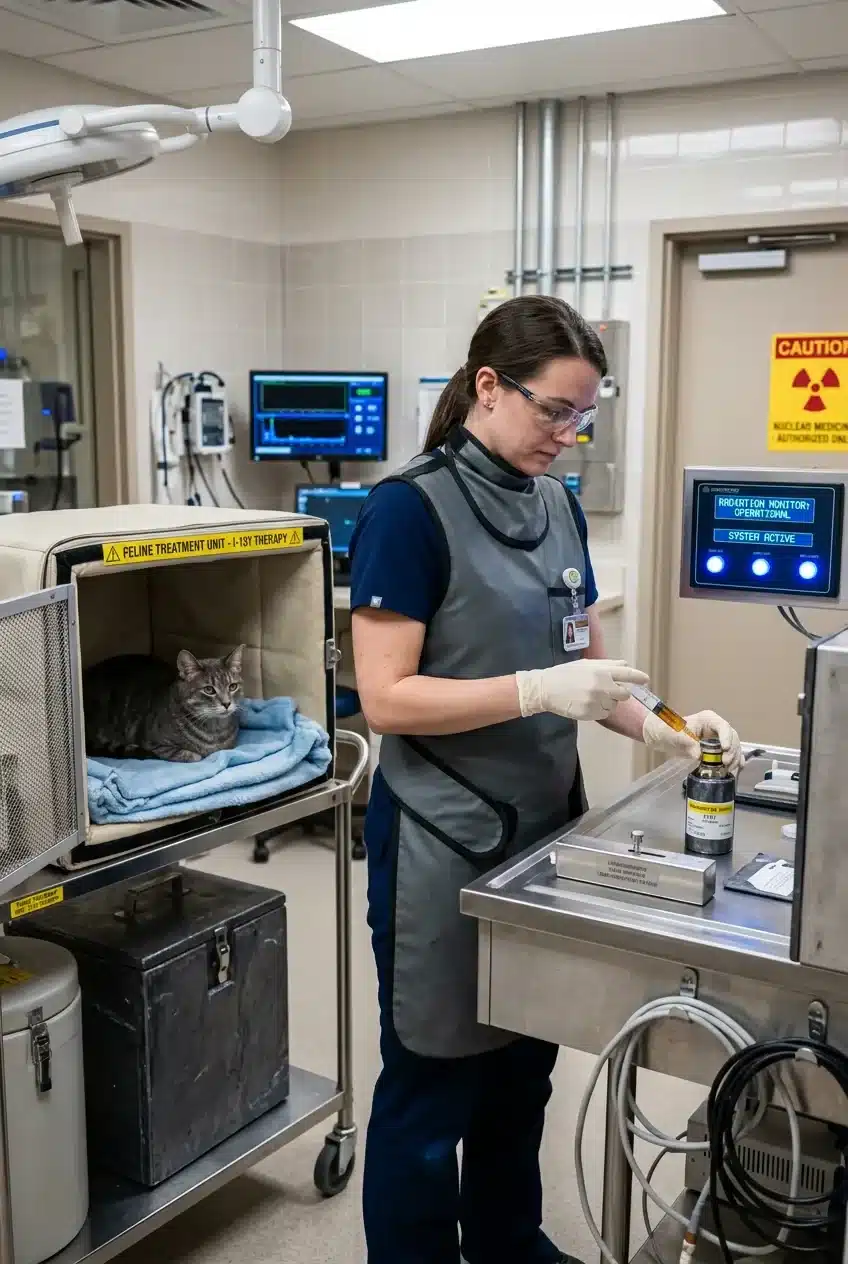
Radioactive iodine therapy (I-131) is the most effective single treatment for feline hyperthyroidism and requires no surgery or lifetime medication. A single injection of radioactive iodine concentrates in the overactive thyroid tissue and destroys it while leaving healthy tissue largely unaffected.
Over 95% of cats are cured with one treatment, and complications are rare.
The main drawback is logistics. Your cat must stay at a licensed veterinary facility for several days — typically 3–7 days depending on local radiation safety regulations — until radiation levels drop to safe limits. During this time, you cannot visit.
Cost and Availability
I-131 therapy typically costs between $1,000 and $2,000 in the US, depending on your region and facility. That may sound steep compared to monthly medication, but over a cat’s remaining lifespan, medication and monitoring costs often exceed this amount.
Not every vet clinic offers I-131 — you’ll likely need a referral to a veterinary internal medicine specialist or a dedicated feline treatment center. If you have a breed like a Bengal who tends toward higher-energy health management needs (you can learn more about why Bengal cats come with higher ownership costs), factoring specialist care into your budget matters.
Surgical Thyroidectomy: Effective but Less Common Today
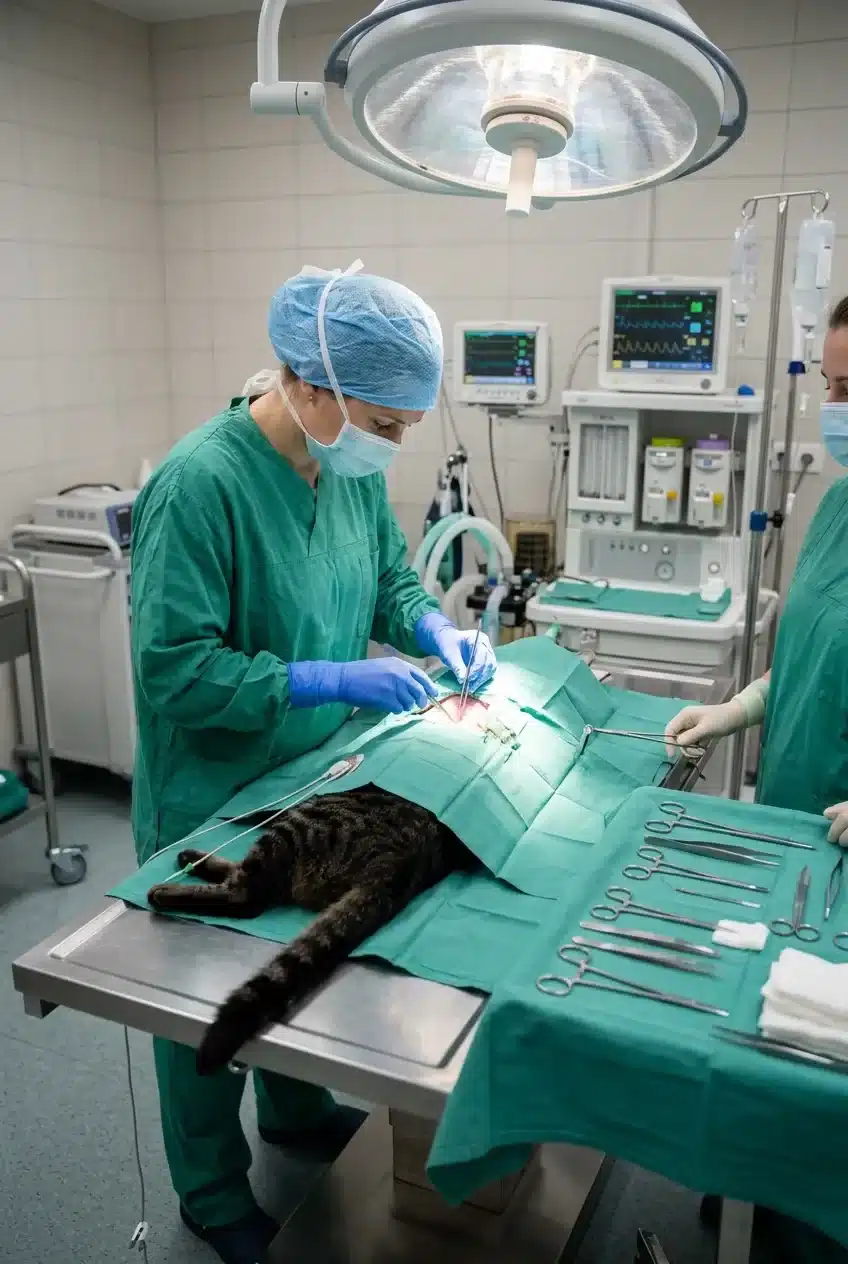
Surgical removal of the thyroid gland (thyroidectomy) can cure hyperthyroidism permanently, similar to radioactive iodine. However, it carries anesthetic risks that are significant in older or medically compromised cats.
- Requires general anesthesia in a cat that is often over 12 years old
- Risk of damaging the parathyroid glands, which regulate calcium — can cause a life-threatening drop in calcium levels
- Recovery time and post-operative monitoring add to cost and stress
- Success rates are high when performed by an experienced surgeon
Surgery is most appropriate when I-131 is unavailable or unaffordable and the cat is otherwise healthy enough to tolerate anesthesia. Your vet will run full bloodwork, a cardiac evaluation, and blood pressure readings before recommending this route.
A veterinary blood pressure cuff is standard pre-surgical equipment your vet will use — but knowing it’s part of the workup helps you understand the prep involved.
Prescription Iodine-Restricted Diet: A Drug-Free Option
Hill’s Prescription Diet y/d is the only commercially available diet formulated to manage feline hyperthyroidism through iodine restriction. By severely limiting iodine intake, the diet reduces the thyroid gland’s ability to produce excess hormone.
This option only works if your cat eats absolutely nothing else — no treats, no other food, no hunting outdoors.
For strictly indoor cats who accept the food, it can normalize thyroid levels within 8 weeks, according to Hill’s Pet Nutrition clinical data. It’s a genuinely useful option for cats who cannot tolerate medication or anesthesia.
The challenge is compliance. Even one piece of regular cat food can disrupt the iodine restriction. If you have multiple cats, keeping them on separate diets adds complexity. Keeping your cat mentally stimulated indoors — check out the best toys for indoor cats — can help manage the frustration of dietary restrictions.
Comparing the Four Treatment Options
| Treatment | Curative? | Ongoing Cost | Key Risk |
|---|---|---|---|
| Methimazole (medication) | No | High (lifelong) | Side effects, missed doses |
| Radioactive iodine (I-131) | Yes | Low after treatment | Separation stress, specialist needed |
| Surgery (thyroidectomy) | Yes | Low after recovery | Anesthetic risk, calcium drop |
| Prescription diet (y/d) | Conditional | Moderate (ongoing food cost) | Strict compliance required |
How to Work Through the Treatment Decision Step by Step
- Confirm the diagnosis — Your vet measures total T4 (thyroxine) levels. A result above 4.0 µg/dL typically confirms hyperthyroidism, per the AAFP diagnostic guidelines.
- Run a full health panel — Bloodwork, urinalysis, blood pressure, and a cardiac exam identify hidden kidney disease or heart complications before treatment begins.
- Start a methimazole trial — Give medication for 4–8 weeks to normalize thyroid levels and reveal how kidneys function without the hormone boost.
- Reassess kidney function — If kidney values worsen significantly during the trial, your vet will recalibrate. If kidneys hold steady, permanent treatment is safe to pursue.
- Choose your long-term plan — Based on your cat’s health, your schedule, and your budget, select medication continuation, I-131, surgery, or the prescription diet.
- Schedule follow-up monitoring — Whichever route you choose, recheck thyroid and kidney values at 3 months post-treatment, then every 6 months ongoing.
Common Mistakes Cat Owners Make With Hyperthyroidism Treatment
- Skipping the methimazole trial before I-131: Rushing to a permanent cure without checking kidney response can lead to irreversible kidney failure. Always do the trial first.
- Stopping medication when the cat seems better: Methimazole controls but does not cure. Stopping it restarts hormone overproduction within days. Work with your vet on any changes.
- Feeding extra treats on the prescription diet: Even small amounts of regular food break the iodine restriction entirely. If full compliance isn’t realistic, switch to another option.
- Delaying treatment to “wait and see”: Prolonged untreated hyperthyroidism damages the heart and raises blood pressure. Early treatment preserves organ function.
- Not monitoring kidney values post-treatment: The kidney-thyroid relationship continues after treatment. Regular rechecks catch emerging CKD early when it’s most manageable.
Just as many pet diseases benefit from early, consistent treatment, feline hyperthyroidism is far easier to manage when caught early and monitored carefully.
Frequently Asked Questions About Treatment for Hyperthyroidism in Cats
How long does it take for methimazole to work in cats?
Methimazole typically lowers thyroid hormone levels within 2–3 weeks of starting treatment. Most cats show noticeable improvement in weight, appetite, and energy levels within 4–6 weeks of beginning the medication.
Can hyperthyroidism in cats be cured naturally?
Hyperthyroidism in cats cannot be cured through natural remedies. The only non-drug option with clinical evidence is Hill’s Prescription Diet y/d, which requires strict iodine restriction and counts as a medical dietary intervention, not a natural cure.
What happens if feline hyperthyroidism is left untreated?
Untreated hyperthyroidism in cats leads to progressive heart disease, dangerous high blood pressure, weight loss, and eventual organ failure. The Cornell Feline Health Center notes that heart muscle thickening from chronic hyperthyroidism can become irreversible without prompt treatment.
Is radioactive iodine treatment painful for cats?
Radioactive iodine treatment is not painful for cats — it is given as a single subcutaneous injection. The main stress is the mandatory isolation period of several days at the treatment facility away from their owner.
How much does it cost to treat hyperthyroidism in cats?
Treatment costs vary widely: methimazole medication runs roughly $30–$60 per month plus monitoring visits; radioactive iodine costs $1,000–$2,000 as a one-time fee; surgery typically falls between $1,500–$3,000 depending on location and complexity.
Can a cat with hyperthyroidism also have kidney disease?
Yes, and this combination is common in older cats. Hyperthyroidism can mask kidney disease by artificially boosting blood flow to the kidneys, which is why a supervised methimazole trial before permanent treatment is the standard recommended approach.
Making the Right Call for Your Cat
The single most important takeaway is this: get the methimazole trial done before committing to any permanent option. It protects your cat’s kidneys and gives you real information to base the bigger decision on.
Today’s action: call your vet and ask specifically about running a baseline kidney panel alongside the thyroid test — or if your cat is already on medication, ask whether a 4-week kidney recheck has been scheduled. That one conversation can shape the entire treatment path.
Cats diagnosed early and managed consistently do well for years. With the right approach, hyperthyroidism is one of the most treatable chronic conditions in older cats — and your cat’s quality of life can stay genuinely good. If you share your home with other pets, keeping each one’s health monitored matters just as much; even cross-species health risks between cats and small animals are worth knowing about as a multi-pet household.
For further reading, the Cornell Feline Health Center and the American Association of Feline Practitioners (AAFP) both publish regularly updated, vet-reviewed guidance on feline hyperthyroidism management.