Your male cat was just diagnosed with urinary crystals, and now he is not peeing at all. That combination is a veterinary emergency — not a wait-and-see situation.
A male cat not peeing after urinary crystal diagnosis can develop a complete urethral blockage within hours. Male cats have a much narrower urethra than females, which makes them far more vulnerable to dangerous obstructions. If you are also noticing unusual litter box behavior, understanding why your cat is peeing in the house or avoiding the box entirely can help you describe the situation clearly to your vet.
What Does It Mean When a Male Cat Cannot Pee After a Crystal Diagnosis?
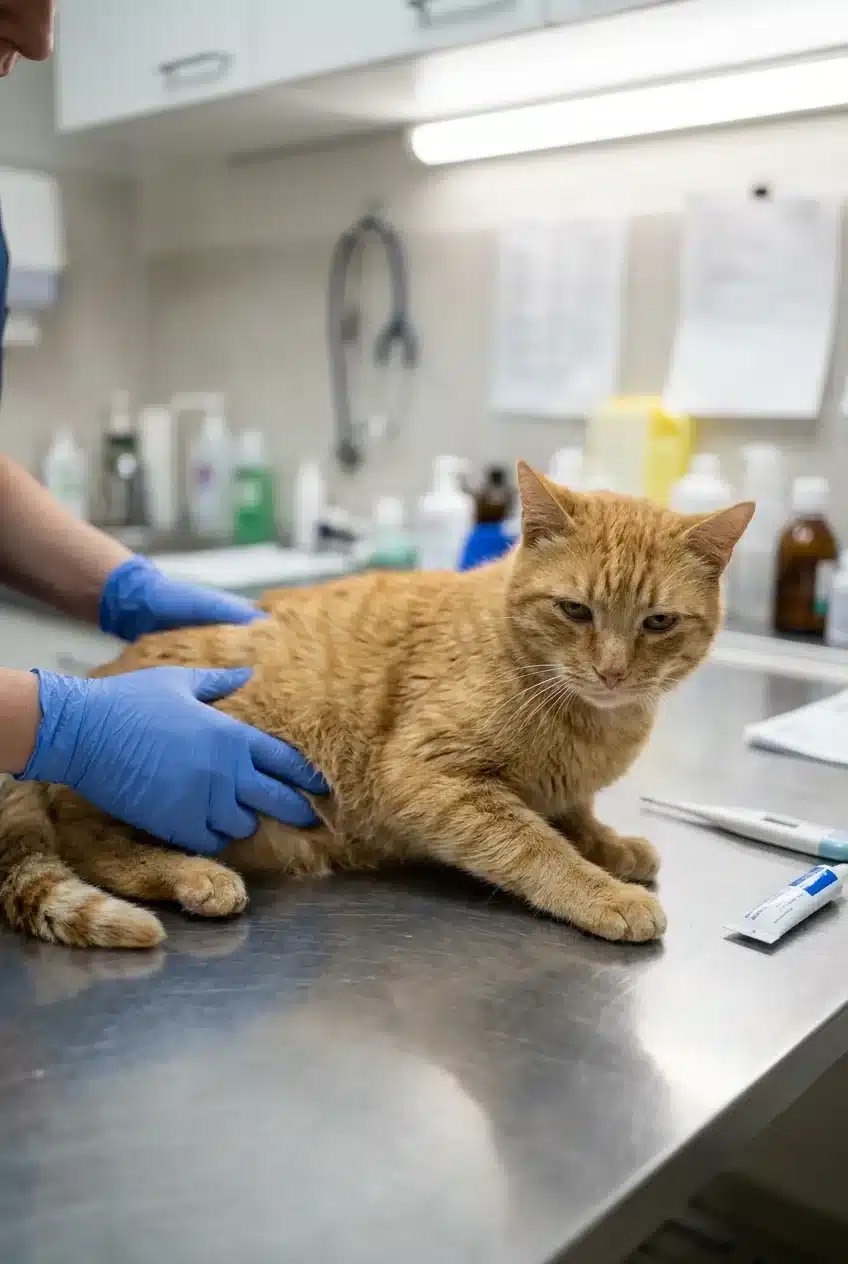
A male cat not peeing after a urinary crystal diagnosis likely has a urethral obstruction — a blockage caused by crystals, mucus, or both compacting in the narrow urethra. This is a life-threatening emergency requiring immediate veterinary care, typically within 24–48 hours before kidney failure begins.
- Straining in the litter box with little or no urine output is the primary warning sign.
- Crying, vocalizing, or restlessness often accompanies a full blockage.
- Vomiting and lethargy appear as toxins build up in the bloodstream.
- A distended, firm abdomen indicates a severely full bladder.
- Loss of appetite frequently accompanies a blockage within 12–24 hours.
- Some cats lick their genitals repeatedly in response to urethral pain.
Why Are Male Cats So Vulnerable to Urinary Blockages?
Male cats are at significantly higher risk of urethral obstruction than female cats because of anatomy. The male urethra is long, narrow, and contains a penile section only about 1–2 mm in diameter — small enough for a single crystal cluster to cause a complete block.
According to the Cornell Feline Health Center, urethral obstruction is one of the most common emergencies in male cats, with struvite and calcium oxalate crystals being the leading culprits.
Urethral obstruction in male cats can become fatal within 24 to 48 hours if the bladder is not relieved. — Cornell Feline Health Center
Neutered males are particularly at risk because neutering can cause a slightly narrower urethra. Indoor cats on dry-food-only diets also show higher rates of crystal formation, partly due to lower water intake.
BEFORE YOU SCROLL PAST
Cat Owners Also Read:
Get FREE Guide Every Week
Join 10,000+ dog & cat owners. Vet-approved advice every week
🔒 No spam. Unsubscribe anytime.
👉 Why Does My Cat Bite My Kittens Neck
👉 Why Does My Cat Pee On The Carpet
👉 Cute White Cats Who Hide Their Real Intentions Behind Their Beautiful Looks
Struvite vs. Calcium Oxalate Crystals
The type of crystal your cat has changes the treatment plan significantly. Both types can cause blockages, but they respond to different dietary and medical approaches.
| Crystal Type | pH Environment | Common Trigger | Dietary Fix |
|---|---|---|---|
| Struvite | Alkaline urine | Infection, high magnesium diet | Prescription dissolution diet |
| Calcium Oxalate | Acidic urine | Low water intake, genetics | Increased hydration, diet change |
Struvite crystals can often be dissolved with a prescription diet over weeks. Calcium oxalate crystals cannot be dissolved and must be managed through prevention and, in blockage cases, physical removal.
What Happens at the Vet When a Male Cat Cannot Urinate?
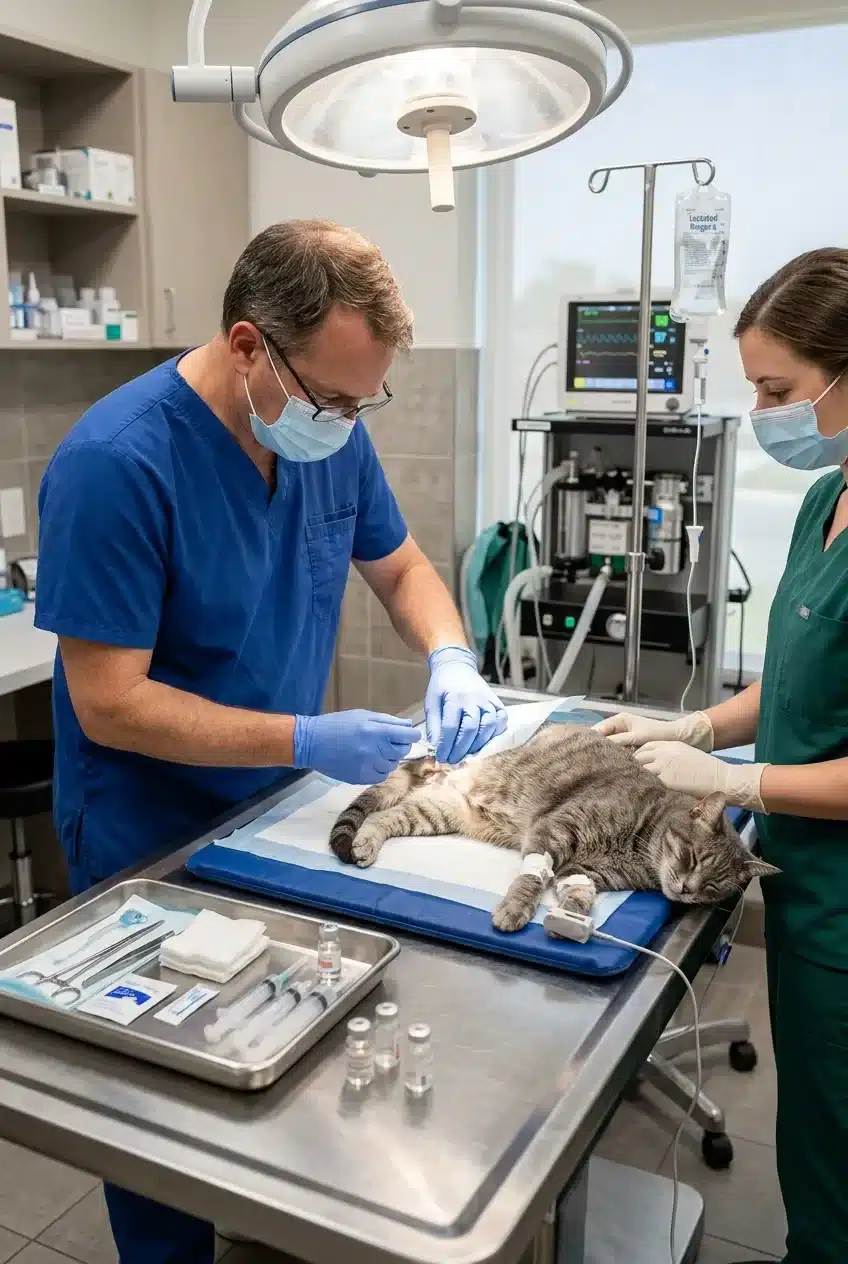
When a male cat cannot urinate due to crystals, the vet’s first priority is relieving the blockage and stabilizing the cat before any long-term treatment begins. The process typically follows a specific clinical sequence.
- Assess stability: Blood work checks kidney values (BUN, creatinine) and electrolytes. Elevated potassium from a blockage can cause fatal heart arrhythmias.
- Sedate the cat: A urinary catheter cannot be safely placed in a conscious, painful cat.
- Place a urethral catheter: The vet flushes the urethra with sterile saline to dislodge the crystal plug and restore urine flow.
- Secure an indwelling catheter: A catheter is often left in place for 24–72 hours to allow the urethra to heal and urine to drain freely.
- Provide IV fluids: Fluids flush toxins from the kidneys and correct electrolyte imbalances.
- Monitor urine output: Hospital staff track whether the cat urinates normally once the catheter is removed before discharge.
The average hospitalization for a urethral blockage runs 2–4 days, depending on how long the cat was blocked before treatment.
A American Veterinary Medical Association-recognized procedure called a perineal urethrostomy (PU surgery) may be recommended for cats with recurrent blockages. This surgery widens the urethral opening permanently to reduce future risk.
How to Support Your Cat’s Recovery at Home

After your cat is discharged, home care directly affects whether the blockage returns. Recurrence rates are high — some studies estimate that up to 25% of male cats experience a second blockage within a year without significant lifestyle changes.
Hydration Is the Most Effective Prevention Tool
Increasing water intake dilutes urine and reduces crystal concentration. A stainless steel cat water fountain encourages cats to drink more by providing constantly moving, fresh water.
Wet food is also highly effective. Canned cat food contains roughly 70–80% moisture versus 10% in dry kibble, making it one of the single best dietary changes for urinary health.
Prescription Urinary Diets
Your vet will likely recommend a urinary health diet tailored to the type of crystal your cat forms. Do not switch to an over-the-counter food without veterinary guidance — the wrong pH can worsen the underlying problem.
- Urinary SO and Urinary ST/OX diets (Royal Canin, Hill’s c/d) are the most commonly prescribed options.
- These diets adjust urine pH and reduce mineral concentrations that feed crystal growth.
- Feeding schedule and portion control also matter — obesity increases urinary disease risk in cats.
Stress reduction plays a role too. Feline idiopathic cystitis, which can mimic or accompany crystal disease, is strongly linked to environmental stress. You can read more about this in our guide to male cat interstitial cystitis, signs, care, and relief.
Monitoring Litter Box Habits
Watch your cat’s litter box output closely after he comes home. Keep a clean, low-sided open cat litter box so you can easily see urine clumps and check their size daily.
If your cat is producing small, frequent clumps or seems to be straining again, contact your vet the same day. Early intervention can prevent a full re-blockage.
Common Mistakes That Can Make Things Worse
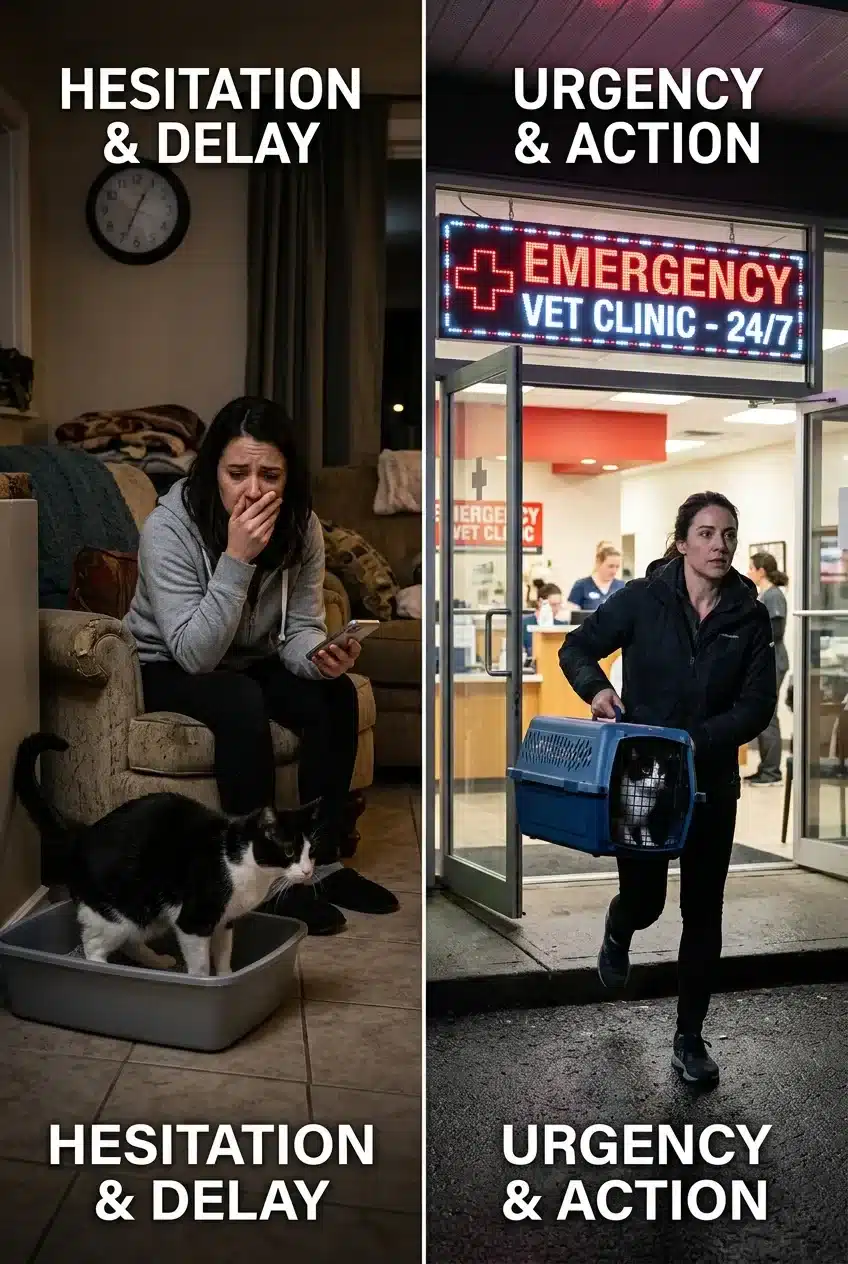
Many well-meaning owners make choices that increase the risk of recurrence or delay treatment. Knowing these pitfalls can protect your cat.
- Waiting to see if the cat urinates on his own: A fully blocked male cat will not clear the obstruction without veterinary intervention. Every hour of delay causes more kidney damage.
- Switching back to dry food after recovery: Dry food significantly raises urinary crystal risk. Sticking with wet food or a prescription diet is a long-term commitment, not a short-term fix.
- Stopping medication early: Muscle relaxants and anti-inflammatories prescribed post-blockage must be finished. Stopping early increases urethral spasm and re-blockage risk.
- Ignoring behavior changes: Hiding, reduced appetite, or avoiding the litter box after a blockage can signal a secondary infection or early re-blockage — not just stress. If you notice your cat avoiding the litter box, reviewing ways to stop inappropriate elimination may help you rule out behavioral versus medical causes.
- Skipping follow-up urinalysis: A urine recheck at 2–4 weeks confirms crystals are clearing and urine pH is in a healthy range. Missing this check removes your early warning system.
Frequently Asked Questions About Male Cat Not Peeing After Urinary Crystal Diagnosis
How long can a male cat go without peeing before it becomes dangerous?
A male cat not peeing for more than 24 hours is in serious danger. Complete urethral obstruction can cause irreversible kidney damage or death within 24 to 48 hours without treatment.
Can urinary crystals in male cats dissolve on their own?
Struvite crystals in male cats can dissolve with a prescription diet over several weeks, but only if the urethra is not already blocked. Calcium oxalate crystals cannot dissolve and require dietary prevention instead.
Will my male cat always be at risk of another blockage after one episode?
Yes, a male cat who has had one urethral blockage has a significantly elevated risk of recurrence. Dietary changes, increased hydration, and regular vet monitoring are the most effective tools for reducing that risk.
Is a prescription urinary diet necessary after a crystal diagnosis?
A prescription urinary diet is strongly recommended after a urinary crystal diagnosis in a male cat. Over-the-counter foods do not reliably control urine pH or mineral levels the way therapeutic diets do.
What does normal litter box behavior look like after a blockage is treated?
After treatment, a male cat should produce normal-sized urine clumps without straining within 24–48 hours of going home. Small, frequent clumps or visible straining signal a possible re-blockage and require same-day veterinary attention.
Can stress cause a male cat’s urinary crystals to get worse?
Stress does not directly cause crystals but can trigger feline idiopathic cystitis, which produces similar symptoms and can worsen urinary inflammation alongside crystals. Managing your cat’s environment is a genuine part of long-term urinary care.
Final Takeaway
A male cat not peeing after a urinary crystal diagnosis needs emergency veterinary care — this is the one fact that matters above everything else in this article.
If your cat has already been treated and is home recovering, the most important action you can take today is switching to a high-moisture diet and scheduling a follow-up urinalysis within four weeks. Adding a urinary health wet food approved by your vet is a simple, immediate step that lowers re-blockage risk from day one.
Your cat came through a serious event. With the right home care and consistent monitoring, many male cats go on to live long, comfortable lives after a urinary crystal diagnosis.