How long can a puppy hold their bladder in a crate? That question hits fast when you are juggling sleep, work, and a puppy who seems to need a potty break every hour.
This topic matters because holding it too long can lead to accidents, stress, and slow house training. A good crate plan helps your puppy stay comfortable and helps you build better habits from day one.
This guide gives you age-based timelines, crate training tips, warning signs, and a realistic schedule. We will also cover when to call your vet and how to avoid common mistakes.
How Long Can A Puppy Hold Their Bladder In A Crate?
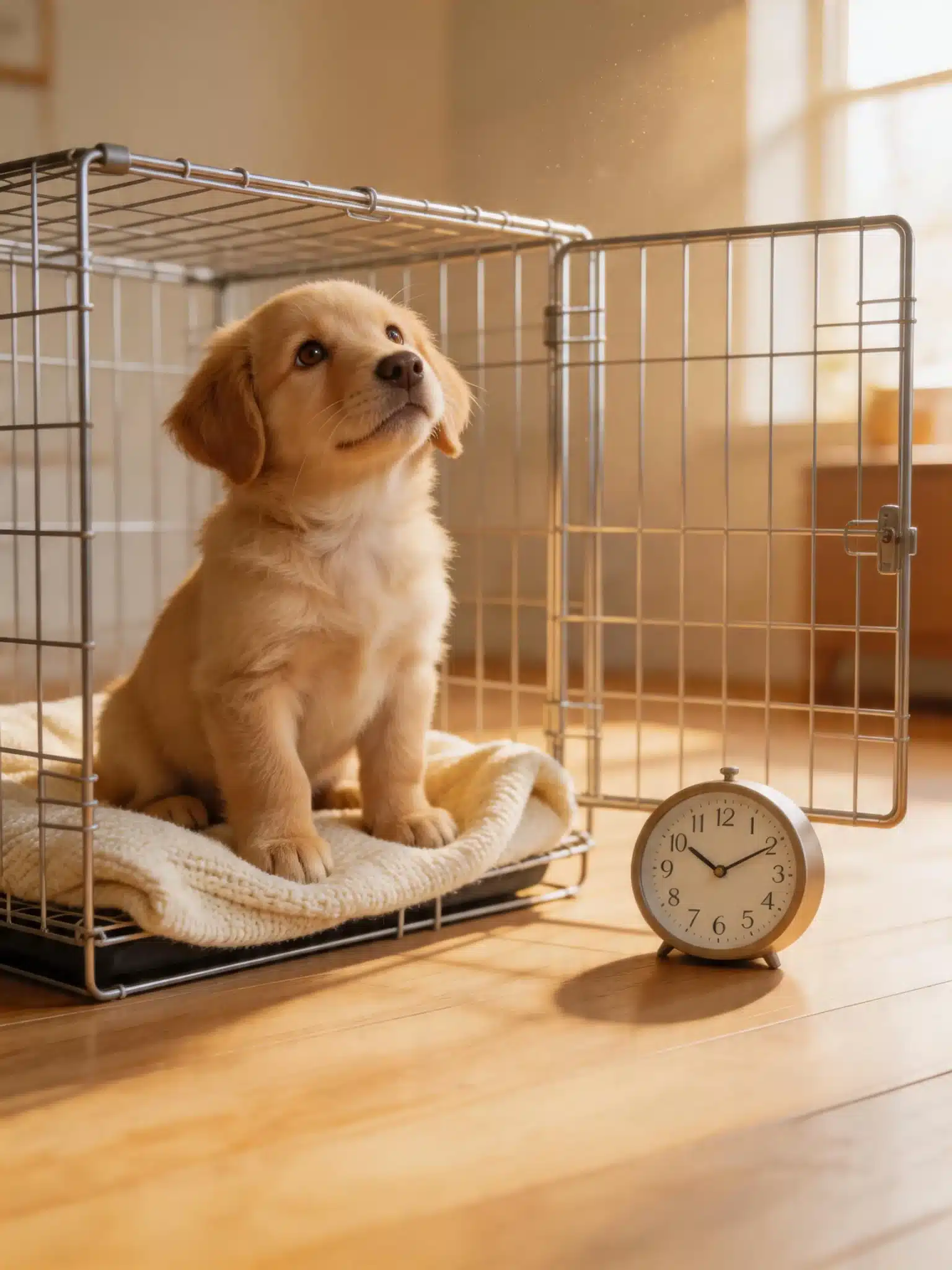
Most puppies can hold their bladder for about one hour per month of age during the day, with a small limit. A 2-month-old puppy usually manages about 2 hours, while a 4-month-old puppy often reaches 4 hours.
- 8 weeks old: about 2 hours maximum
- 12 weeks old: about 3 hours maximum
- 16 weeks old: about 4 hours maximum
- Most young puppies need overnight potty breaks
- Small breeds often need more frequent breaks
- After play, food, or naps, go out sooner
- Do not force a puppy to wait too long
What Changes How Long A Puppy Can Hold It?

Age gives you a useful starting point, but it never tells the whole story. Breed size, health, water intake, stress, and crate setup can all change how long your puppy stays dry.
In our experience, small puppies need breaks more often than large puppies of the same age. A 10-week-old Chihuahua usually cannot wait as long as a 10-week-old Labrador.
Size And Breed Matter
Small breeds have smaller bladders and faster metabolisms, so they often need more bathroom trips. Toy breeds also lose body heat faster, which can make outdoor potty trips feel urgent and frequent.
For example, Mia brought home an 11-week-old Yorkie named Benny who needed a potty break every 90 minutes. Her friend had a 12-week-old Golden Retriever named Scout who often lasted closer to 2.5 hours.
Get Free Dog Health Tips!
Weekly guides on keeping your dog healthy & happy
🔒 No spam. Unsubscribe anytime.
Daily Routine Matters Too
Puppies usually need to pee right after waking, eating, drinking, playing, and training. If your puppy just chased a ball for 15 minutes, the crate clock resets.
Building on what we covered about size and breed, routine can shorten crate time even more. What we have found works best is taking puppies out within 5 to 15 minutes after meals.
DON’T MISS THESE
You’ll Want to Read These Too: 👇
👇 What Makes A Dog Hypoallergenic
👇 Best Low Carb Dog Foods Reviews
Health And Stress Can Shorten Crate Time
Urinary tract infections, diarrhea, parasites, and anxiety can all cause more frequent accidents. If your puppy suddenly loses bladder control, talk with your veterinarian instead of assuming training failed.
Dr. Jerry Klein, Chief Veterinary Officer for the American Kennel Club, often reminds owners that accidents can signal a health issue. We have seen this consistently when a previously dry puppy starts having several crate accidents in one week.
Age-By-Age Puppy Crate Bladder Guide
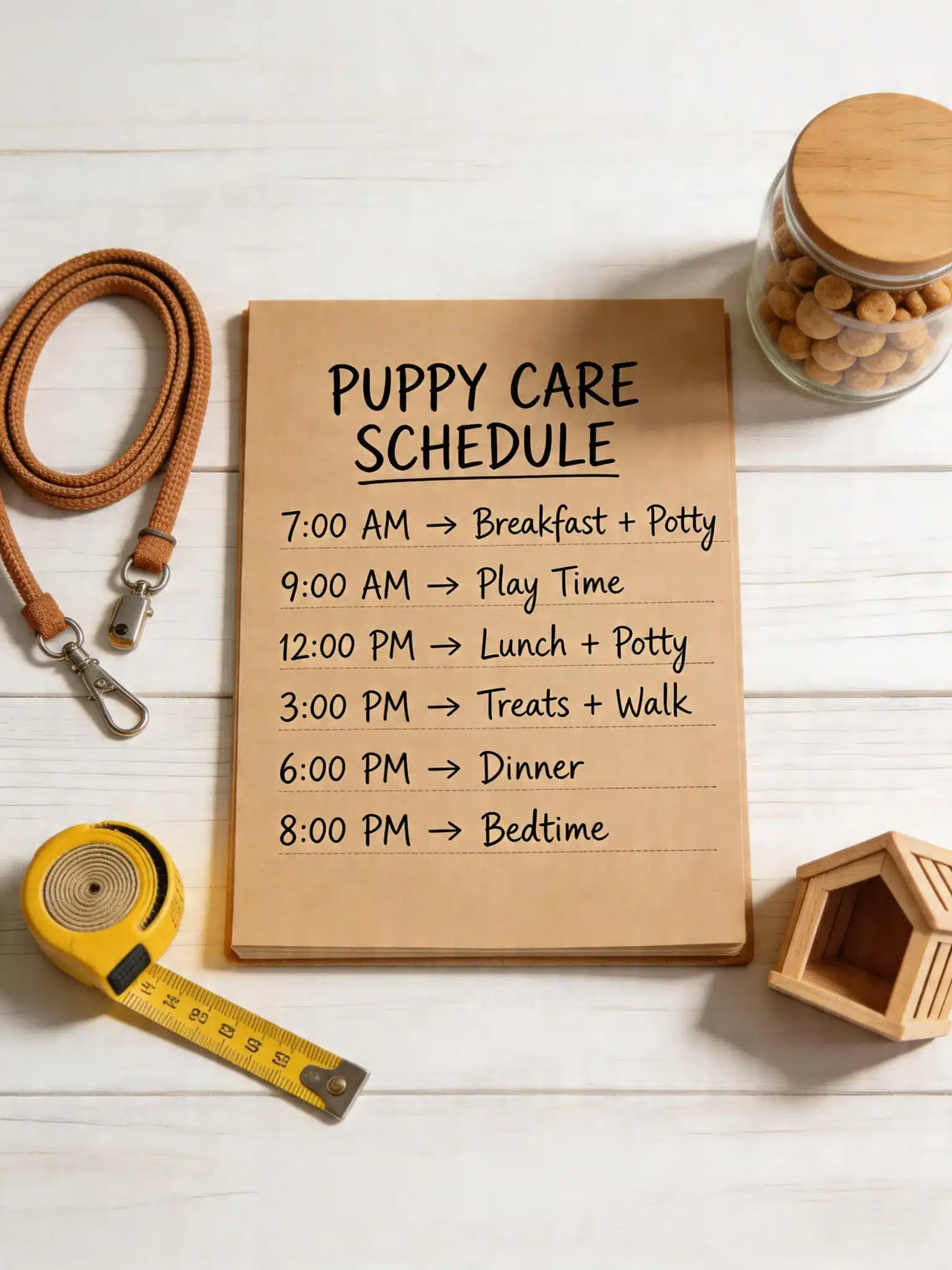
The common rule says one hour per month of age, but treat that as a ceiling, not a goal. Your puppy may need shorter crate periods, especially during the first month at home.
Many of our readers tell us they feel better once they stop chasing perfect numbers. Instead, they watch patterns for three days and adjust the schedule around the puppy in front of them.
8 To 10 Weeks Old
At this age, many puppies can handle about 1 to 2 hours during the day. Most still need one or two overnight potty trips, and some need more.
Jake tracked his 8-week-old Beagle, Daisy, for four days and found she stayed dry for 75 minutes on average. Once he switched to 60-minute potty breaks, her crate accidents stopped.
11 To 14 Weeks Old
Many puppies in this stage can manage 2 to 3 hours during the day if they are calm and healthy. After hard play or a big drink, they still need to go much sooner.
If your puppy settles well, a Puppy Crate Divider can help you size the crate correctly. Too much extra space often encourages one corner for sleeping and another for peeing.
15 To 20 Weeks Old
Many puppies can hold it for 3 to 4 hours during the day by this age. Some larger breeds may stretch a bit longer, but you should stay cautious.
As the Age-By-Age Puppy Crate Bladder Guide section showed, overnight control often improves before daytime control looks perfect. That does not mean your puppy can stay crated all morning without a break.
6 Months And Older
Many healthy puppies around 6 months can hold it for about 5 to 6 hours in some cases. Even then, long crate stretches should stay the exception, not the daily plan.
If your family is preparing for a future litter, our guides on how long a poodle is pregnant and how many puppies a poodle can have can help you plan ahead. Early planning makes puppy care less chaotic later.
How To Tell If Your Puppy Needs More Potty Breaks
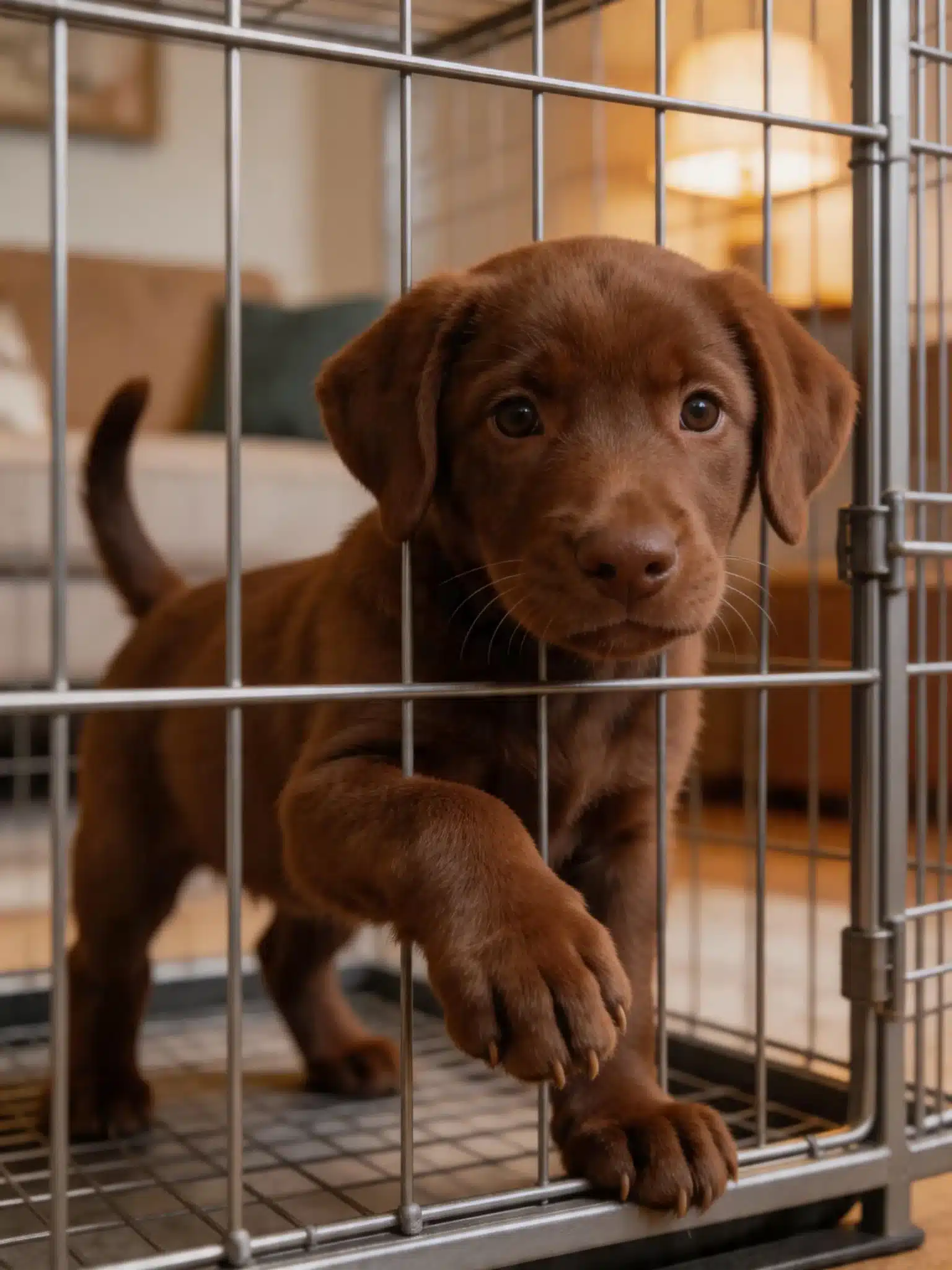
Your puppy will often show clear signals before accidents become a pattern. The key is spotting the change early and adjusting the schedule that same day.
Repeated crate accidents are information, not defiance. Your puppy is either too young, waiting too long, stressed, or dealing with a health problem.
Watch For These Signs
- Whining starts suddenly after settling
- Restless circling in the crate
- Sniffing bedding or the crate corners
- Accidents happen at the same time daily
- Dry overnight, but wet during daytime crating
- Frequent peeing outside too
One client, Erica, noticed her 13-week-old Cavapoo cried at the 2-hour mark every afternoon. She moved lunch, added a 1:45 potty break, and the barking and accidents ended within three days.
When Accidents Mean Something More
If your puppy pees tiny amounts often, strains, or has cloudy urine, call your vet. Those signs can point to a urinary problem rather than a training issue.
Building on what we covered about changing schedules, look for sudden shifts. A puppy who stayed dry for two weeks and then starts peeing every hour may need medical care.
How To Set Up A Crate Routine That Works
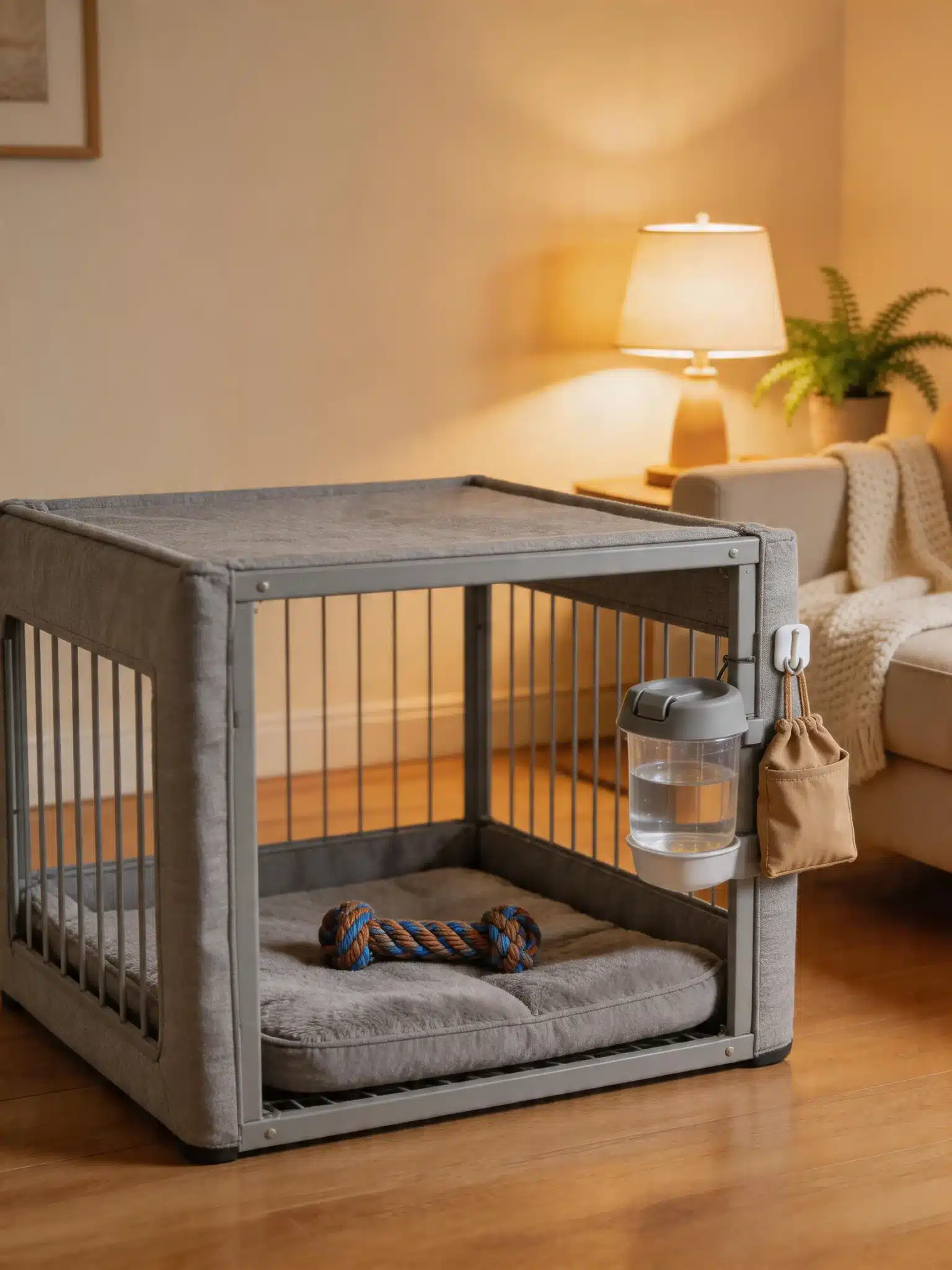
A strong routine protects your puppy from waiting too long and helps house training move faster. The best plan uses predictable potty trips, a properly sized crate, and calm crate time.
What we have found works best is giving the crate one job: safe rest between bathroom trips. We avoid using the crate to test limits or “teach” a puppy to hold it longer.
Use These Crate Basics
- Choose a crate your puppy can stand and turn around in
- Use a divider for growing puppies
- Take your puppy out before crating
- Keep a simple log for three to five days
- Feed meals on a regular schedule
- Use calm praise after outdoor potty success
A washable Washable Puppy Crate Pad can make cleanup easier, but avoid thick bedding if your puppy keeps peeing on it. Some puppies stay drier on a flat towel or bare crate tray during training.
Sample Daytime Potty Rhythm
- Take your puppy out right after waking.
- Take them out 5 to 15 minutes after meals.
- Go out after active play or training.
- Crate only after they have just peed.
- Set the next potty break before their usual limit.
- Track dry times and adjust every few days.
For example, Marcus used a simple phone note for his 10-week-old Boxer, Luna. After logging six accidents, he found most happened 20 minutes after play, not after naps.
Common Crate Training Mistakes That Cause Accidents
Crate accidents often come from normal human mistakes, not stubborn puppies. Once you fix the setup and timing, many puppies improve within a week.
We have seen this consistently with first-time puppy owners who trust the age rule too much. That rule helps, but your actual puppy always wins the argument.
Mistake 1: Crating Too Long
If you wait until the estimated maximum, you are already close to an accident. Aim for a shorter interval until your puppy has at least one dry week.
Sara thought her 12-week-old Pomeranian, Tilly, should manage 3 hours every afternoon. Tilly kept having accidents at 2 hours and 20 minutes, so Sara shifted to 2 hours and solved the problem.
Mistake 2: Giving Too Much Crate Space
A huge crate can encourage a bathroom corner and a sleeping corner. That setup weakens the natural instinct to keep the bed area clean.
If you need help choosing crate accessories, a Snuggle Puppy Heartbeat Toy may help anxious puppies settle. A calmer puppy often rests better and signals more clearly before needing a break.
Mistake 3: Missing The After-Event Potty Trips
Many owners focus only on clock time and miss the big triggers. Meals, water, zoomies, visitors, and training sessions all create fresh urgency.
As the What Changes How Long A Puppy Can Hold It? section showed, routine shifts matter. If your puppy drinks extra water after a walk, take them out again before crating.
Mistake 4: Punishing Accidents
Punishment creates fear and can make your puppy hide when they need to pee. You want your puppy to trust you, not worry about making a mistake.
If you also share your home with other pets, hygiene matters even more. While not puppy-specific, articles on whether chinchillas can get fleas and whether chinchillas get fleas from dogs show why clean spaces and quick cleanup protect everyone.
What Experts Say About Puppy Bladder Control
Veterinarians and trainers generally agree that young puppies need frequent bathroom breaks and realistic expectations. The younger the puppy, the shorter the safe crate window.
Dr. Karen Becker, a proactive and integrative wellness veterinarian, advises puppy owners to use frequent outdoor trips and supervision rather than expecting long holding times. Her advice matches what many trainers see in early house training.
The American Kennel Club notes that puppies usually gain better bladder and bowel control around 16 weeks of age. That timeline helps explain why many 8- to 12-week-old puppies still struggle with daytime crate stretches.
One trainer we worked with, Nicole Ellis, CPDT-KA, used 90-minute daytime breaks for a 9-week-old mixed-breed rescue named Otis. Within 10 days, Otis went from three daily accidents to zero.
If your puppy has other small-animal housemates, parasite concerns can complicate cleanup and health checks. These guides on whether chinchillas get fleas from cats, whether chinchillas can get mites, and whether chinchillas can get rabies cover related questions.
Frequently Asked Questions About How Long Can A Puppy Hold Their Bladder In A Crate?
Can A Puppy Hold Their Bladder Longer At Night?
Yes, many puppies can sleep longer at night because their bodies slow down and they stay still. Young puppies still often need one or two nighttime potty breaks.
Is The One Hour Per Month Rule Always Accurate?
No, that rule gives a rough estimate, not a promise. Small breeds, anxious puppies, and puppies after play or meals often need breaks sooner.
Should I Put Pee Pads In The Crate?
Usually no, because pads can teach your puppy that peeing in the crate is acceptable. Use them only if your veterinarian or trainer recommends them for a special case.
What If My Puppy Keeps Peeing In The Crate Right After Going Outside?
Your puppy may not have fully emptied their bladder or may feel stressed in the crate. Try a longer outdoor potty walk, a smaller crate space, and a vet check if it keeps happening.
Can I Leave My 3-Month-Old Puppy Crated During A Work Shift?
No, a full work shift is usually too long for a 3-month-old puppy. Arrange a midday visit, dog walker, neighbor break, or pet sitter.
When Should I Call The Vet About Crate Accidents?
Call your vet if accidents suddenly increase, urine looks cloudy, your puppy strains, or they pee tiny amounts often. Call sooner if your puppy also seems tired, uncomfortable, or stops eating.
Conclusion
Most puppies can hold their bladder in a crate for about one hour per month of age, but that number is only a guide. Your puppy’s age, size, routine, and health decide the real limit.
Start a simple potty log today and schedule the next crate break 15 to 30 minutes earlier than your puppy’s last accident. With a smart routine and patience, you can build crate success faster than you think.