Your dog limps after a short walk, licks their paws obsessively, or refuses to step onto hot pavement. These are signs that their paw pads need protection — and the right pair of booties can make the difference between a comfortable walk and a painful one.
This best dog booties for sensitive paw pads complete guide covers everything: what to look for, how to size them correctly, and which features genuinely matter for dogs with raw, cracked, or allergy-prone paws. If you also worry about your dog’s overall health costs, checking out a complete guide to pet insurance alongside this guide is a smart move.
Sensitive paws are more common than many owners realize. Getting the boots right the first time saves your dog discomfort and saves you wasted money on ill-fitting gear.
5 Best Dog Booties for Sensitive Paw Pads
If your dog has sensitive paw pads, the right booties can mean the difference between a happy walk and a painful one. Here are the five most-loved options on Amazon right now for protecting tender paws on hot pavement, rough trails, and icy sidewalks.
1. QUMY Dog Boots for Large Dogs
The bestselling choice for medium and large breeds with sensitive pads. Soft fabric upper, anti-slip rubber sole, and two adjustable reflective velcro straps that actually keep them on.
Great for hot pavement, snow, and rocky trails — and the wide split-seam opening makes them surprisingly easy to slip on even on wiggly pups.
🛒 Buy on Amazon: QUMY Dog Boots for Large Dogs
2. PawZ Rubber Dog Boots
The simplest option — disposable, biodegradable natural rubber boots that fit like a sock. No zippers, no straps, and no padding so your dog can feel the ground naturally.
Perfect for dogs with paw injuries, post-surgery recovery, or pups who refuse to walk in bulky shoes. Comes in a 12-pack.
🛒 Buy on Amazon: PawZ Rubber Dog Boots
Get Free Dog Health Tips!
Weekly guides on keeping your dog healthy & happy
🔒 No spam. Unsubscribe anytime.
3. QUMY Small Dog Boots
The small-breed version of the #1 pick — designed specifically for puppies, Frenchies, Yorkies, and other small dogs with delicate paw pads.
Soft rubber sole, breathable upper, and reflective straps for safe evening walks. The perfect first pair of booties for sensitive small dogs.
🛒 Buy on Amazon: QUMY Dog Shoes for Small Dogs
4. Ruffwear Grip Trex Dog Boots
The premium hiking choice. Vibram outsole grips like a hiking shoe and the breathable mesh upper means no overheating on long summer trails.
Pricier than the rest but built to last for years of serious outdoor adventures with sensitive-pawed dogs.
🛒 Buy on Amazon: Ruffwear Grip Trex Dog Boots
5. EXPAWLORER Anti-Slip Dog Socks
Best for indoor sensitive paws and senior dogs. Double-sided silicone grips give traction on hardwood floors without the bulk of full boots.
Ideal for older dogs whose pads are too tender for traditional shoes but who still slip on slick floors.
🛒 Buy on Amazon: EXPAWLORER Anti-Slip Dog Socks
Quick tip: Always measure your dog’s paw width before ordering — the #1 reason booties fail is wrong sizing, not bad product. Place the paw on paper, press down, and measure across the widest point. 🐾
What Are the Best Dog Booties for Sensitive Paw Pads?
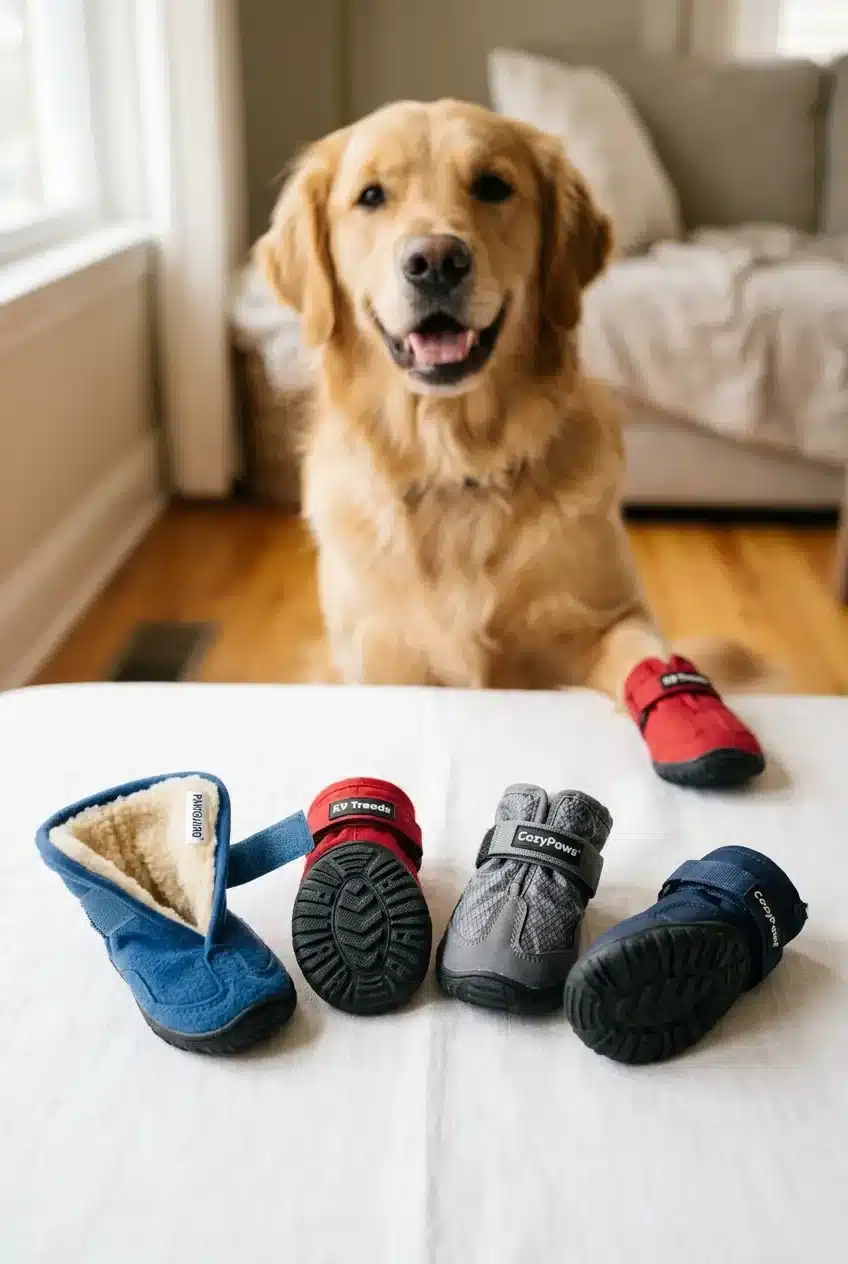
The best dog booties for sensitive paw pads use soft, non-abrasive inner linings, flexible soles with enough grip to prevent slipping, and secure-but-gentle closures that don’t restrict circulation. Look for breathable materials like neoprene or fleece-lined nylon for everyday use, and rubber-soled designs for outdoor terrain.
- Soft inner lining prevents friction on raw or inflamed paw tissue
- Flexible sole allows natural paw movement and reduces gait disruption
- Adjustable Velcro or drawstring closures keep boots on without squeezing
- Waterproof outer layer protects against ice melt chemicals and wet surfaces
- Reflective strips add low-light visibility as a bonus safety feature
- Machine-washable construction simplifies hygiene for allergy-prone dogs
Fit is the single most important factor — a well-made boot in the wrong size causes more harm than no boot at all.
DON’T MISS THESE
You’ll Want to Read These Too: 👇
👇 What Makes A Dog Hypoallergenic
👇 Best Low Carb Dog Foods Reviews
Why Do Some Dogs Have Sensitive Paw Pads?

Sensitive paw pads result from several distinct causes, and identifying the right one helps you choose the most suitable boot. Environmental allergens, skin conditions like hyperkeratosis, post-injury healing, and exposure to extreme surfaces are the most frequent culprits.
Environmental and Seasonal Triggers
Pavement temperatures in summer can exceed 60°C (140°F) on a sunny day, according to data published by Arizona State University researchers studying urban heat surfaces. At that temperature, paw pad burns can occur in under 60 seconds.
Winter brings its own hazards. Road salt and de-icing chemicals contain compounds such as calcium chloride, which causes chemical burns and severe drying on repeated contact.
Skin Conditions Affecting Paw Pads
Canine hyperkeratosis causes excess keratin buildup, making pads rough, cracked, and prone to painful fissures. The American Kennel Club (AKC) identifies this condition as particularly common in older dogs and certain breeds including Labrador Retrievers and Golden Retrievers.
Allergies — both food-based and environmental — frequently manifest as paw inflammation and interdigital itching. If your dog’s paw sensitivity seems tied to specific seasons or foods, reviewing their diet with a vet is worth doing alongside choosing protective footwear. A good starting point is understanding what goes into their meals, such as reviewing the best dog food options for sensitive breeds.
How to Measure Your Dog’s Paws for the Perfect Bootie Fit

Measuring your dog’s paws correctly before buying is non-negotiable — most returns and failed bootie attempts trace back to sizing errors. A bootie that’s too tight restricts blood flow; one that’s too loose twists underfoot and causes trips.
- Place a blank sheet of paper on a hard floor. Have your dog stand naturally on it with full weight on the paw.
- Trace around the widest part of the paw, including any fur that spreads at the sides. The widest point — not the longest — determines the width measurement.
- Measure both the length and width of the traced outline in millimetres. Use the larger paw if front and back differ.
- Compare against the brand’s specific size chart. Sizing is not standardized across manufacturers — a size 3 in one brand may be a size 5 in another.
- Check that the boot sits just above the ankle when fitted, and that you can slide two fingers comfortably under the closure without the boot slipping off.
Success looks like this: the boot stays on during a gentle shake of the leg, the dog’s stride looks nearly normal after a short adjustment period, and there’s no redness where the closure sits after 10 minutes of wear.
Pairing your walks with a well-organized waterproof dog walking bag means you can carry spare booties and paw balm without hassle.
Key Features to Compare When Buying Sensitive Paw Booties
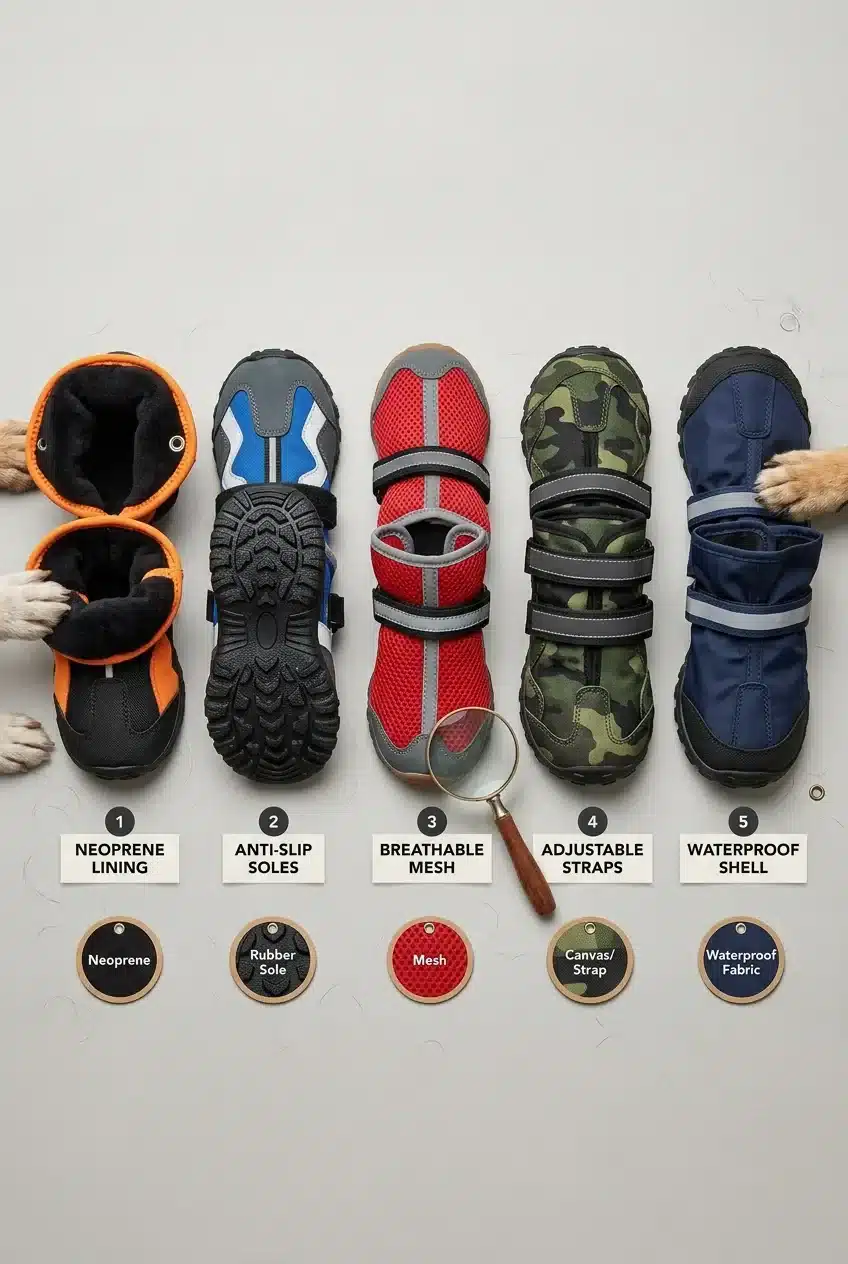
Not every bootie on the market is built for sensitive pads — many are designed purely for traction or aesthetics. The table below breaks down what actually matters for a dog with delicate or compromised paw tissue.
| Feature | What to Look For | Why It Matters for Sensitive Paws |
|---|---|---|
| Inner lining | Fleece, soft neoprene, or cotton | Prevents abrasion on raw or thin pad tissue |
| Sole flexibility | Bends easily with hand pressure | Allows natural gait; rigid soles cause compensatory stress |
| Closure type | Wide Velcro or adjustable drawstring | Distributes pressure evenly; avoids pinch points |
| Sole grip | Textured rubber or anti-slip coating | Prevents slipping on smooth floors, which stresses healing pads |
| Waterproofing | PVC-free outer shell or treated nylon | Blocks moisture and chemical contact from treated roads |
| Breathability | Mesh panels or vented design | Reduces heat and sweat buildup that worsens skin conditions |
For dogs with active skin infections or fungal issues, pairing boots with a targeted wash routine helps. Exploring the best antibacterial and antifungal dog shampoos is a useful complement to protective footwear.
A well-fitted soft-soled dog bootie set with fleece lining is one of the most practical purchases for dogs recovering from pad injuries.
How to Get Your Dog Used to Wearing Booties
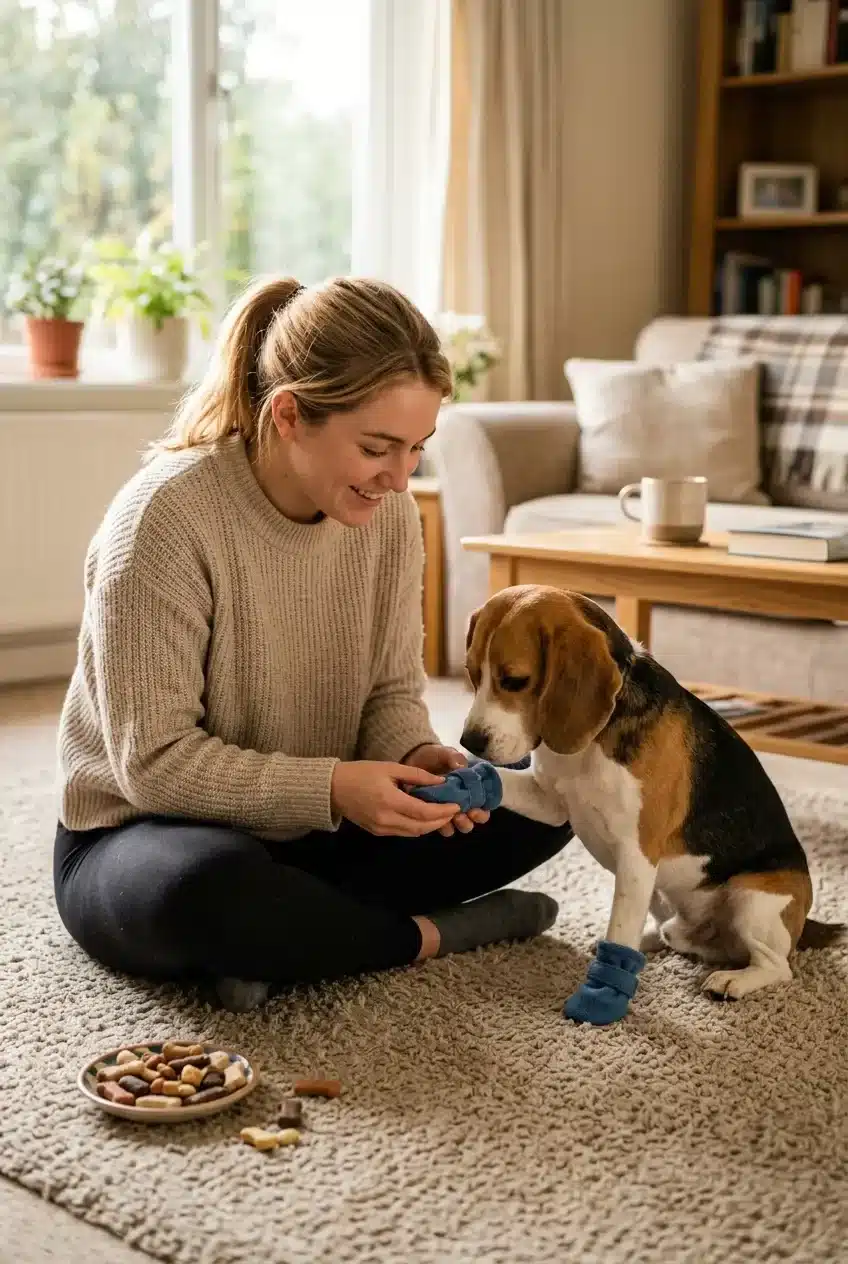
Most dogs resist booties at first — the sensation of something on their paws triggers a high-stepping, freeze, or shake response. This is normal and temporary with the right approach.
The Gradual Introduction Method
Start by leaving the booties near your dog’s sleeping area for a day or two so they become familiar objects rather than threats. Then introduce them in short, positive sessions before any actual walk.
“Desensitization works best when the dog associates the new object with something rewarding. Pair each step of the process with a high-value treat and keep sessions under five minutes.” — Dr. Karen Overall, veterinary behaviorist and author of Manual of Clinical Behavioral Medicine for Dogs and Cats
Once your dog tolerates having boots on all four paws, start with a two-minute indoor walk before graduating to outdoor surfaces. Most dogs fully adapt within one to two weeks of consistent, calm sessions.
Signs the Boots Are the Wrong Fit During Training
- Persistent high-stepping after more than five sessions — usually indicates sole stiffness
- Chewing at the boot immediately — often means the closure is too tight
- Boot twisting sideways within two minutes of walking — indicates too-wide fit
Upgrading to a non-slip adjustable dog bootie with a wider Velcro strap often resolves the twisting problem quickly.
Common Mistakes When Buying Dog Booties for Sensitive Paws
Getting booties wrong is easy — the market is full of options that look suitable but fall short for dogs with genuine paw sensitivity. Here are the mistakes that cause the most problems.
- Buying based on breed weight alone: Paw size doesn’t correlate directly with body weight. A 20kg mixed breed may have narrower paws than a 15kg Bulldog. Always measure.
- Choosing hard rubber soles for indoor use: Hard soles on smooth floors cause slipping, which strains already-sensitive paw pads. Use soft-soled or anti-slip designs for indoor and post-surgery recovery situations.
- Ignoring the boot’s inner seam placement: Raised inner seams sit directly on sensitive tissue and cause pressure sores. Run your finger inside the boot before buying — the interior should feel smooth throughout.
- Skipping the break-in period: Putting boots on for a one-hour walk immediately causes rubbing even with a well-fitted boot. Start with 10-minute sessions and build up.
- Using the same boots in summer and winter: Insulated winter boots trap heat in warm weather, which worsens sweat-related fungal problems. Keep two pairs and rotate by season.
If paw issues keep recurring despite protective footwear, behavioral triggers like anxiety-driven licking may be part of the picture — understanding how environmental stressors affect your dog can help, including looking at how your dog interacts with other animals, as covered in this guide on managing dog behavior around cats.
For dogs prone to paw infections, a veterinary-grade paw balm applied before booting helps protect cracked pad tissue from further irritation.
Frequently Asked Questions About Best Dog Booties for Sensitive Paw Pads Complete Guide
How do I know if my dog’s paw pads are too sensitive for regular walks?
Signs your dog’s paw pads are too sensitive for regular walks include limping, excessive licking after returning home, visible redness, and reluctance to walk on certain surfaces. A vet can confirm whether the cause is a skin condition or environmental damage.
Can dog booties make paw sensitivity worse?
Dog booties can make paw sensitivity worse if they fit incorrectly, have rough internal seams, or trap moisture. Choosing breathable, smooth-lined boots and allowing adequate break-in time prevents these issues.
How long should my dog wear booties each day?
Start with 10–15 minute sessions and gradually extend over two weeks. Most dogs with healthy adaptation can wear correctly fitted booties for a full walk without issue after proper conditioning.
Are there specific bootie brands recommended by vets?
Veterinary professionals frequently mention Ruffwear and Muttluks as brands with consistent sizing and soft construction suited to sensitive paws. Always check the current size chart for each brand, as sizing updates between product generations.
Do dog booties help with allergies or just physical injuries?
Dog booties help with allergies by blocking contact with environmental allergens like grass pollen, lawn chemicals, and road salt. They don’t treat the allergy itself, but they reduce the allergen load reaching the paw skin significantly.
What’s the easiest bootie style to put on a reluctant dog?
Slip-on stretchy booties with wide Velcro tabs are the easiest style to put on a reluctant dog. They require less handling time per paw and allow quick adjustments, which shortens the stressful part of the process.
The Right Bootie Protects More Than Just Paws
Choosing the best dog booties for sensitive paw pads comes down to three things: accurate sizing, a soft interior, and a sole flexible enough not to disrupt your dog’s natural movement. Everything else — color, price, brand name — is secondary.
Start today by tracing your dog’s paw on paper and measuring the width. That single step eliminates the most common buying mistake before you’ve spent a penny. For a breathable fleece-lined dog bootie that works well for sensitive pads year-round, search with those specific terms rather than generic keywords to filter out hard-sole options.
Your dog can’t tell you their paws hurt — but the right protective gear means you won’t need them to. For more guidance on keeping your dog healthy from the ground up, explore our top-rated antibacterial dog shampoo picks to complement your paw care routine.