Are salt lamps good for cats is a smart question if your cat sniffs, licks, or climbs everything in sight. These glowing pink lamps look calm and cozy, but they can create real risks for curious pets.
This topic matters because too much salt can seriously harm a cat in a short time. A single evening of licking a damaged lamp can lead to vomiting, weakness, or worse.
This guide will help you decide if a salt lamp belongs in your home. You will learn the real risks, warning signs, safer placement ideas, and better pet-friendly alternatives.
If you share your home with other animals too, safety choices often overlap. Homes that manage cat-dog dynamics well, like those in golden retriever and cat households, usually do best with simple hazard control.
Are Salt Lamps Good For Cats?
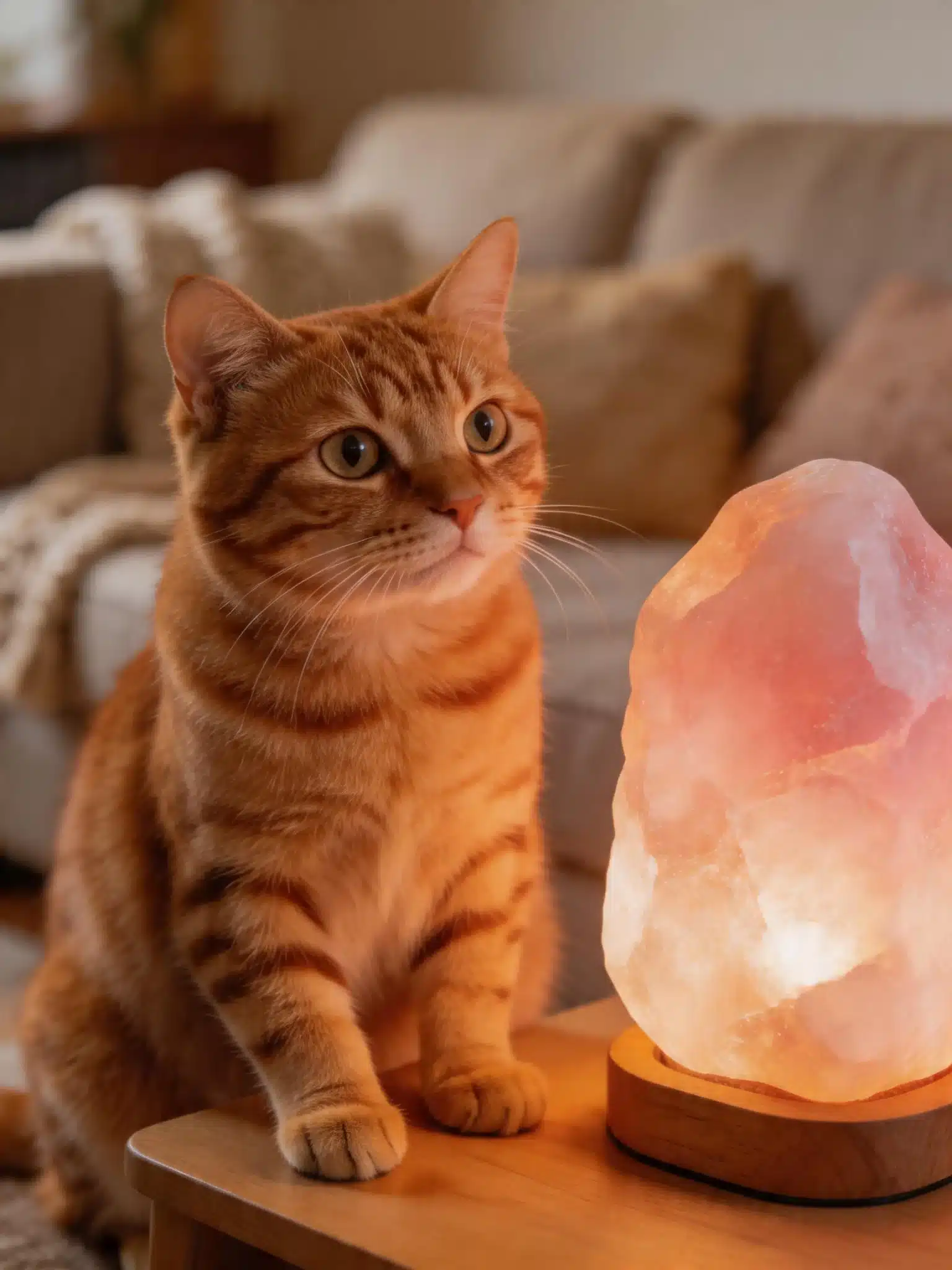
No, salt lamps are not a good choice for cats if your cat can reach or lick them. The biggest risk comes from salt ingestion, which can lead to dangerous sodium poisoning.
- Cats can lick salt lamps repeatedly.
- Too much salt can trigger sodium poisoning.
- Symptoms may start with vomiting or lethargy.
- Severe cases can cause tremors or seizures.
- Broken lamps create easier access to salt.
- High shelves reduce risk but do not erase it.
- Pet-safe decor works better in cat homes.
Why Salt Lamps Can Be Dangerous For Cats
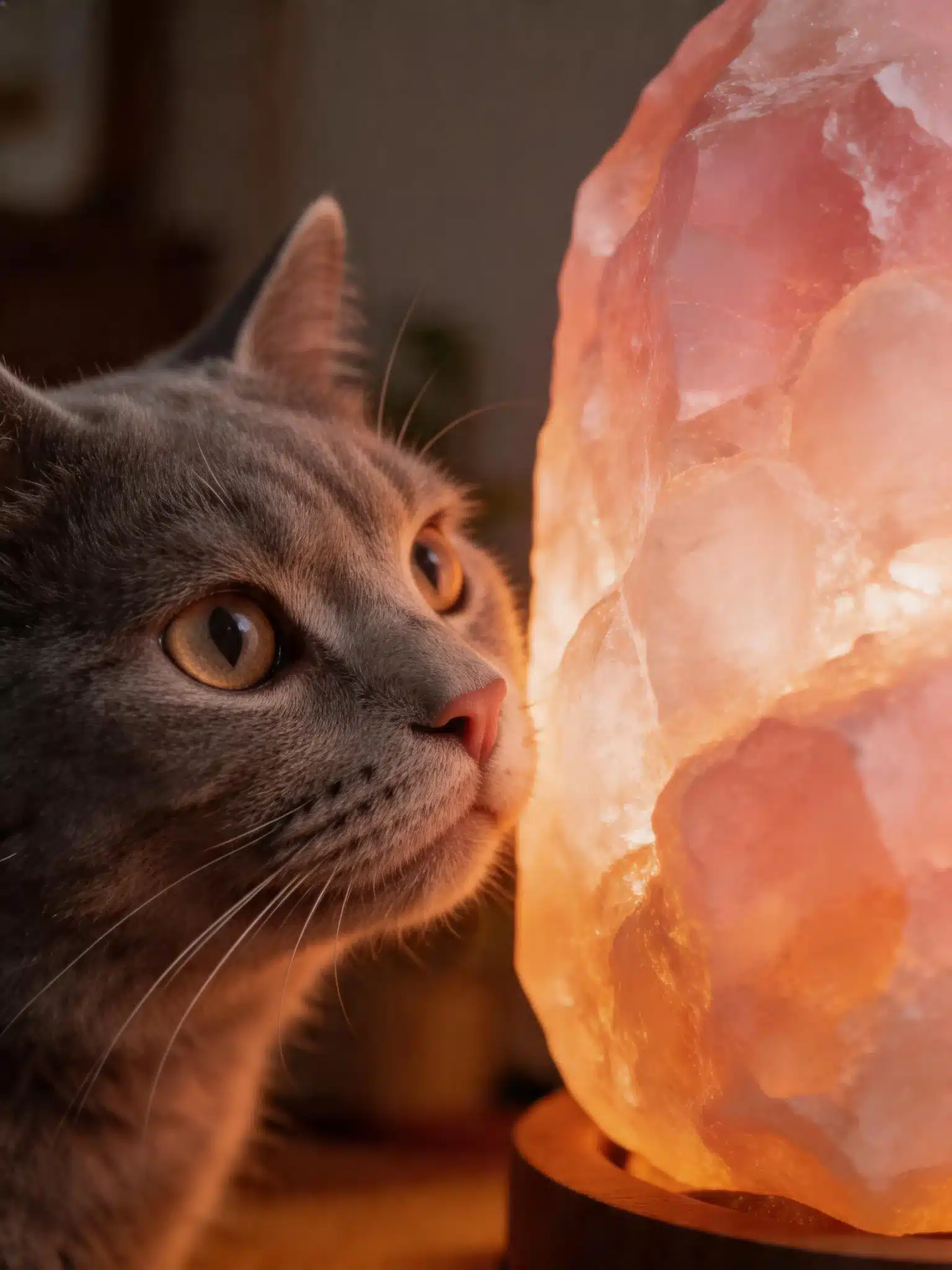
Salt lamps attract some cats because the surface tastes salty and feels interesting on the tongue. In our experience, cats that already lick sinks, shower walls, or sweaty shoes show the strongest interest.
Unlike a tiny accidental taste, repeated licking adds up fast. Cats have small bodies, so even modest extra sodium can affect them much more than it affects people.
Trending Now:
Get FREE Guide Every Week
Join 10,000+ dog & cat owners. Vet-approved advice every week
🔒 No spam. Unsubscribe anytime.
❤️ How Often Should I Feed My Cat
❤️ Why Does Cat Lick Plastic Bag
How The Risk Happens
A salt lamp slowly pulls moisture from the air, which can make the outside damp. That damp surface can become even more tempting for a cat to lick.
If the lamp chips, flakes, or tips over, the risk increases because your cat can reach loose salt pieces. A broken lamp turns a mild concern into an urgent one.
We have seen this consistently with active indoor cats that patrol shelves at night. One reader, Melissa from Ohio, found pink salt crumbs on her floor at 6 a.m. after her 9-pound tabby knocked the lamp from a dresser.
What Happens If A Cat Licks A Salt Lamp

A few quick licks may not always cause visible harm, but you should never assume it is harmless. The real danger comes from repeated licking or larger amounts of salt over several hours.
Salt poisoning, also called sodium ion poisoning, can happen when sodium levels rise too high. This condition can affect the brain, muscles, and fluid balance throughout your cat’s body.
Common Warning Signs
Watch for changes in behavior soon after exposure. Signs can start mild and get serious quickly.
- Vomiting
- Diarrhea
- Extreme thirst
- Lethargy
- Wobbliness
- Tremors
- Seizures
Many of our readers tell us they first notice unusual thirst or strange walking. If your cat seems weak, confused, or unsteady after licking a salt lamp, call your veterinarian right away.
One cat owner in Arizona told us her cat Oliver vomited twice within an hour after licking a lamp on a windowsill. Her veterinarian advised immediate evaluation, and Oliver recovered after prompt treatment and fluids.
Paw-pular Reads:
👉 What Are Some Common Protein Sources In Cat Food
👉 Best Cat Shampoo For Long Hair
What To Do If Your Cat Licked A Salt Lamp
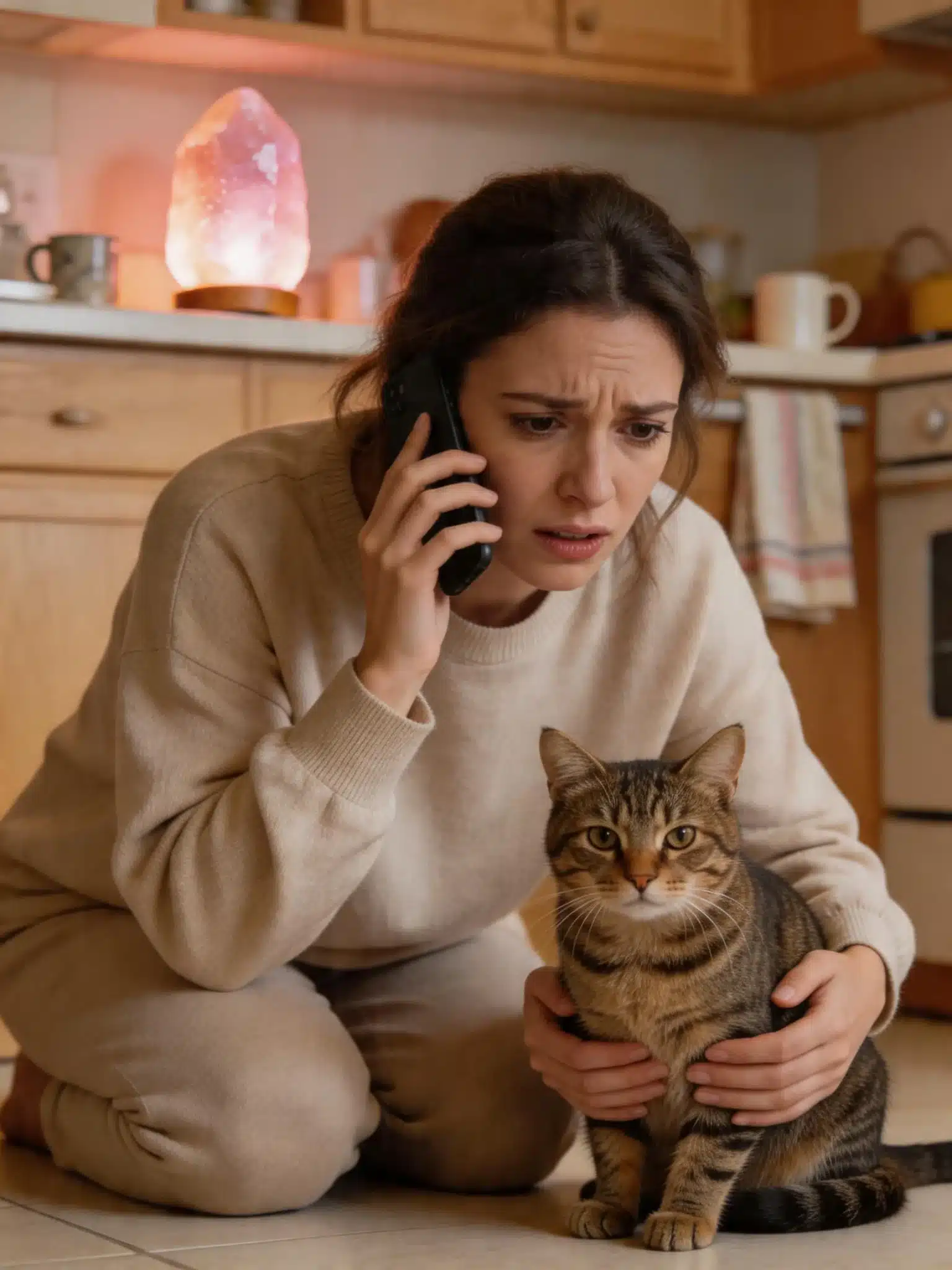
If you saw your cat lick a salt lamp, act fast and stay calm. Remove access to the lamp and call your veterinarian or a pet poison helpline immediately.
Do not wait for severe symptoms before asking for help. Cats can worsen quickly, especially smaller cats, seniors, and cats with kidney problems.
Steps To Take Right Away
- Move the lamp to a closed room or locked cabinet. Make sure your cat cannot reach any loose salt fragments.
- Check your cat for vomiting, drooling, tremors, or trouble walking. Note the time and how much licking you saw.
- Offer fresh water unless your veterinarian tells you otherwise. Do not force your cat to drink.
- Call your vet and describe the exposure clearly. Share your cat’s weight, age, symptoms, and the lamp size if you know it.
- Follow medical advice exactly. Do not try home remedies or induce vomiting unless a professional tells you to.
What we have found works best is taking a quick phone photo of the lamp and any salt residue. That helps your vet judge the likely exposure and guide the next step faster.
For example, Jenna in Michigan sent her vet a photo of a cracked 7-inch lamp beside visible flakes. The clinic asked her to come in the same morning, and her cat Luna avoided a more serious emergency.
Can You Keep A Salt Lamp In A House With Cats?
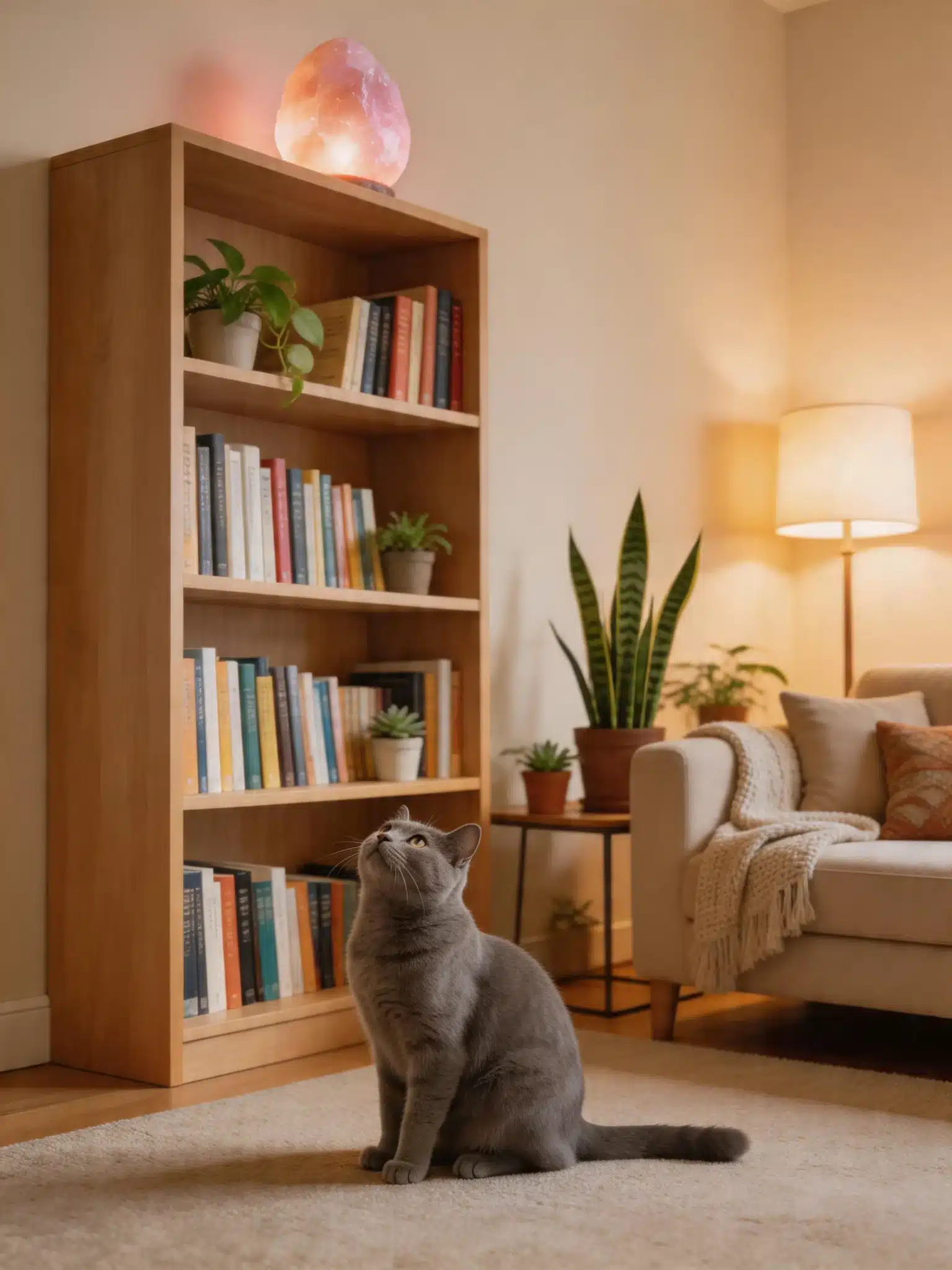
Yes, but only with strict limits, and even then it may not be worth the risk. If your cat has any history of licking odd surfaces, the safest answer is to skip salt lamps completely.
Building on what we covered about exposure, height alone does not guarantee safety. Cats jump, climb, and explore at night when you are asleep.
Safer Placement Rules
If you insist on keeping one, choose a spot your cat cannot physically reach. A truly closed office or guest room works better than a “high shelf” in a shared space.
- Keep it in a room with a closed door.
- Use a sturdy, non-tip base.
- Inspect weekly for chips or moisture.
- Unplug and remove damaged lamps immediately.
- Never place one near cat trees or window ledges.
We have seen this consistently in apartments where vertical space gives cats access to nearly every shelf. A Boston reader thought a lamp on a 6-foot bookcase was safe, but her Siamese reached it by jumping from a nearby chair.
If you live in a compact space, pet-safe enrichment matters even more than decorative lighting. Cat owners often get better results by swapping hazards for play items like indoor cat toys that redirect licking and climbing behavior.
Better Alternatives To Salt Lamps For Cat Owners
You do not need a salt lamp to create a warm, cozy room. Several safer options give you the same soft glow without exposing your cat to concentrated salt.
In our experience, cat owners stick with safer decor when it feels just as relaxing and looks just as good. That makes the change easier to keep long term.
Cat-Friendlier Lighting Ideas
- Warm LED table lamps with enclosed bulbs
- Dimmable night lights
- Wax warmers placed in closed rooms only
- Battery-powered lantern-style lights
- Warm LED Table Lamp for soft ambient light
If your cat knocks things over, choose wider bases and lower centers of gravity. A sturdy cat-proof lamp base can reduce tipping accidents in busy rooms.
One family in Denver replaced two salt lamps with amber LED lamps after their cat Milo licked one three nights in a row. They kept the same cozy bedroom feel and stopped the risky behavior immediately.
Some pet homes also benefit from more activity zones and less tempting decor. If you enjoy planning your cat’s environment, fun reads like Bengal cat names and why Bengal cats cost more often spark better enrichment ideas too.
Expert Insights On Salt And Cat Safety
The ASPCA lists salt as potentially dangerous to pets when eaten in large amounts. Their poison control guidance notes that too much salt can lead to vomiting, diarrhea, tremors, elevated body temperature, seizures, and even death.
Dr. Tina Wismer, senior director at the ASPCA Animal Poison Control Center, has repeatedly warned pet owners about salt toxicosis from concentrated sources. That includes items beyond table salt, such as dough ornaments, paintballs, and salt lamps.
As the What Happens If A Cat Licks A Salt Lamp section showed, small animals face larger risks from concentrated exposures. A 10-pound cat has far less room for error than a person tasting the same source.
For a real-world reminder, veterinarian teams often treat sodium exposure as urgent because symptoms can escalate fast. One clinic in North Carolina advised same-day care for a 4-year-old cat after repeated lamp licking and early tremors.
If your home includes several small pets, review all cross-species hazards together. Owners who also keep exotics often appreciate guides like chinchillas and cats health risks because pet safety problems rarely stay isolated.
Frequently Asked Questions About Are Salt Lamps Good For Cats
Can One Lick Of A Salt Lamp Hurt A Cat?
One tiny lick may not cause clear symptoms, but it still is not safe. Repeated licking creates the biggest danger, so remove access right away.
Are Himalayan Salt Lamps Toxic To Cats?
Yes, they can be toxic if your cat licks or eats enough salt. The risk comes from sodium poisoning, not from the pink color or glow.
Why Do Cats Like Licking Salt Lamps?
Some cats enjoy the salty taste and the damp surface. Cats that already lick mineral deposits, sinks, or skin often show more interest.
Should I Throw Out My Salt Lamp If I Have A Cat?
If your cat can reach it or has shown interest, removing it is the safest move. Many owners decide the decor is not worth the medical risk.
Can I Put A Salt Lamp On A High Shelf?
A high shelf helps less than most people think because cats climb and jump well. A closed room with no cat access is much safer than shelf height alone.
What Decor Is Safer Than A Salt Lamp For Cat Owners?
Warm LED lighting, enclosed lamps, and stable battery lights work well. A simple dimmable amber night light gives a similar cozy feel without the salt risk.
Conclusion
Salt lamps are not a good choice for most cat homes because licking them can lead to dangerous salt exposure. If your cat can reach it, the risk is real, especially with broken or damp lamps.
Your best move today is to remove any salt lamp from shared cat spaces and replace it with safer lighting. If your cat already licked one, call your veterinarian now and do not wait for symptoms to worsen.
Thoughtful pet-proofing makes a big difference across your whole home. The same practical approach that helps with apartment-friendly pet setups can make your cat’s space calmer and safer too.