Do cats love Himalayan salt lamps? Many cat owners ask this after spotting a curious paw, a quick lick, or a long stare at that warm orange glow.
This topic matters because Himalayan salt lamps can pose a real risk to cats that lick them. A harmless-looking home decor item can turn into a health problem fast.
This guide explains why cats notice salt lamps, whether they truly love them, and how to keep your pet safe. If you also enjoy learning about cat life at home, our guide to best toys for indoor cats can help enrich your space.
Do Cats Love Himalayan Salt Lamps? The Short Answer
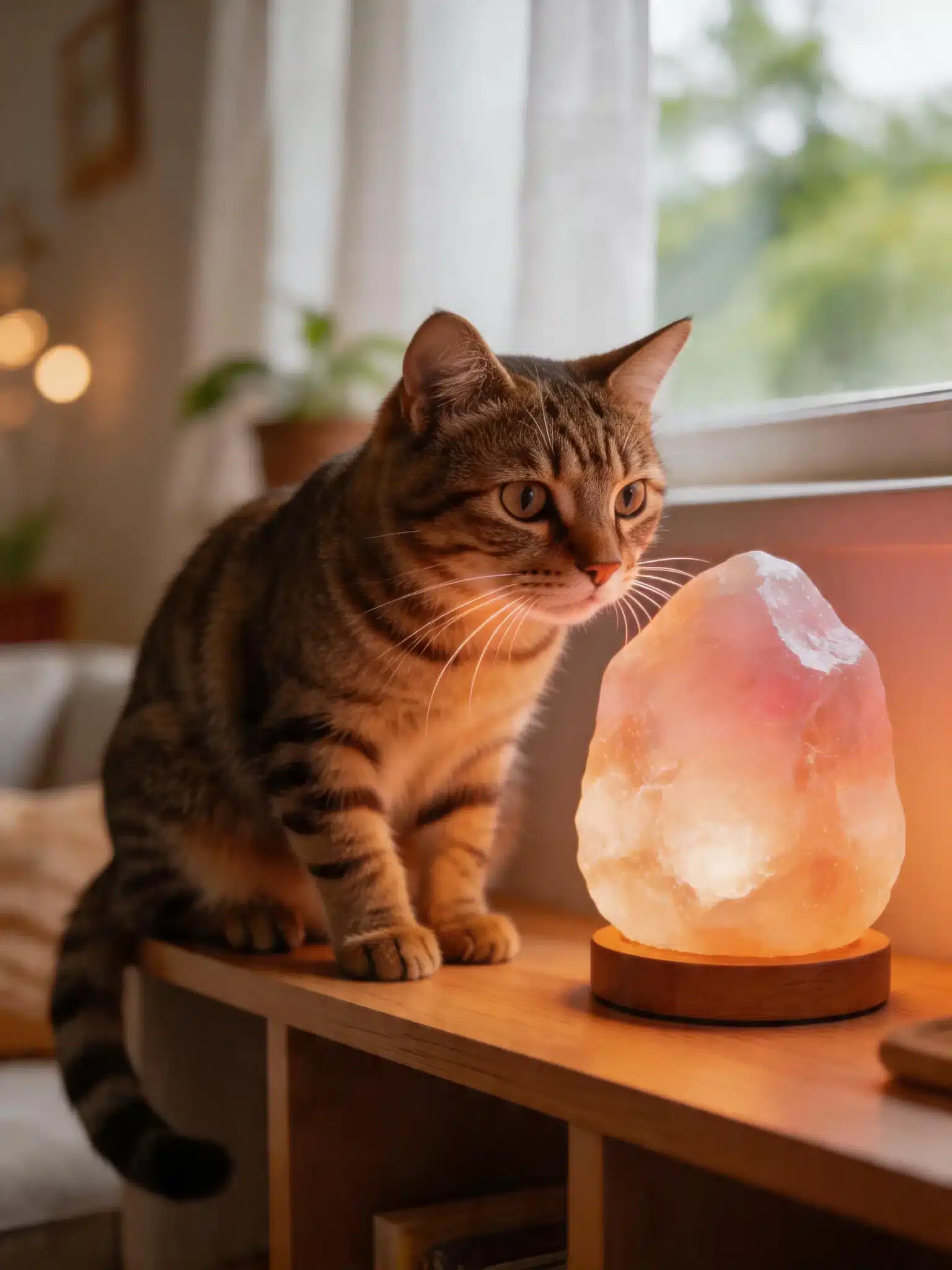
Cats often feel curious about Himalayan salt lamps, but that does not mean they love them in a healthy or meaningful way. Most cats react to the lamp’s salty surface, warmth, height, or glow rather than emotional attachment.
- Cats may lick salt lamps because they taste salty.
- Some cats enjoy the lamp’s warmth and soft light.
- Salt lamps are not safe for cats that lick them.
- Too much salt can cause serious illness.
- Curiosity does not equal comfort or affection.
- Place lamps well out of reach or remove them.
- Call your vet fast if your cat licks one repeatedly.
Why Cats Notice Himalayan Salt Lamps

Cats explore with their noses, tongues, and paws, so a Himalayan salt lamp gives them several things to investigate at once. The rough texture, mild heat, and mineral smell can make it stand out from other objects in your home.
In our experience, cats seem most interested when the lamp sits on a low side table or windowsill. A cat named Milo in Ohio licked a lamp base three nights in a row simply because it sat beside his usual sleeping spot.
The Salty Taste Attracts Some Cats
Salt has a strong flavor, and some cats take a test lick when they find a crystal salt surface. One lick may look harmless, but repeat licking creates the bigger concern.
Trending Now:
Get FREE Guide Every Week
Join 10,000+ dog & cat owners. Vet-approved advice every week
🔒 No spam. Unsubscribe anytime.
❤️ How Often Should I Feed My Cat
❤️ Why Does Cat Lick Plastic Bag
Cats do not need extra salt from a lamp because balanced cat food already contains the sodium they need. Your cat’s interest comes from curiosity, not nutrition.
The Glow And Warmth Can Draw Them In
Some cats like warm electronics, sunny windows, and heated blankets, so a gently warm lamp can attract them. The amber glow also catches movement-sensitive eyes, especially in dim rooms during evening hours.
What we have found works best is treating a salt lamp like any other tempting but unsafe object. If your cat loves cozy resting areas, offer a safer option such as a heated cat bed or fleece perch nearby.
Are Himalayan Salt Lamps Dangerous For Cats?

Yes, Himalayan salt lamps can be dangerous for cats if they lick enough salt from the surface. Too much sodium can upset the body’s fluid balance and lead to salt poisoning.
The risk depends on how much your cat licks, how often it happens, and your cat’s size and health. A small cat that licks daily faces more risk than a larger cat that takes one quick taste.
We have seen this consistently when owners think the lamp is harmless because it looks natural. Natural products can still hurt pets, just like certain plants, essential oils, and cleaning products can.
What Salt Poisoning Can Look Like
Signs may include vomiting, diarrhea, weakness, loss of appetite, wobbling, tremors, or unusual thirst. Severe cases can progress to seizures, confusion, or collapse.
If your cat shows any of those symptoms after licking a salt lamp, call your veterinarian or an emergency clinic right away. Do not wait for symptoms to get worse.
Paw-pular Reads:
👉 What Are Some Common Protein Sources In Cat Food
👉 Best Cat Shampoo For Long Hair
A Real-World Example
In 2016, veterinarians in New Zealand treated a cat named Ruby after she repeatedly licked a Himalayan salt lamp. Reports said she developed neurological signs, including trouble walking and seeing, before receiving care.
That case spread widely because it showed how a common household object can create a real emergency. While not every licking episode reaches that level, the story remains a clear warning for cat owners.
Do Cats Actually Love Salt Lamps Or Just Explore Them?
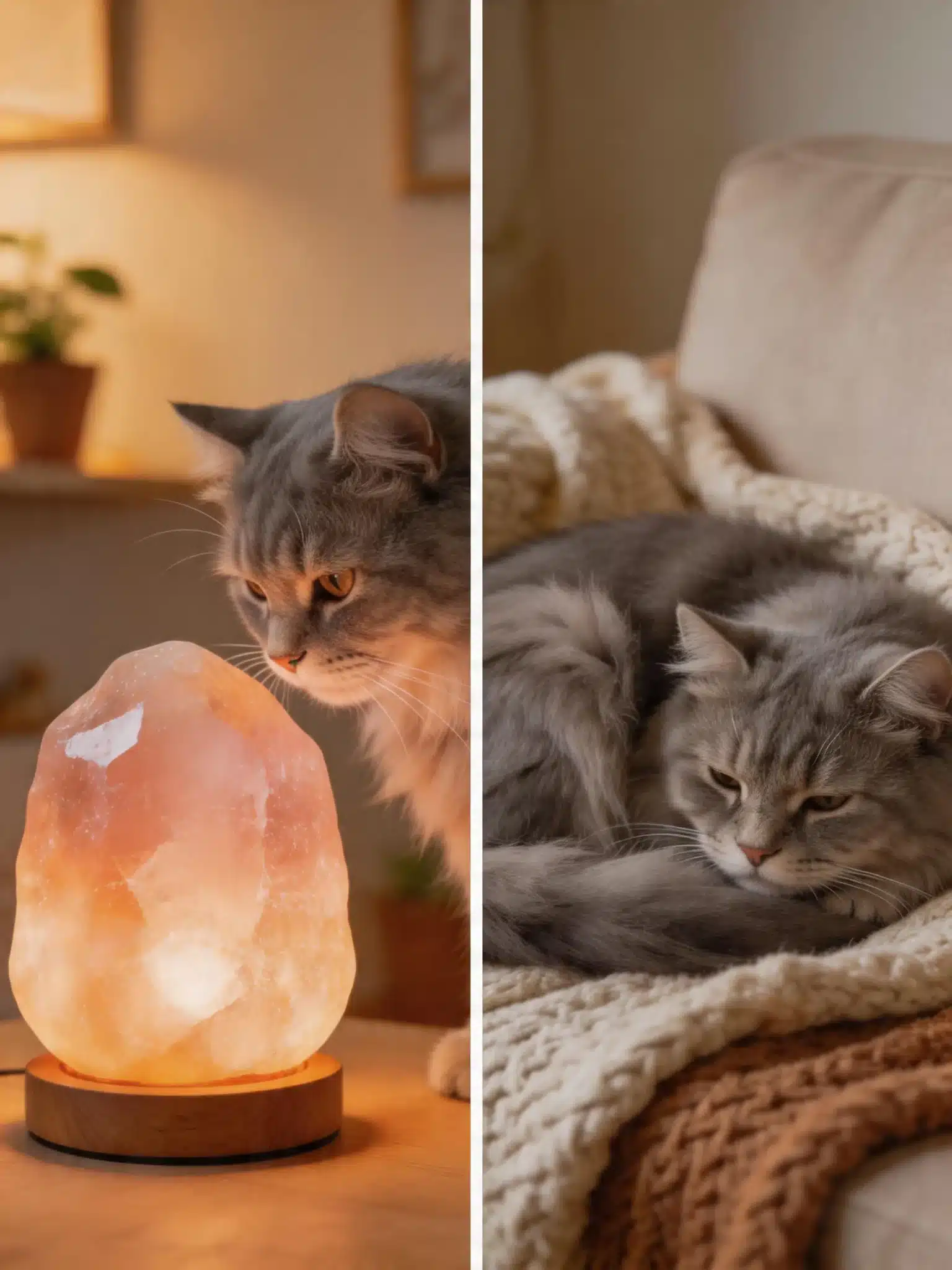
Building on what we covered about attraction, most cats do not love Himalayan salt lamps in the way they love a favorite blanket, person, or sleeping spot. They usually investigate the lamp because it offers novelty and sensory interest.
Many of our readers tell us their cats lose interest once the lamp moves out of reach. That pattern suggests the lamp functions more like a tempting object than a true comfort item.
How To Tell The Difference
If your cat loves something, you often see relaxed body language, repeated resting, purring, kneading, or gentle rubbing. If your cat fixates on a salt lamp, you may notice licking, batting, sniffing, or climbing instead.
Austin, a two-year-old tabby from Denver, ignored his owner’s salt lamp once she replaced it with a warm window hammock. His behavior showed he wanted elevation and warmth, not the salt itself.
Why This Distinction Matters
When you understand the reason behind the behavior, you can solve it with safer substitutes. A cat that seeks warmth needs warmth, while a cat that craves stimulation needs better enrichment.
If you enjoy building a fun indoor space, our article on good names for Bengal cats pairs nicely with a more personalized home setup. A strong bond grows faster when your cat’s environment fits their natural habits.
How To Keep Your Cat Away From A Himalayan Salt Lamp
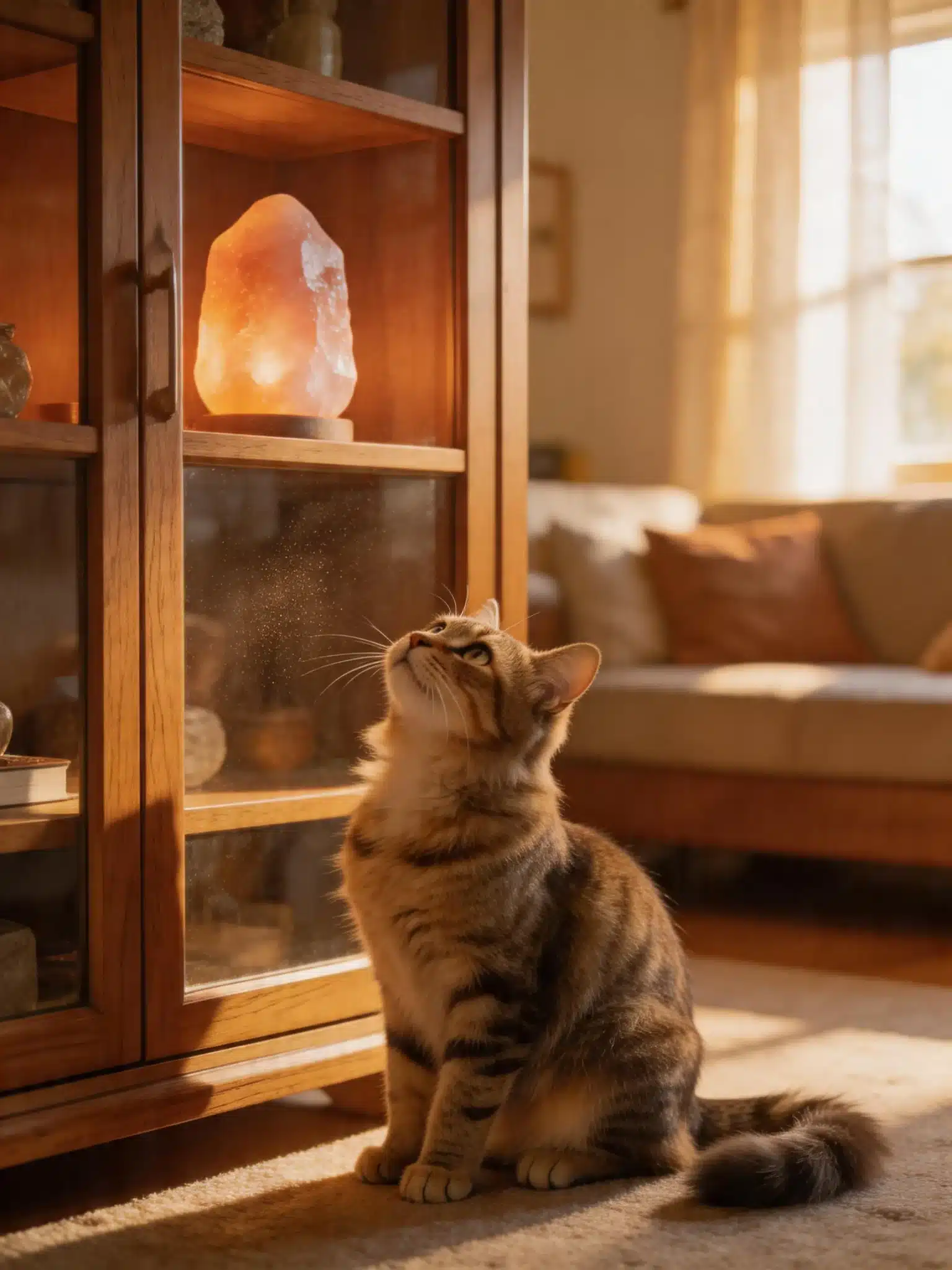
The safest choice is simple: remove the lamp from any area your cat can reach. If you want to keep using one, place it in a truly cat-free room with a closed door.
Many homes do not have a reliable cat-free room, especially with agile jumpers. In that case, replacing the lamp with safer decor often works better than constant supervision.
Safer Placement Tips
- Move the lamp to a room your cat never enters.
- Use tall shelving only if your cat cannot access it.
- Unplug and store the lamp when unsupervised.
- Clean salty residue from nearby surfaces.
- Offer a warm cat-safe resting spot elsewhere.
In our experience, relocation only works when you assume your cat can climb higher than expected. A cat named Nala in Texas reached a 62-inch bookshelf within two days, even though her owner thought it was impossible.
Helpful Product Alternatives
If you want a cozy glow without the risk, try a warm-toned amber LED night light. It gives you a similar mood without a salty surface.
For cats that chase warmth, a heated cat bed can redirect that interest safely. Give your cat a better option before they create their own.
What To Do If Your Cat Licks A Salt Lamp
If your cat licks a Himalayan salt lamp once, stay calm and remove access right away. Then check for drooling, vomiting, wobbling, unusual thirst, or behavior changes over the next several hours.
If your cat licks the lamp repeatedly or seems unwell, contact your veterinarian immediately. You can also call the ASPCA Animal Poison Control Center or Pet Poison Helpline for guidance if those services fit your situation.
Step-By-Step Response
- Move the lamp away from your cat immediately. Put it in a closed room or sealed container.
- Wipe your cat’s mouth gently if you see visible salt residue. Do not force water or food.
- Watch for symptoms like vomiting, weakness, tremors, or stumbling. Write down when the licking happened.
- Call your vet if you saw repeated licking. Call sooner if your cat seems off in any way.
- Bring the product details if your vet asks. A quick photo of the lamp can help.
What we have found works best is acting early instead of waiting for dramatic symptoms. Lisa from Michigan called her vet after seeing three separate licking attempts, and her cat recovered without developing severe signs.
Better Ways To Satisfy Your Cat’s Curiosity
As the Why Cats Notice Himalayan Salt Lamps section showed, your cat often wants stimulation, warmth, texture, or height. You can meet those needs with cat-safe choices that protect your pet and your decor.
Redirecting behavior works better than punishment. Cats learn faster when you make safe options easier and more rewarding than unsafe ones.
Smart Alternatives For Curious Cats
- Window perches for height and sunshine.
- Puzzle feeders for mental stimulation.
- Cat grass for safe chewing.
- Scratching posts with rough texture.
- Heated mats made for pets.
- Interactive play before bedtime.
We have seen this consistently with younger indoor cats that need more outlets for energy. If your pet tends to pester unusual objects, our guide to golden retrievers and cats also shows how environment affects behavior around other household triggers.
For active breeds, enrichment matters even more because they often seek novelty fast. Our pieces on why Bengal cats are so expensive and cat name ideas for male and female cats can help if you are building a thoughtful routine for a new cat.
A rescue cat named Juno stopped licking a salt lamp after her owner added two food puzzles and a sisal post. Within one week, the lamp stopped getting attention because her daily environment finally matched her needs.
Expert Insights On Salt Lamps And Cat Safety
Veterinary experts generally agree that concentrated salt sources pose a risk to pets that lick them. The concern centers on sodium toxicity, which can become serious quickly in smaller animals.
Dr. Tina Wismer, senior director at the ASPCA Animal Poison Control Center, has warned that salt poisoning can happen when pets consume too much sodium. Signs can include vomiting, lethargy, incoordination, tremors, seizures, and worse in severe cases.
The Merck Veterinary Manual also lists excessive sodium intake as a cause of toxicosis in dogs and cats. That source notes neurological signs can develop when sodium levels rise too high or shift too quickly.
Many of our readers tell us they assumed one decorative lamp could not matter much. Expert guidance says the opposite: repeated exposure to salt deserves quick action and strong prevention.
If your home includes several species, think beyond cats too. Our article on chinchillas getting fleas from cats shows how pet households often need species-specific safety planning.
For small pets with very different needs, the same rule applies: curiosity does not equal safety. You can see that idea again in our guide to what gerbils love the most, where safe enrichment matters more than novelty.
Frequently Asked Questions About Do Cats Love Himalayan Salt Lamps?
Why Does My Cat Keep Licking My Himalayan Salt Lamp?
Your cat likely likes the salty taste, the rough texture, or the warmth. Repeated licking can become dangerous, so remove access right away.
Can One Lick Of A Salt Lamp Hurt A Cat?
One small lick may not cause harm, but every cat differs in size and sensitivity. Repeated licking creates the bigger risk and deserves a vet call if symptoms appear.
Do Cats Like The Color Of Himalayan Salt Lamps?
Some cats notice the warm glow, especially in darker rooms. The light may attract curiosity, but the salt surface creates the real problem.
Should I Get Rid Of My Salt Lamp If I Have A Cat?
If your cat can reach the lamp or has shown interest, removing it is the safest move. A cat-safe light gives you a similar look without the sodium risk.
Are Himalayan Salt Lamps Toxic To Other Pets Too?
Yes, other pets can also face problems from excessive salt intake. Dogs and smaller animals may also lick or chew salty surfaces.
What Can I Use Instead Of A Himalayan Salt Lamp?
Try a warm LED night light, soft accent lamp, or flameless candle for the same cozy feel. If your cat seeks heat, add a pet-safe warming bed nearby.
Conclusion
Do cats love Himalayan salt lamps? Usually, they just find them interesting, but that curiosity can turn risky fast when licking starts.
Today, check every room your cat enters and move any salt lamp out of reach or out of the home. Your cat will do best with safer warmth, better enrichment, and a space designed around real feline needs.