When to switch from kitten to cat food is a common question, especially when your playful kitten suddenly looks almost grown. You want to support healthy growth without overfeeding calories your cat no longer needs.
This choice matters because kitten food packs more calories, protein, and fat than adult formulas. If you switch too early, your kitten may miss key nutrients, and if you switch too late, weight gain can sneak up fast.
This guide will show you the right age range, signs your kitten is ready, and how to make the change smoothly. You will also learn what vets look for, what to feed special cases, and how to avoid the stomach upset many owners face.
When To Switch From Kitten To Cat Food

Most kittens should switch from kitten food to adult cat food at around 12 months old. Large breeds like Maine Coons often need kitten food longer, sometimes until 15 to 18 months.
- Most cats switch at 1 year old.
- Maine Coons often switch later.
- Ask your vet about spayed or neutered kittens.
- Change food over 7 to 10 days.
- Watch weight, stool, and appetite closely.
- Choose adult food labeled complete and balanced.
- Avoid sudden changes unless your vet directs it.
Why Kittens Need Different Food First

Kitten food supports fast growth, brain development, and high energy needs during the first year. Adult cat food usually contains fewer calories and lower fat, which works better once growth slows down.
Kitten formulas help build muscle, bones, and a strong immune system. They also usually include higher levels of DHA, an omega-3 fat that supports brain and eye development.
In our experience, owners often assume size alone tells them when to switch. Age matters more, because a small 10-month-old kitten still needs growth nutrition even if she already looks sleek and tall.
Trending Now:
Get FREE Guide Every Week
Join 10,000+ dog & cat owners. Vet-approved advice every week
🔒 No spam. Unsubscribe anytime.
❤️ How Often Should I Feed My Cat
❤️ Why Does Cat Lick Plastic Bag
For example, Mia from Ohio weighed 7.8 pounds at 11 months and looked fully grown. Her veterinarian kept her on kitten food for one more month, and she maintained steady growth without becoming underweight.
What Makes Kitten Food Different
Kitten food usually contains more calories per cup than adult food. That extra energy helps fuel climbing, playing, and the rapid body changes that happen during the first year.
It also tends to contain more protein and fat. Those nutrients support lean muscle and help kittens stay fueled between meals, especially if they seem hungry all the time.
Why Adult Food Comes Later
Adult cat food helps maintain health instead of supporting rapid growth. Once your kitten reaches maturity, adult food helps prevent excess calorie intake and supports a healthy body condition.
If you like staying organized with feeding changes, a simple tracking system can help. Some readers use a planner like this pet food organizer and feeding schedule guide to monitor portions and body weight.
The Best Age To Transition Your Kitten
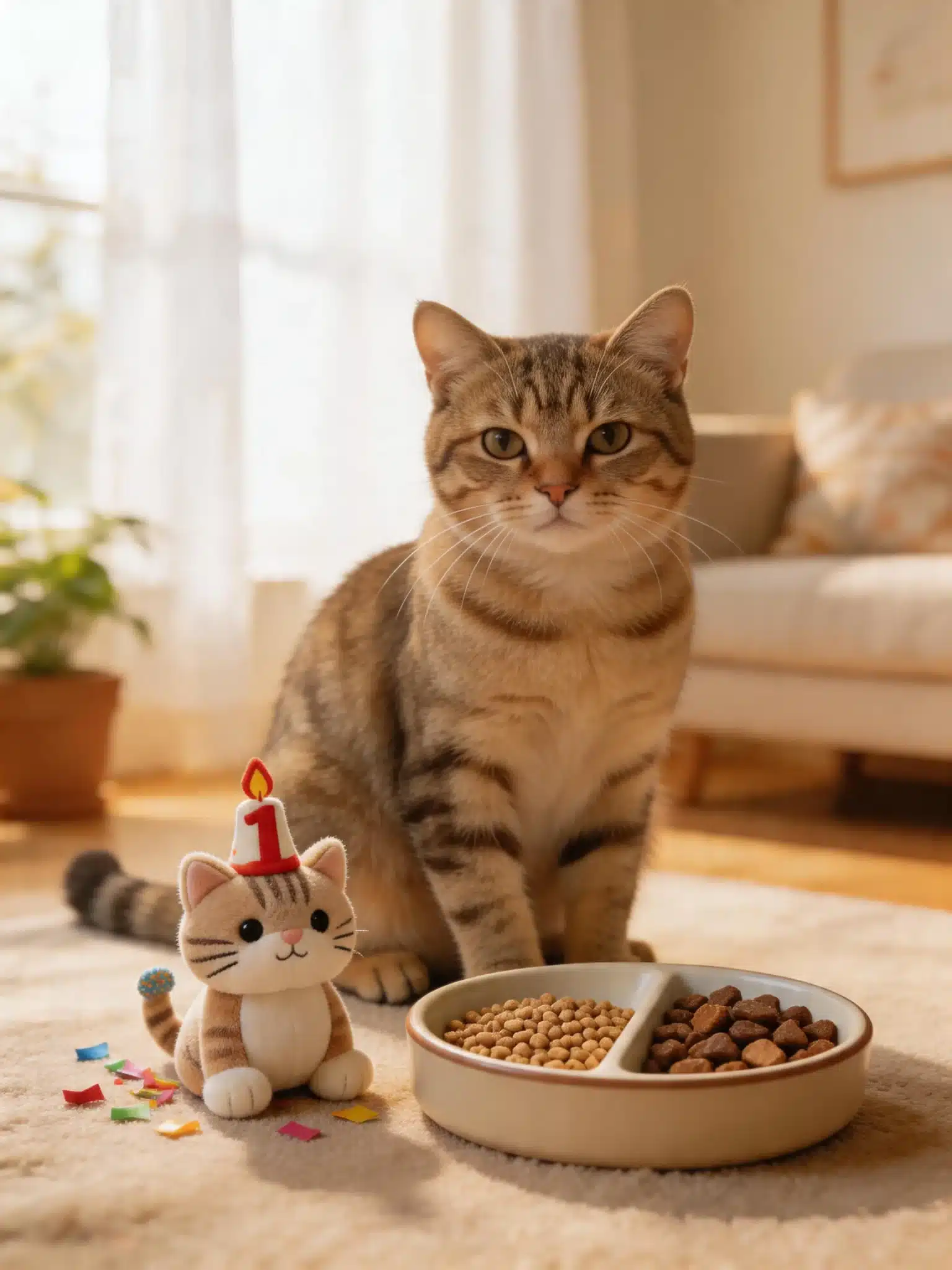
For most cats in the United States, the best time to switch is right around the first birthday. That timeline matches guidance from many veterinarians and pet food companies that formulate by life stage.
As the When To Switch From Kitten To Cat Food section showed, breed can change the timeline. Larger, slower-maturing cats often need kitten food for several extra months because their growth continues longer.
Many of our readers tell us their rescue kittens came with unknown birthdays. In that case, your vet can estimate age by checking teeth, weight, body shape, and growth patterns.
Paw-pular Reads:
👉 What Are Some Common Protein Sources In Cat Food
👉 Best Cat Shampoo For Long Hair
Austin, a male domestic shorthair adopted in Denver, had an estimated age of 10 months when his owner brought him home. His vet advised waiting eight more weeks before switching, and his weight stayed stable at 9.2 pounds.
Standard Timeline For Most Cats
Most domestic shorthairs and domestic longhairs can move to adult food at 12 months. If your kitten was healthy, gained weight normally, and reached expected milestones, that timing often works well.
Spaying or neutering can lower calorie needs, sometimes by a noticeable amount. Your vet may suggest transitioning close to 12 months while also adjusting portions to avoid rapid weight gain.
Large Breeds May Need More Time
Maine Coons, Norwegian Forest Cats, and some larger mixed breeds mature more slowly. These cats may do best on kitten food until 15 to 18 months, depending on growth and body condition.
What we have found works best is using your cat’s body condition alongside age. A lanky, still-growing large-breed kitten often benefits from a later switch than a compact cat of the same age.
Signs Your Kitten Is Ready For Adult Cat Food

Your kitten does not need to hit a magic weight before the switch. Instead, look at age, growth rate, body condition, and whether your cat still shows signs of active development.
Steady adult-like body shape and slower growth often signal readiness. A kitten that used to grow every month may start holding a stable weight while still staying active and healthy.
We have seen this consistently with indoor cats that become less frantic about food around their first birthday. They still enjoy meals, but they stop acting like every feeding is an emergency.
Jasper, a tabby from Tampa, begged for food constantly at 8 months but settled into a predictable routine by 12 months. After a gradual switch to adult food, his stools stayed normal and his body score remained ideal.
Healthy Signs To Look For
- Your kitten is about 12 months old.
- Weight gain has slowed or leveled off.
- Your vet says body condition looks ideal.
- Your cat seems less ravenous between meals.
- Growth in length and frame appears mostly complete.
Signs You Should Wait Or Ask Your Vet
- Your kitten seems thin despite eating well.
- Weight still climbs quickly month to month.
- Your cat belongs to a large slow-maturing breed.
- Your kitten recently had illness or surgery.
- You are feeding a therapeutic veterinary diet.
If your kitten has digestive problems, check food handling and storage too. Safe storage matters just as much as life stage, and this guide on food contaminated by rats explains why contaminated food can cause serious health issues.
How To Switch Foods Without Upsetting Your Cat’s Stomach
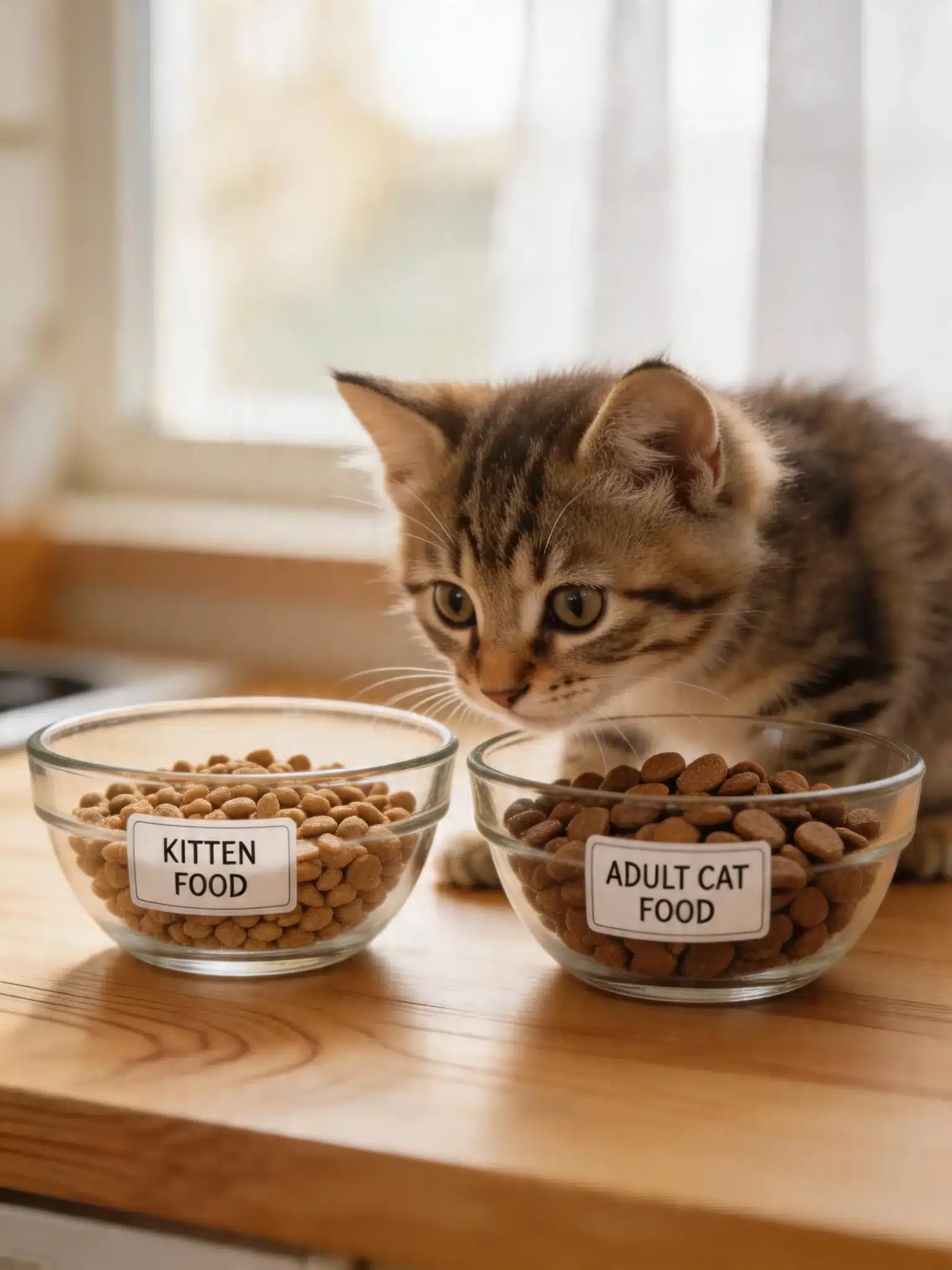
A slow transition gives your kitten’s digestive system time to adjust. Sudden changes often trigger vomiting, loose stool, or food refusal, even when the new food is high quality.
Many cats do well with a 7-to-10-day transition. Sensitive kittens may need a full 14 days, especially if they already have a history of digestive upset.
For one owner in Phoenix, a sudden same-day switch caused three days of soft stools in a 12-month-old kitten named Luna. After restarting with a slower 10-day blend, Luna adjusted without any further stomach trouble.
Step-By-Step Food Transition
- Days 1 and 2: Feed 75% kitten food and 25% adult food.
- Days 3 and 4: Feed 50% kitten food and 50% adult food.
- Days 5 and 6: Feed 25% kitten food and 75% adult food.
- Days 7 through 10: Feed 100% adult cat food if stool stays normal.
What To Watch During The Change
Check the litter box every day during the switch. Soft stool once can happen, but repeated diarrhea, vomiting, or complete refusal to eat calls for a pause and a vet check.
Keep fresh water available and avoid adding extra new foods during the transition. That means no random treats, toppers, or table scraps while your cat adjusts.
If you feed wet food, a measured option like adult wet cat food can help you control portions. For dry feeders, a kitchen scoop or cat food measuring scoop makes the blend more accurate.
Choosing The Right Adult Cat Food
Not all adult cat foods fit every cat, even after the timing is right. Look for a complete and balanced formula for adult maintenance from a reputable brand that meets AAFCO standards.
Protein should come from named animal sources, and calories should match your cat’s lifestyle. An indoor young adult often needs a different calorie level than a highly active cat with outdoor access.
In our experience, owners often focus on fancy marketing instead of calorie density. A bag that looks premium can still lead to overfeeding if each cup contains far more calories than expected.
Rachel in Portland switched her 1-year-old indoor cat to an adult formula with 360 calories per cup instead of 430. Over the next four months, her cat maintained 10.1 pounds without the creeping gain she had noticed before.
What To Look For On The Label
- AAFCO statement for adult maintenance or all life stages
- Named protein like chicken, turkey, or salmon
- Clear calorie information per cup or can
- No drastic ingredient changes from current food
- A texture your cat already accepts well
Wet, Dry, Or Both
Both wet and dry food can work if the diet is complete and balanced. Many veterinarians like mixed feeding because wet food adds moisture and dry food offers convenience and easy portioning.
Building on what we covered about food transitions, keep the texture familiar when possible. If your kitten only eats pate, switching both life stage and texture at the same time can make acceptance harder.
A practical product for mixed feeders is an airtight cat food storage container. It helps keep dry food fresh and makes it easier to track how much your cat actually eats each week.
Special Cases That Change The Timeline
Some kittens should not follow the standard 12-month schedule. Medical conditions, large breeds, pregnancy, and weight concerns can all change when and how you move to adult food.
Your veterinarian should guide any switch if your cat has a health issue. That includes food allergies, chronic diarrhea, poor growth, or recovery from illness or surgery.
We have seen this consistently with underweight rescue kittens. They often need a customized timeline because catching up on growth matters more than following a calendar date.
For example, a foster kitten named Theo arrived in Chicago at 9 months old but weighed only 5.4 pounds due to parasites. His veterinarian kept him on kitten food until 14 months, and he reached a healthy 8 pounds.
Spayed Or Neutered Kittens
After spay or neuter surgery, some kittens burn fewer calories and become hungrier. Your vet may recommend watching portions closely or choosing an adult formula sooner if weight rises too fast around the one-year mark.
Underweight Or Recently Sick Kittens
If your kitten is recovering from illness, hold off on changes until eating and stool look normal. Stability comes first, because introducing a new formula during recovery can muddy the picture.
Pregnant Or Nursing Young Cats
A pregnant or nursing young cat often needs kitten food because the calorie and nutrient needs rise sharply. If you care for other species too, these guides on food for pregnant rabbits and brands for lactating rabbits show how life stage changes feeding across pets.
Households with several animals often juggle multiple diet stages at once. If that sounds familiar, keeping each pet’s food separate helps prevent accidental feeding, whether you own cats, dogs, or even birds that need items like cockatoo food.
Expert Insights On The Right Time To Switch
The American Animal Hospital Association and the American Association of Feline Practitioners publish life stage guidance that treats kittens as a distinct nutritional group. That framework supports feeding growth diets during kittenhood and shifting after maturity.
Dr. Lisa A. Pierson, DVM, a widely read feline nutrition educator, often emphasizes reading labels carefully and watching the individual cat rather than the front of the bag. That advice helps when your cat sits near the border between kitten and adult stages.
The Association for Pet Obesity Prevention has reported that overweight cats remain a common problem in the United States. That makes portion control after the switch just as important as the switch itself.
What we have found works best is pairing expert guidance with monthly weigh-ins at home or at your clinic. One family in Nashville caught a 1.2-pound gain over three months and corrected portions before obesity set in.
Frequently Asked Questions About When to switch from kitten to cat food?
Can I switch my kitten to adult food at 6 months?
No, most kittens still need kitten food at 6 months because they are growing fast. Switching that early can leave them short on calories and nutrients.
What happens if my cat stays on kitten food too long?
Your cat may gain excess weight because kitten food usually contains more calories and fat. A few extra weeks rarely cause harm, but many extra months can create problems.
Should I switch wet and dry food at the same time?
You can, but many cats do better when you change one variable at a time. If your cat has a sensitive stomach, start with one texture first.
Do indoor cats switch earlier than outdoor cats?
Not usually, because age and growth matter more than lifestyle for the switch itself. Indoor cats may simply need fewer calories once they move to adult food.
Can I feed an all life stages food instead?
Yes, if the food is complete and balanced and your veterinarian agrees it suits your cat. Still, you must portion it carefully because some all life stages diets run calorie-dense.
How do I know if I am feeding too much after the switch?
Watch for steady weight gain, a disappearing waist, and less ability to feel the ribs easily. Your veterinarian can score body condition and help you set a better daily amount.
Conclusion
Most kittens should switch from kitten to cat food at about 12 months, while larger breeds often need longer. The safest plan combines age, body condition, and your veterinarian’s advice.
Start by checking your cat’s age, current weight, and food label today. If your kitten is nearing the one-year mark, plan a 7-to-10-day transition and track the results with confidence.
If you also manage feeding for other pets, keeping written schedules helps prevent mistakes and overfeeding. A simple routine, like the one in this pet food planner, can make multi-pet homes much easier to run.