Why does my cat lightly bite my bare toes? If your cat sneaks up and gives your feet a gentle chomp, you are not alone.
This habit can feel funny, annoying, or confusing, especially when it happens at 5 a.m. It matters because light biting can signal play, attention-seeking, hunting instinct, stress, or a boundary issue.
This article will help you figure out what your cat means and what to do next. We will cover common causes, warning signs, training steps, expert insight, and when to call your vet.
Building on common cat behavior questions, some owners also compare toe biting with social cat biting like why a cat bites a kitten’s neck. The reasons overlap more than most people expect.
Why Does My Cat Lightly Bite My Bare Toes?
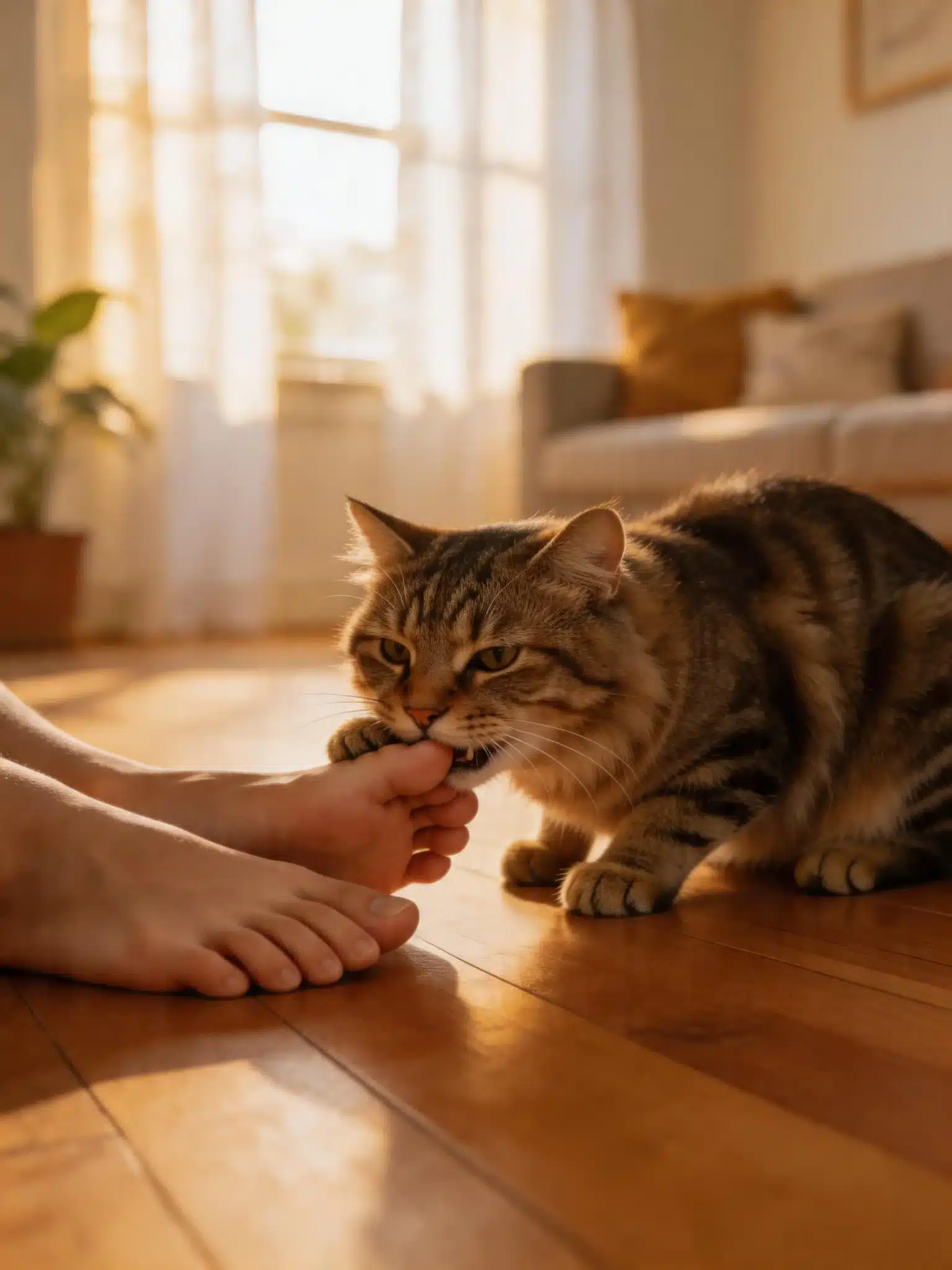
Your cat usually lightly bites your bare toes because they see movement, want attention, invite play, or act on hunting instincts. Bare feet also smell strongly and wiggle unpredictably, which makes them extra tempting targets.
- Moving toes trigger your cat’s prey drive.
- Light bites often mean play, not aggression.
- Morning toe attacks can mean hunger or boredom.
- Bare skin feels different than socks or slippers.
- Some cats use gentle bites to get attention fast.
- Stress or overstimulation can also cause nibbling.
- Hard bites, hissing, or swelling need closer attention.
Play And Hunting Instincts Often Explain Toe Biting
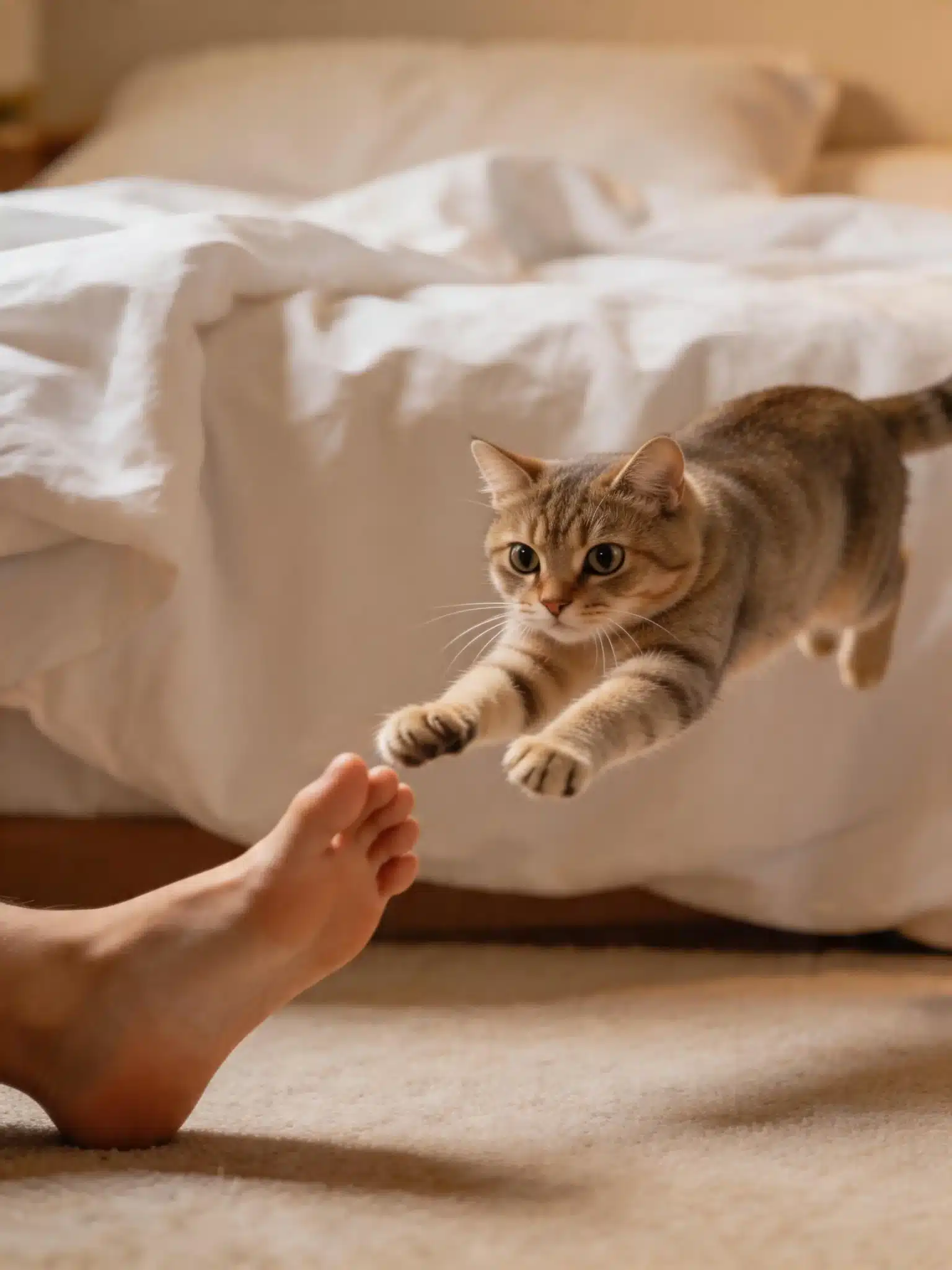
Cats are small hunters, and your moving toes can look like prey under a blanket or across the floor. In our experience, this is the most common reason behind light ankle and toe bites in healthy indoor cats.
Bare toes wiggle, twitch, and disappear under sheets, which mimics mice or birds. That sudden movement flips on your cat’s chase response before they stop to think.
Trending Now:
Get FREE Guide Every Week
Join 10,000+ dog & cat owners. Vet-approved advice every week
🔒 No spam. Unsubscribe anytime.
❤️ How Often Should I Feed My Cat
❤️ Why Does Cat Lick Plastic Bag
Why Bare Toes Are More Tempting Than Covered Feet
Your skin gives off heat, scent, and texture that socks hide. A cat can track all three cues at once, so naked feet become a more exciting target.
We have seen this consistently with cats that ignore shoes but pounce on feet after bedtime. Luna, a 2-year-old tabby from Ohio, stopped toe nipping within 10 days after her owner added two daily wand-toy sessions.
Building on what we covered about hunting instinct, homes with birds can also raise a cat’s chase behavior. If you share space with both pets, review whether a cat can kill a bird in a cage and how to introduce a bird to a cat.
Your Cat May Want Attention, Food, Or A Morning Routine

Some cats learn that a soft bite to your toes gets a fast reaction. If talking, laughing, pulling away, or feeding follows the bite, your cat may repeat it because the trick works.
Many of our readers tell us the biting happens right before breakfast. That timing matters because cats love routines and quickly connect your feet leaving the bed with food.
How Routine Strengthens The Habit
If your cat bites your toes at 6:15 and breakfast appears at 6:17, your cat may think they caused breakfast. Even negative attention can reward the behavior if it gets your focus.
Oliver, a 5-year-old rescue in Texas, bit his owner’s toes every morning for three weeks. The behavior dropped sharply after she used an automatic feeder and stopped reacting with playful foot movements.
As the routine section showed, your response shapes what happens next. The same pattern appears in other pet behavior questions, including why a ferret bites feet.
Paw-pular Reads:
👉 What Are Some Common Protein Sources In Cat Food
👉 Best Cat Shampoo For Long Hair
Overstimulation, Stress, Or Frustration Can Cause Gentle Bites

Not every toe bite comes from playful energy. Some cats lightly bite when they feel overstimulated, restless, frustrated, or conflicted about whether they want contact.
This often happens after petting, during loud household changes, or when a cat lacks enough outlets for climbing, scratching, and stalking. What we have found works best is looking at the full pattern, not just the bite itself.
Signs The Bite Is Not Simple Play
Watch your cat’s body language before and after the nibble. A twitching tail, pinned ears, skin rippling, or quick swatting can point to overstimulation instead of playful hunting.
Maya, a 7-year-old cat in Florida, started toe biting after a move and a new baby arrived within one month. Her owner added hiding spots, vertical shelves, and a nightly play session, and the behavior eased within two weeks.
If your cat also nips during handling, stress may play a bigger role than prey drive. Some owners compare patterns across species, such as why hedgehogs bite or whether guinea pigs bite, to notice how fear changes body language.
How To Tell Normal Play From A Behavior Problem
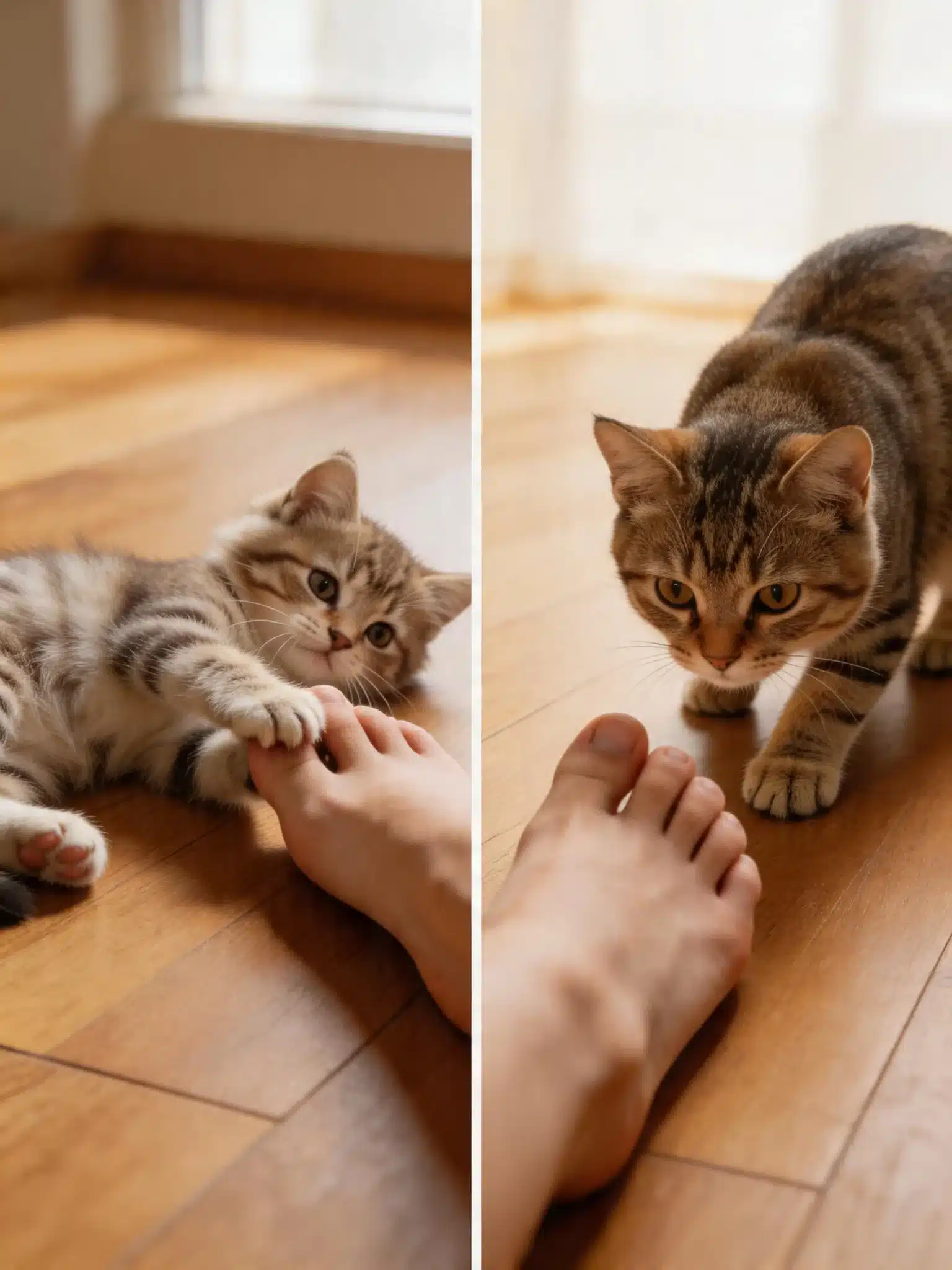
A gentle toe nip once in a while usually does not mean anything serious. Repeated biting with intensity, stalking that escalates, or bites that break skin deserve a closer look.
Look at frequency, force, and context. A cat who lightly mouths your toes during play differs from a cat who charges, latches on, and cannot settle.
Green Flags
- Loose body posture and relaxed ears.
- Short, soft bites with no skin break.
- Biting happens during obvious play moments.
- Your cat redirects easily to a toy.
Red Flags
- Bites grow harder week by week.
- Your cat guards spaces or ambushes constantly.
- Hissing, growling, or dilated pupils appear often.
- Touching paws, hips, or back triggers sudden biting.
We have seen this consistently with cats in pain, especially older cats with arthritis or dental trouble. Jasper, age 11, began attacking feet near the hallway, and his exam later showed painful arthritis that improved with treatment.
If your cat is new to your home, fear can blur the line between play and defense. A fresh routine, calm handling, and even picking from cat name ideas can help create more positive daily interactions.
How To Stop Your Cat From Lightly Biting Your Bare Toes
You can reduce toe biting by changing what your cat practices every day. The goal is simple: make toes boring and toys rewarding.
Do not punish, yell, or flick your cat’s nose. Harsh reactions can increase stress and make the behavior stronger or less predictable.
- Freeze your feet the moment your cat targets them. Movement keeps the game alive.
- Redirect fast with a wand toy, kicker toy, or tossed soft toy. Reward the toy choice with praise or a treat.
- Schedule two to three play sessions daily for 10 minutes each. Aim for stalking, chasing, pouncing, and a small food reward after.
- Feed on a routine, especially if attacks happen near wake-up time. An automatic cat feeder can break the link between your toes and breakfast.
- Protect your feet for a while with socks or house shoes. This lowers the payoff while you retrain the habit.
- Add enrichment like scratching posts, puzzle feeders, and climbing spots. A cat wand toy often works well for redirecting hunting energy.
- Track patterns for 7 to 14 days. Note time, location, body language, and what happened right before the bite.
Many of our readers tell us step four changes everything for dawn toe attacks. Bella, a 3-year-old calico, stopped biting feet after her family moved breakfast from human wake-up time to a timed feeder at 5:45 a.m.
Building on what we covered about enrichment, some cats also calm down when they have a clear resting zone. A cozy cat window perch can give an active cat a better outlet than stalking ankles.
Expert Insights On Cat Nipping And Hunting Behavior
Board-certified veterinary behaviorist Dr. Karen Overall has long emphasized that cats repeat behaviors that bring predictable outcomes. If your reaction creates play, food, or excitement, your cat learns the pattern quickly.
Cat behavior expert Jackson Galaxy often teaches that play should follow the natural hunt sequence. That means stalk, chase, pounce, then a reward like a treat or meal.
A 2021 AAFP and ISFM feline environmental needs guideline highlights how enrichment supports healthy behavior in indoor cats. Those guidelines stress choice, play, scratching, climbing, and safe hiding spaces.
In our experience, owners get the best results when they pair behavior tracking with better enrichment. Nina from Colorado logged her cat’s toe bites for 12 days and found 80 percent happened on low-play evenings.
When To Call Your Vet
Call your vet if the biting suddenly starts, gets harder, or comes with changes in appetite, mobility, grooming, or litter box habits. Pain can make even friendly cats act oddly around touch and movement.
You should also book a visit if your cat bites feet while limping, hiding more, or reacting to touch near the back, hips, or mouth. A medical issue can sit underneath what looks like playful nibbling.
Signs You Should Not Ignore
- Skin-breaking bites or frequent swelling.
- Sudden aggression in an older cat.
- Nighttime restlessness with vocalizing.
- Sensitivity when you touch legs, paws, or spine.
- Less jumping, slower walking, or missed landings.
What we have found works best is filming a short clip for your vet if you can do so safely. One 20-second video helped Max’s veterinarian spot stiffness before his owner even noticed it during the exam.
Frequently Asked Questions About Why does my cat lightly bite my bare toes?
Does A Light Toe Bite Mean My Cat Loves Me?
Sometimes a light bite can be social or playful, but it does not always mean affection. Look at the full context and body language.
Why Does My Cat Bite My Toes Under The Blanket?
Blanket movement looks like hidden prey to your cat. The shape, motion, and surprise make the game even more exciting.
Should I Let My Kitten Play With My Feet?
No, because cute kitten play can turn into a hard-to-break adult habit. Redirect to toys every time so your kitten learns the right target.
Why Does My Cat Only Bite Bare Toes And Not Socks?
Bare toes give off more heat, scent, and texture than covered feet. They also move in a way that feels more lifelike to a hunting cat.
Can Toe Biting Mean My Cat Is Bored?
Yes, boredom often drives stalking and nipping in indoor cats. More active play and enrichment usually help a lot.
How Long Does It Take To Stop Toe Biting?
Many cats improve within one to three weeks with consistent redirection and routine changes. Long-standing habits can take longer, especially if everyone in the home reacts differently.
Conclusion
Light toe biting usually comes down to play, hunting instinct, attention-seeking, or stress rather than meanness. Your cat is telling you something, and the pattern around the bite reveals the message.
Start today by freezing your feet, redirecting to a toy, and adding one structured play session before bed. With steady practice, most cats learn that toys pay off better than your toes.