There’s nothing quite like watching your cat press their nose against the window, dreaming of the great outdoors. You want to give them that freedom, but the fear of them bolting and never coming back is very real.
The good news is that with the right approach, you can let your cat enjoy fresh air and sunshine safely. Thousands of cat owners do it every day without incident.
This guide walks you through everything you need to know — from building trust to choosing the right gear — so you can feel confident every time you open that door.
🛒 My Recommended Amazon Picks
So, How Do You Let a Cat Outside Without It Running Away?
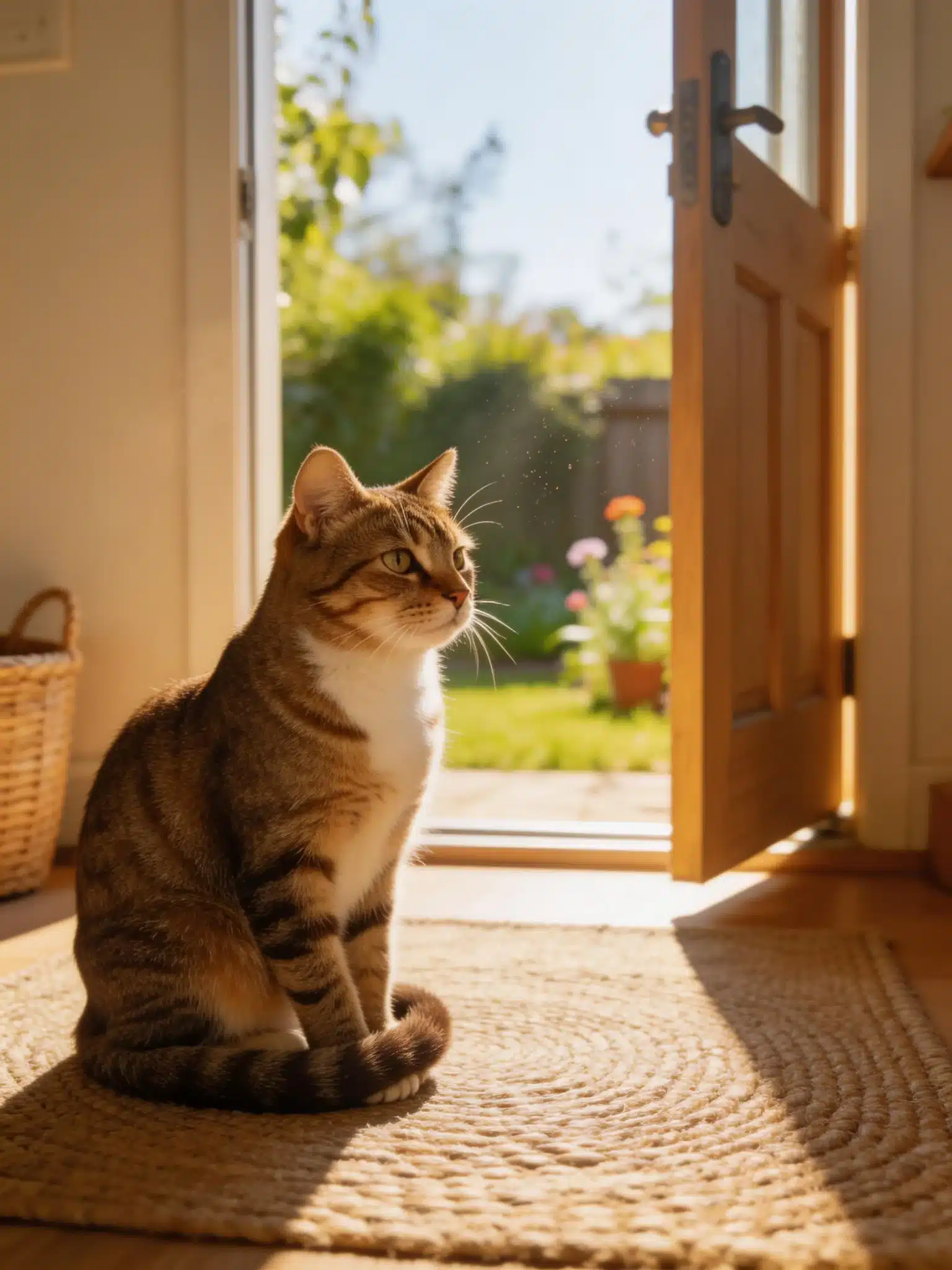
The key is a slow, controlled introduction to the outdoors combined with strong recall training and the right safety tools. Cats that feel secure in their environment and bonded to their owner are far less likely to bolt. Start small, stay consistent, and always set your cat up for success.
- Never let your cat outside for the first time unsupervised
- Build a strong recall habit using treats and a consistent cue word
- Consider a cat harness and leash for early outdoor trips
- Let your cat explore your yard on their own terms — never rush them
- Make sure your cat is microchipped and wearing an ID tag
- Always go outside with your cat the first several times
- Feed meals indoors so your cat always has a reason to come home
Get Your Cat Ready Before Opening the Door
Get FREE Guide Every Week
Join 10,000+ dog & cat owners. Vet-approved advice every week
🔒 No spam. Unsubscribe anytime.

Preparation is everything. A cat that is spayed or neutered, up to date on vaccines, and microchipped is much safer outdoors than one that isn’t.
Intact cats have a strong drive to roam and find a mate. That biological pull can override even the strongest bond with their owner.
Talk to your vet before making the switch to outdoor access. They can flag any health concerns and make sure your cat’s vaccinations cover outdoor risks like feline leukemia and rabies.
🛒 Vet Recommended for Yeasty Paws
Microchip and ID Tag Are Non-Negotiable
Even the most well-trained cat can get spooked and run. A microchip gives you the best chance of getting them back if they do.
Pair the microchip with a breakaway collar with an ID tag so anyone who finds your cat can contact you right away.
Always keep your contact info updated in the microchip registry. A chip is only as useful as the information attached to it.
Train a Strong Recall Before Going Outside

Recall training is the single most valuable skill you can teach your cat. It means your cat learns to come to you when called — every single time.
Start this training indoors, weeks before you ever open the back door. Use a consistent cue word like “here kitty” or their name, and always pair it with a high-value treat.
Practice five to ten times a day in short sessions. Once your cat nails it inside, they’ll be much more likely to respond when called outdoors too.
Choosing the Right Treats for Training
Not all treats are created equal when it comes to motivation. You want something your cat absolutely loves and only gets during training sessions.
High-value cat training treats like freeze-dried chicken or tuna-flavored soft bites tend to work really well.
Keep training sessions short and always end on a win. If your cat walks away, that’s your cue to stop for now and try again later.
How to Introduce Your Cat to the Outdoors Step by Step

Rushing this process is the number one mistake cat owners make. Take it slow and let your cat set the pace.
- Start with a harness and leash indoors. Let your cat wear the harness around the house for a few days so it doesn’t feel strange.
- Open the door and let your cat look out. Don’t push them outside — let curiosity do the work.
- Step outside together on leash. Stay close and let your cat sniff around for five to ten minutes.
- Go back inside before your cat wants to. Always end the session while your cat is still enjoying themselves.
- Gradually extend outdoor time over days and weeks as your cat builds confidence.
- Practice your recall cue every single outdoor session so it stays sharp.
- Only remove the leash once your cat reliably comes when called and seems calm outdoors.
Be patient — some cats adapt in a week, others take a month. There’s no rush, and slower is almost always safer.
Use the Right Gear to Keep Your Cat Safe

A good harness is your best friend during early outdoor adventures. Look for one that fits snugly but doesn’t restrict movement — your cat should be able to walk naturally but not slip free.
The escape-proof cat harness styles with a figure-eight or H-shape design tend to be much more secure than simple vest-style options.
If you have a yard, a catio or outdoor cat enclosure is a fantastic long-term solution. It gives your cat fresh air, stimulation, and safety all at once.
Make Your Yard a Place Your Cat Wants to Stay
Cats are less likely to wander if their immediate environment is interesting and comfortable. Add hiding spots, climbing options, and areas to sunbathe.
You can also check out some creative DIY cat toy ideas that can be adapted for outdoor play to keep your cat engaged right in your own backyard.
A stimulated cat is a cat that has no reason to go looking for adventure elsewhere.
Build a Daily Routine Your Cat Can Count On
Cats are creatures of habit, and routine is one of your most powerful tools. Feed your cat indoors at the same times every day so they always have a reason to come home.
Let them out at consistent times too. Over time, most cats learn their schedule and will actually come home on their own when they’re ready for food and rest.
Understanding your cat’s behavior also helps — if you’ve ever wondered about things you might be doing that your cat secretly hates, it’s worth a read. A cat that feels stressed at home is more motivated to escape.
Expert Insights and What the Research Shows
According to veterinary behaviorists, the biggest risk factor for a cat running away outdoors is being rushed into the experience before they’re ready. Gradual exposure and positive associations are key.
A 2024 study published in the journal Frontiers in Veterinary Science found that cats allowed outdoor access in a controlled, gradual way showed lower stress markers than those kept exclusively indoors with no enrichment. Outdoor time, done right, is genuinely good for most cats.
Dr. Karen Becker, a well-known integrative veterinarian, recommends treating outdoor training like you would any behavioral modification — small steps, positive reinforcement, and never punishing a cat for hesitation or fear.
Frequently Asked Questions About Letting Your Cat Outside Safely
How Long Should I Wait Before Letting a New Cat Outside?
Most experts recommend waiting at least four to six weeks after bringing a new cat home before allowing outdoor access. This gives your cat time to fully bond with you and see your home as their safe base. Rushing this is one of the most common reasons cats run away.
What If My Cat Darts Out the Door Before I’m Ready?
Stay calm and don’t chase them — that almost always makes things worse. Crouch down, use your recall cue, and shake a treat bag if you have one nearby. If they run, leave the door open and give them space to come back on their own.
Is It Safe to Let My Cat Outside at Night?
Nighttime outdoor access carries higher risks including predators, traffic, and territorial fights with other cats. Most veterinarians recommend keeping cats indoors after dark. If your cat insists on being out at dusk, a reflective safety collar can help drivers spot them.
My Cat Was Indoor-Only for Years — Is It Too Late to Start?
It’s never too late, but older indoor cats may take longer to adjust and might prefer a catio over free-roaming access. Start even slower than you would with a younger cat, and watch their body language closely. Some cats are perfectly happy staying indoors with plenty of enrichment.
How Do I Know My Cat Is Ready to Go Outside Without a Leash?
Your cat is ready when they respond to their recall cue reliably every time outdoors, seem calm and confident rather than panicked, and have shown no signs of trying to bolt during leashed sessions. There’s no set timeline — trust your gut and don’t rush it.
You’ve Got This
Letting your cat outside safely is absolutely possible with patience and the right approach. Start with recall training this week — even five minutes a day indoors makes a huge difference. Your cat will thank you with purrs, and you’ll both enjoy the outdoors with a lot less stress.