The best long-lasting chews for pit bulls that won’t break their teeth are those rated softer than the dog’s tooth enamel — options like bully sticks, rubber chew toys, and raw bones that flex or compress under pressure. Pit bulls are powerful chewers, and the wrong chew can crack a tooth in a single session.
Finding safe chews for this breed takes more than grabbing the biggest option on the shelf. Veterinary dental specialists have specific guidelines, and knowing them protects your dog’s teeth for life.
What Are the Best Long-Lasting Chews for Pit Bulls That Won’t Break Their Teeth?
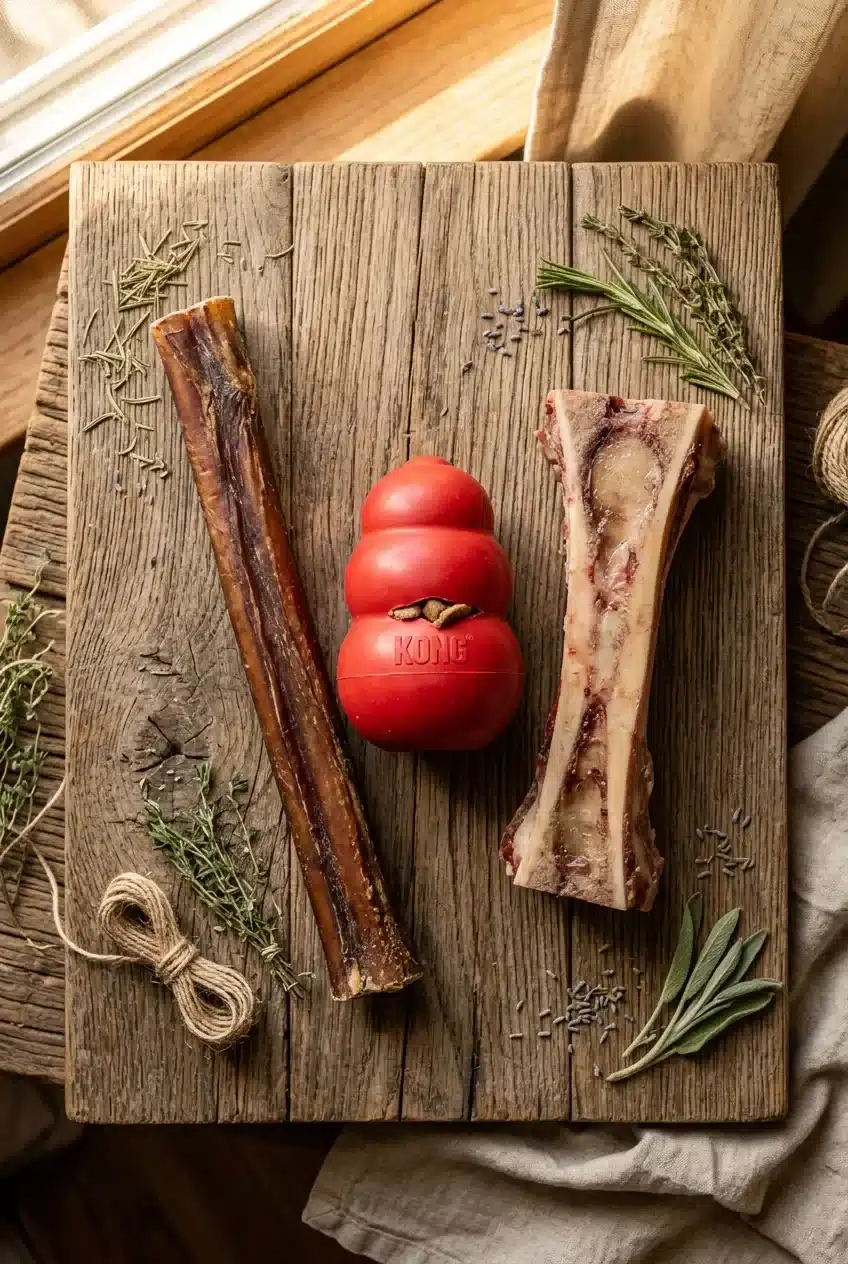
The safest long-lasting chews for pit bulls are bully sticks, rubber chew toys (like Kong), and raw meaty bones — all of which provide extended chewing without the fracture risk of hard bones or antlers. Avoid anything harder than your thumbnail, which is the standard veterinary guideline for assessing chew safety.
- Bully sticks: fully digestible, last 30–60 minutes for strong chewers
- Raw beef knuckle bones: softer than weight-bearing bones, lower fracture risk
- Rubber chews (stuffed Kong): customizable difficulty, nearly indestructible
- Himalayan yak chews: compressed cheese, softens as it’s chewed
- Collagen sticks: gentler than rawhide, digestible, long-lasting
- Nylon chews labeled “for power chewers”: designed to resist but not shatter
Why Pit Bulls Need Special Attention When It Comes to Chews
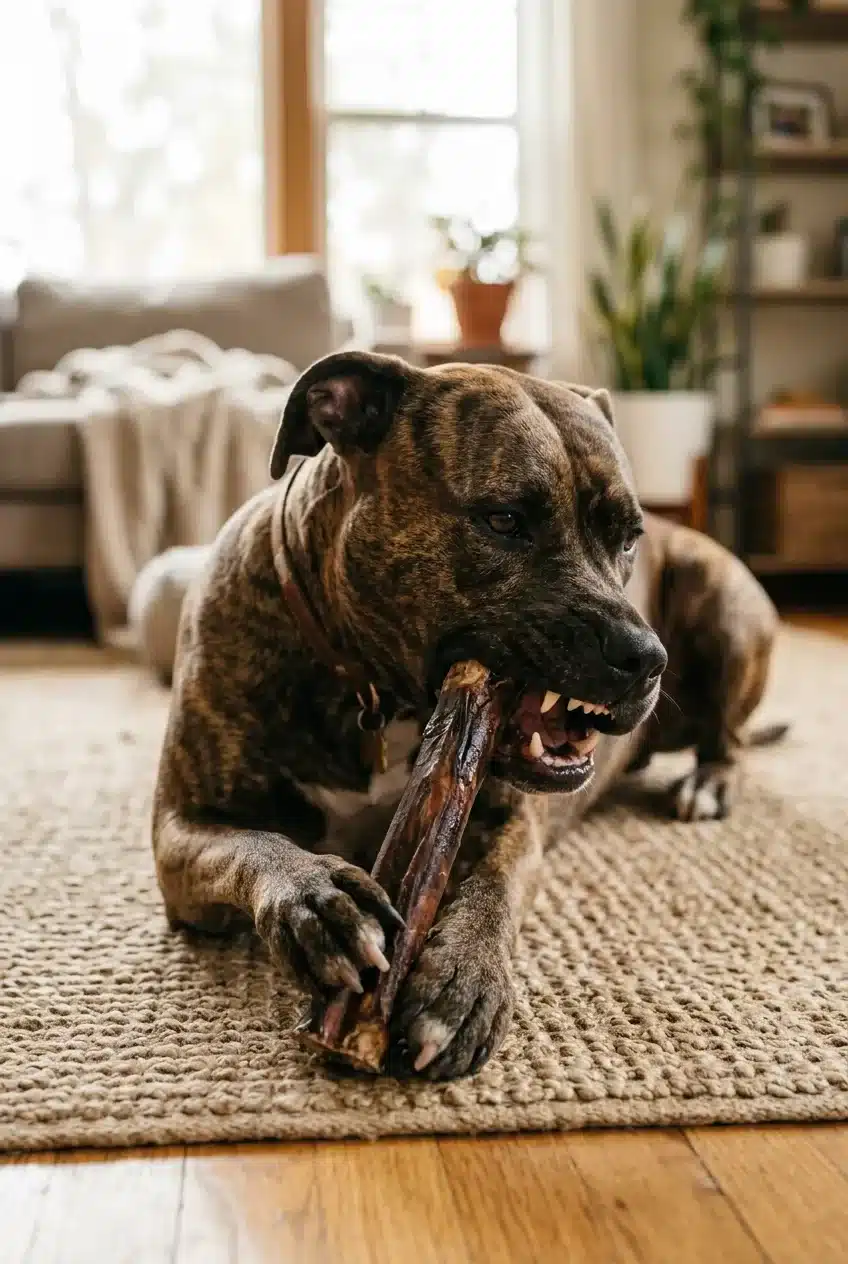
Pit bulls have one of the strongest bite forces among domestic dog breeds, with measurements frequently cited between 235–300 PSI in popular sources — though peer-reviewed data on breed-specific bite force remains limited. That power means they can destroy a chew that would last a Labrador a week.
Slab fractures — where a large piece of tooth shears off — are the most common dental injury in heavy chewers. The American Veterinary Dental College (AVDC) warns that hard chews are a leading cause of tooth fractures in dogs.
The AVDC recommends the “thumbnail test”: if you can’t indent the chew with your thumbnail, it’s too hard for any dog’s teeth.
Pit bulls are also prone to enthusiastic, repetitive chewing rather than gentle gnawing. This increases cumulative stress on teeth over time, even from chews that seem safe at first glance.
The breed’s strength is an asset — but it demands more careful chew selection than most owners expect.
Get Free Dog Health Tips!
Weekly guides on keeping your dog healthy & happy
🔒 No spam. Unsubscribe anytime.
The Chews You Should Never Give a Pit Bull
Several popular chews carry a high fracture risk for strong chewers. The AVDC specifically advises against these categories for any dog:
- Antlers: Extremely hard, no give — a leading cause of slab fractures
- Cooked bones: Splinter into sharp shards that can puncture the gut
- Marrow bones (weight-bearing): Femur and tibia bones are dense enough to crack molars
- Hooves: Hard keratin surface with zero flex under pressure
- Ice cubes: Surprisingly hard — repeated crunching can stress enamel
How to Choose the Right Chew Hardness for Your Pit Bull
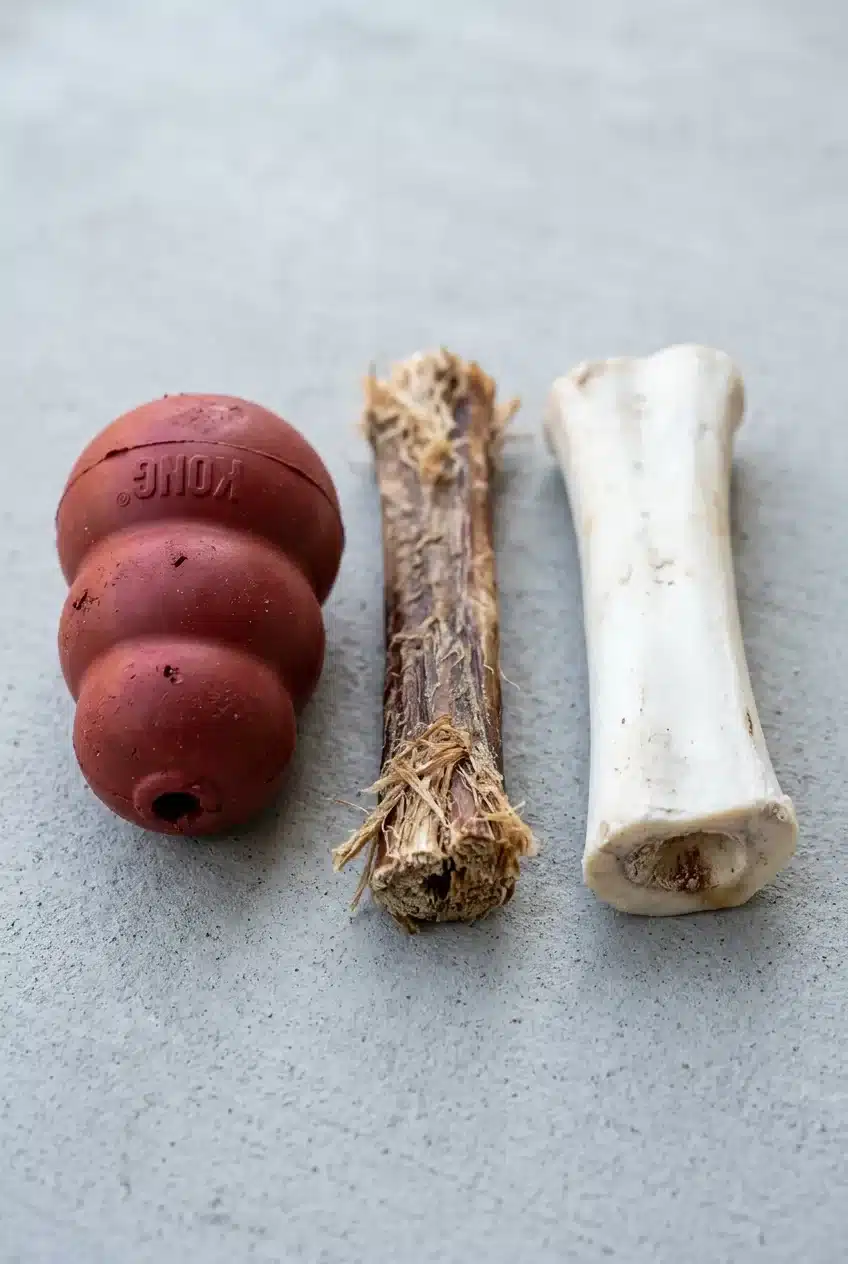
Chew hardness is the single most important factor in preventing tooth fractures. A chew should bend, compress, or shred — not resist with zero give.
Veterinary dentists group chews into three rough categories based on hardness and risk. Here’s how they compare:
MOST POPULAR THIS WEEK
Vet-Recommended Articles: 👇
👉 Why Does My Dogs Skin Turn Dark And Thick After Years Of Allergy Treatment
👉 Best Home Remedies For Arthritis In Dogs With Limping
👉 How Long Does An Elimination Diet Take For Dogs With Skin Allergies
| Chew Type | Hardness Level | Fracture Risk | Lasts How Long? |
|---|---|---|---|
| Bully sticks | Soft-medium | Low | 30–90 min |
| Raw knuckle bones | Medium | Low-medium | Several sessions |
| Himalayan yak chews | Medium-hard | Low-medium | 1–3 hours |
| Nylon power chewer toys | Firm but flexible | Low | Weeks-months |
| Antlers / hooves | Very hard | High | Long but dangerous |
Size also matters. A chew too small for your pit bull becomes a choking hazard once it wears down. Always size up — choose chews labeled for dogs 10–20 lbs heavier than your dog’s actual weight.
Raw vs. Cooked Bones: What the Evidence Says
Raw bones retain moisture and flexibility, which reduces the chance of splintering. Cooked bones dry out and become brittle — the AVDC advises against all cooked bones for this reason.
If you choose raw bones, opt for raw beef knuckle bones rather than weight-bearing leg bones. Knuckle bones have cartilage and softer tissue that gives under chewing pressure.
Supervise every raw bone session. Remove the bone once it’s been chewed down to a size your dog could swallow whole.
Top Chew Options That Last Longest for Pit Bulls
Longevity is relative to the individual dog’s chewing intensity. These options consistently outlast most alternatives for strong chewers while staying within safe hardness ranges.
Bully Sticks
Bully sticks are made from dried bull pizzle. They’re fully digestible, free of artificial additives in quality brands, and soften as your dog chews — which means fracture risk stays low throughout the session.
For a pit bull, choose thick bully sticks designed for large breeds — the thinner 6-inch versions disappear in minutes. Braided or jumbo-sized versions can stretch a session to an hour or more.
Stuffed Rubber Chew Toys
A Kong Extreme rubber chew toy stuffed with frozen peanut butter or kibble is one of the safest long-duration options available. The rubber has significant flex and is rated specifically for power chewers.
Freezing the filling extends the session considerably — sometimes 30–45 minutes for a motivated pit bull. This also makes it useful for crate settling, similar to techniques discussed in guides on how long a puppy can hold their bladder in a crate.
Himalayan Yak Chews
These compressed cheese chews are harder than bully sticks but soften as your dog works on them. They pass the thumbnail test for most medium-hardness versions.
Look for “extra large” or “XL” sizing. Once the chew wears down to a small nub, microwave it for 30–45 seconds — it puffs into a safe, crunchy cheese puff your dog can finish safely.
Collagen Sticks
Collagen sticks have grown in popularity as a rawhide alternative. They’re made from beef collagen (the inner layer of cattle hide), are digestible, and hold up longer than standard rawhide under strong chewing.
Collagen sticks for large dogs are worth keeping on hand as a rotation option to prevent your pit bull from getting bored with any single chew type.
How to Introduce a New Chew Safely
Introducing any new chew should be a supervised process — especially with a breed known for powerful, determined chewing.
- Supervise the first three sessions — watch how your dog approaches the chew and check for aggressive chomping versus steady gnawing.
- Apply the thumbnail test before every new chew type — press your thumbnail firmly into the surface; if it doesn’t indent, discard or return the product.
- Check for sharp edges after 15–20 minutes of chewing — natural chews can develop points as they wear down.
- Remove the chew once it reaches a size your dog could swallow in one piece — generally when it’s smaller than your fist.
- Rotate between 2–3 chew types to prevent obsessive chewing patterns and keep sessions engaging without over-relying on one option.
Success looks like steady, focused chewing — not frantic biting, gagging, or gulping large pieces.
Common Mistakes Pit Bull Owners Make With Chews
- Choosing antlers for “durability”: Antlers last a long time because they’re extremely hard — hard enough to fracture a molar. Switch to nylon power chewer toys or jumbo bully sticks instead.
- Leaving chews unsupervised: Even a “safe” chew becomes a hazard once it’s worn to a small piece. Always supervise and remove when the chew is down to swallowing size.
- Buying chews sized for the breed label, not the individual dog: A pit bull who chews aggressively needs a size larger than the package’s breed recommendation. Size up by at least one tier.
- Giving cooked bones from the kitchen: Cooked chicken, pork, or beef bones splinter into sharp fragments. This is one of the most common causes of internal injuries in dogs — use raw only, and even then supervise closely.
- Ignoring teeth after chewing sessions: Inspect your dog’s mouth weekly for cracked teeth, bleeding gums, or unusual sensitivity. Early detection prevents costly dental surgery.
Frequently Asked Questions About Best Long-Lasting Chews for Pit Bulls That Won’t Break Their Teeth
Are bully sticks safe for pit bulls?
Bully sticks are generally safe for pit bulls when sized correctly. They’re fully digestible and soft enough to avoid fracturing teeth, though you should supervise sessions and remove small remnants before your dog swallows them whole.
Can pit bulls chew on raw bones?
Pit bulls can chew raw bones safely if you choose softer options like raw knuckle bones rather than dense weight-bearing bones. Always supervise, and never give cooked bones, which splinter into dangerous shards.
How long should a chewing session last for a pit bull?
Most veterinary dentists suggest limiting chew sessions to 15–20 minutes at a time. Extended sessions increase cumulative stress on teeth and raise the risk of gulping large softened pieces.
Are Himalayan yak chews safe for pit bulls?
Himalayan yak chews are considered safe for pit bulls when sized appropriately — choose XL or extra-large versions. They pass the thumbnail test and soften as they’re chewed, reducing fracture risk compared to antlers or hooves.
What chews do vets recommend for strong chewers?
The American Veterinary Dental College recommends rubber chew toys, edible chews that soften under pressure, and avoiding anything that fails the thumbnail test. Bully sticks and Nylabone power chew toys are frequently cited in that context.
How often should I give my pit bull a chew?
Daily chewing is fine for most pit bulls using soft-to-medium chews like bully sticks or rubber toys. Harder natural chews like raw bones are better limited to a few times per week to reduce cumulative tooth stress.
The Right Chew Makes All the Difference
The best long-lasting chews for pit bulls that won’t break their teeth all share one trait: they give under pressure. Bully sticks, stuffed rubber toys, Himalayan yak chews, and collagen sticks sit at the top of that list for good reason.
Start with the thumbnail test on every new chew you consider. If it passes, supervise the first few sessions and watch how your dog interacts with it.
For further reading on keeping your dog mentally and physically engaged, explore resources on the best toys for enrichment — the same engagement principles apply across species. Your pit bull’s teeth are worth protecting, and the right chew is the easiest place to start.