Homemade dog food for Cushings disease should be low in fat, moderate in high-quality protein, and free from added sugars and refined carbohydrates. A carefully planned homemade diet can help manage symptoms and support your dog’s overall health alongside veterinary treatment.
If your dog has just been diagnosed with Cushings disease, you are probably feeling overwhelmed. What you feed your dog every day genuinely matters with this condition, and getting the diet right can make a real difference to how your dog feels.
What Should a Dog with Cushings Disease Eat?
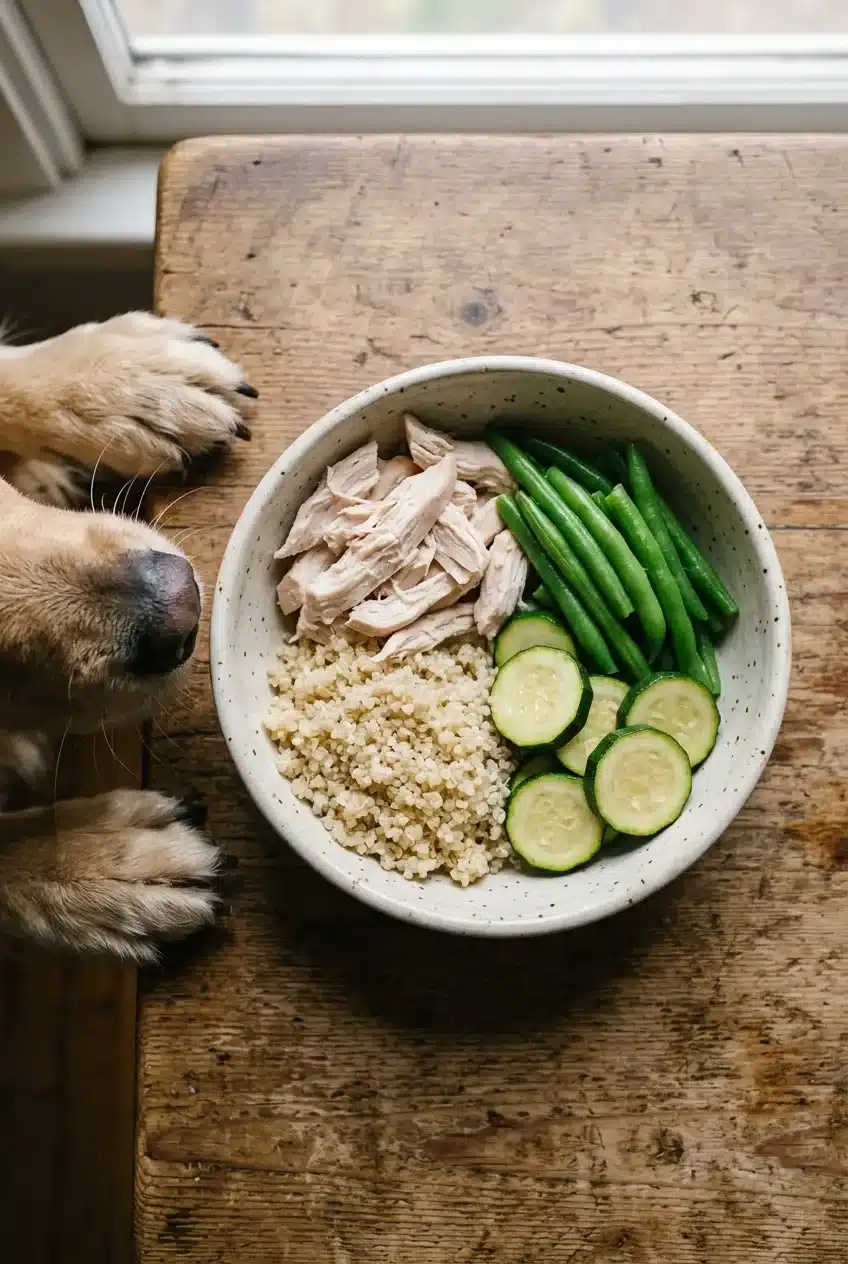
Dogs with Cushings disease do best on a diet that is low in fat, moderate in lean protein, and low in simple carbohydrates. This helps counter the metabolic effects of excess cortisol, which raises blood sugar and promotes fat storage.
- Choose lean proteins: chicken, turkey, white fish, or eggs
- Avoid high-fat ingredients: no fatty cuts of beef, no skin-on poultry
- Skip starchy carbs: no white rice, white potato, or corn
- Use low-glycemic vegetables: green beans, zucchini, broccoli, spinach
- No added salt, sugar, or artificial seasonings
- Always work with a veterinary nutritionist when building a homemade diet
What Cushings Disease Actually Does to Your Dog’s Body
Cushings disease, formally called hyperadrenocorticism, happens when the adrenal glands produce too much cortisol. Cortisol is a stress hormone, and in excess, it disrupts nearly every system in the body.
The excess cortisol raises blood glucose, promotes fat deposits especially around the belly, and causes muscle wasting. It also weakens the immune system and increases thirst and urination. You can read more about how dogs live with Cushings disease and what the long-term outlook looks like.
Diet does not cure Cushings disease, but it can meaningfully reduce the metabolic burden on your dog’s body.
| Body System | Effect of Excess Cortisol | Dietary Response |
|---|---|---|
| Blood Sugar | Chronically elevated | Low-glycemic carbs only |
| Fat Metabolism | Increased fat storage | Low dietary fat |
| Muscle Mass | Muscle wasting over time | Adequate lean protein |
| Immune System | Suppressed function | Antioxidant-rich vegetables |
What Causes Cushings Disease in Dogs
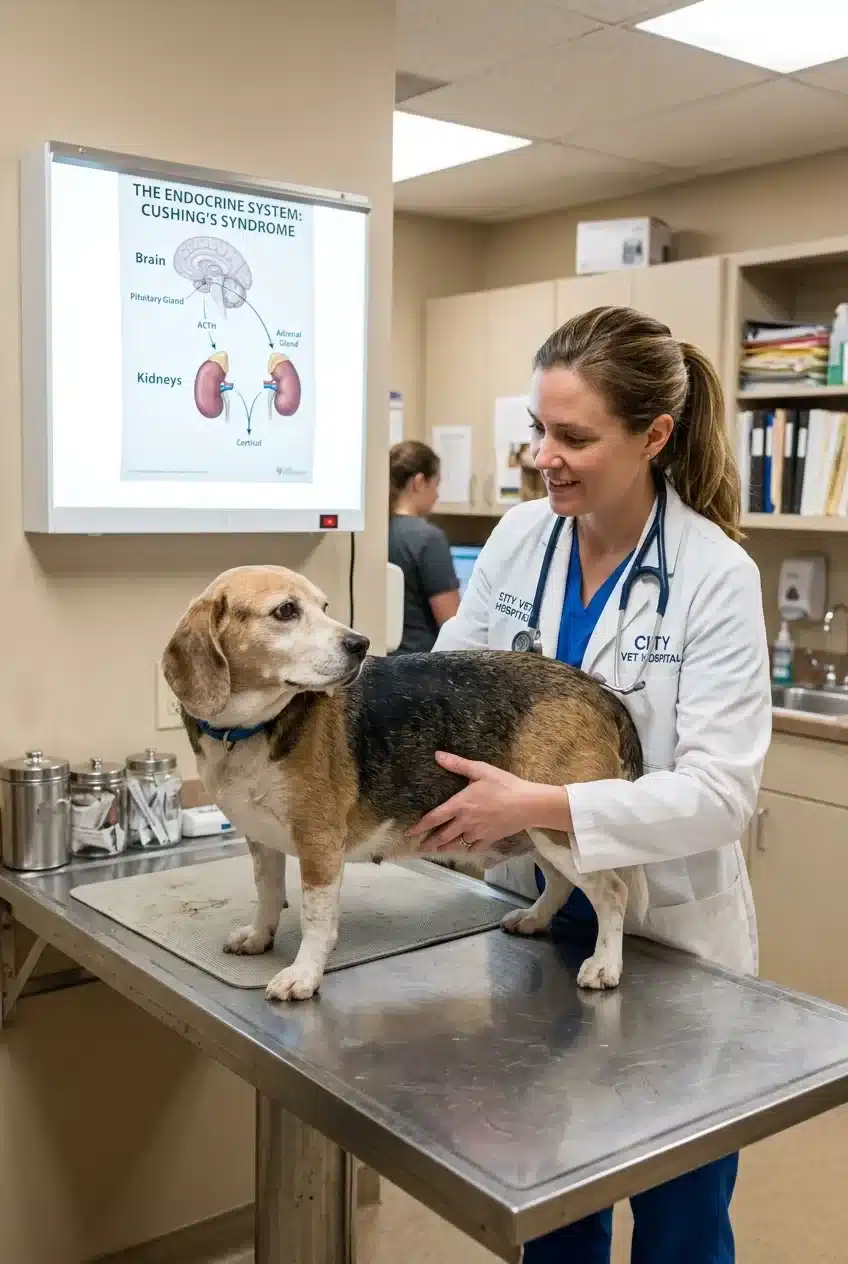
Understanding the cause helps you make smarter choices about your dog’s care. Cushings disease has three main causes, and two of them are far more common than the third.
- Pituitary-dependent (PDH): A benign tumor on the pituitary gland signals the adrenals to overproduce cortisol. This accounts for approximately 80-85% of all canine Cushings cases, according to the Merck Veterinary Manual.
- Adrenal tumor: A tumor on one adrenal gland directly produces excess cortisol. This accounts for roughly 15-20% of cases.
- Iatrogenic Cushings: This is caused by long-term steroid medication use, not a natural tumor. It resolves when steroids are gradually tapered under veterinary supervision.
Signs of Cushings Disease in Dogs
Cushings disease tends to develop slowly, which means many pet parents mistake early symptoms for normal aging. Knowing what to look for helps you act sooner.
Get Free Dog Health Tips!
Weekly guides on keeping your dog healthy & happy
🔒 No spam. Unsubscribe anytime.
- Increased thirst and urination – your dog drinks and urinates far more than usual (Monitor – watch for 24-48 hours)
- Pot-bellied appearance – the abdomen sags or distends noticeably, caused by fat redistribution and muscle weakness (Monitor – watch for 24-48 hours)
- Hair loss – symmetrical thinning on the flanks and trunk, not the head or legs (Monitor – watch for 24-48 hours)
- Increased appetite – constant hunger even after eating a full meal (Monitor – watch for 24-48 hours)
- Lethargy and exercise intolerance – tires quickly on walks your dog used to handle easily (Monitor – watch for 24-48 hours)
- Skin thinning and bruising – skin appears fragile, heals slowly, or bruises easily (Monitor – watch for 24-48 hours)
- Sudden collapse or seizures – can indicate a large pituitary tumor causing neurological pressure (Emergency – see a vet immediately)
- Rapid, labored breathing at rest – can signal a secondary complication such as pulmonary thromboembolism (Emergency – see a vet immediately)
When to See a Vet About Your Dog’s Cushings Disease
If your dog collapses, has a seizure, or shows sudden difficulty breathing, go to an emergency vet tonight – do not wait until morning.
These symptoms can indicate a large pituitary tumor pressing on the brain, or a dangerous blood clot in the lungs, both of which are known complications of untreated Cushings disease.
For most dogs showing the classic signs – increased thirst, pot belly, hair loss, and lethargy – book a regular vet appointment within the next few days. This is not usually a same-night emergency, but it should not wait weeks.
- Emergency vet tonight: seizures, collapse, severe breathing difficulty
- Regular vet within 48-72 hours: sudden worsening of known symptoms, signs of infection in the skin
- Scheduled vet appointment: first-time symptoms matching the list above
- Veterinary nutritionist referral: before starting any homemade diet for Cushings disease
If you are in a rural area without 24-hour emergency vet access, call the ASPCA Animal Poison Control line or your nearest emergency clinic by phone for guidance while you travel.
Homemade Dog Food for Cushings Disease: What You Can Do at Home
Building a safe homemade diet for a dog with Cushings disease takes planning. The goal is to reduce metabolic stress while still meeting all of your dog’s nutritional needs.
- Choose a lean protein base. Skinless chicken breast, turkey, white fish like cod or tilapia, or scrambled eggs are all good options. Aim for protein to make up roughly 30-40% of the meal by volume.
- Add low-glycemic vegetables. Green beans, zucchini, broccoli, spinach, and kale are all Cushings-friendly. Avoid corn, peas, and white potato, which spike blood sugar.
- Skip the grain or go low-glycemic. If you include a carbohydrate source, choose cooked sweet potato in small amounts or omit grains entirely. Avoid white rice and pasta.
- Supplement correctly. Homemade diets almost always lack key nutrients. Work with a veterinary nutritionist to identify gaps, and consider a dog multivitamin formulated for homemade diets as directed by your vet.
- Cook everything plain. No garlic, onions, salt, butter, or oils. Many common seasonings are toxic to dogs.
- Portion carefully. Use a dog feeding schedule and food planner to keep meals consistent and avoid overfeeding, which worsens fat accumulation.
Never start a fully homemade diet for a Cushings dog without a veterinary nutritionist reviewing the recipe first.
The American College of Veterinary Nutrition recommends that all homemade dog diets be formulated by a board-certified veterinary nutritionist to avoid unintentional nutrient deficiencies, which are common even in well-intentioned home recipes.
Vet-Prescribed and Supportive Treatments for Cushings Disease
Diet is one piece of the puzzle. Most dogs with Cushings disease also need medical treatment, and it is important to understand what your vet may recommend.
| Treatment | What It Does | When It Is Used |
|---|---|---|
| Trilostane (prescription) | Blocks cortisol production in the adrenal glands | Most common medical treatment for PDH and adrenal tumors |
| Mitotane (prescription) | Destroys cortisol-producing cells in the adrenal glands | Alternative when trilostane is not tolerated |
| Adrenal surgery | Removes a tumor directly from the adrenal gland | Used for adrenal-dependent Cushings in eligible dogs |
| Dietary management | Reduces metabolic load and supports organ function | Used alongside all medical treatments, not instead of them |
| Steroid taper | Reverses iatrogenic Cushings by reducing medication | Used when Cushings was caused by long-term steroid use |
Most dogs on medication show measurable improvement within four to eight weeks, though cortisol levels are monitored regularly with blood tests throughout treatment. Diet changes can complement medical treatment but do not replace it.
Breeds Most Prone to Cushings Disease
Cushings disease can affect any dog, but certain breeds develop it at significantly higher rates. If your dog is one of the following breeds, earlier screening conversations with your vet make sense.
- Poodles (all sizes): Among the most commonly diagnosed breeds, particularly miniature and toy poodles
- Dachshunds: High incidence of pituitary-dependent Cushings in this breed
- Bichon Frises: Prone to hormonal disorders including Cushings – good diet planning is especially important; see our guide to the best dog food for Bichon Frises
- Boxers: More likely to develop adrenal tumors than many other breeds
- Boston Terriers: Elevated risk compared to the general dog population
- Yorkshire Terriers: Frequently diagnosed, often later in life
Common Mistakes Pet Parents Make With Cushings Diets
- Feeding high-fat proteins thinking more protein is always better. Fatty cuts like ground beef or salmon skin add to the fat load that a Cushings dog already struggles to metabolize. Stick to lean sources and trim all visible fat.
- Using white rice as the safe carb choice. White rice has a high glycemic index and worsens the blood sugar instability that excess cortisol already causes. Choose low-glycemic vegetables instead.
- Skipping nutritional supplements in a homemade diet. Home-cooked meals almost never meet 100% of a dog’s micronutrient needs without deliberate supplementation. A deficiency can develop silently over months. Always have a veterinary nutritionist balance the recipe.
- Treating diet as a replacement for medication. It is easy to hope that a clean diet will be enough. For most dogs, it will not control cortisol levels on its own. Diet supports medication – it does not substitute for it.
- Feeding treats that undo the diet. A single high-fat commercial treat can undermine an otherwise careful meal plan. Choose low-fat, single-ingredient treats like plain boiled chicken or low-fat dog treats when rewarding your dog.
Prevention Tips for Supporting a Dog with Cushings Disease
You cannot prevent Cushings disease itself, since most cases involve tumor growth. But you can take specific steps to slow its progression and reduce complications.
- Schedule bloodwork every six months. Regular monitoring lets your vet catch cortisol changes before symptoms worsen. Cushings dogs on medication need ACTH stimulation testing at specific intervals.
- Keep your dog at a healthy weight. Excess body fat worsens cortisol-driven metabolic problems. Work with your vet to set a realistic target weight and stick to measured portions.
- Limit sun exposure on thinning skin. Cushings dogs often develop fragile, sun-sensitive skin. Limit midday sun time and watch for sores or infections.
- Avoid unnecessary steroid medications. Always remind any vet treating your dog for other conditions that they have Cushings disease, since additional steroids can destabilize cortisol levels.
- Keep a symptom diary. Tracking thirst, urination, energy, and appetite helps your vet spot trends between appointments faster than memory alone.
Frequently Asked Questions About Homemade Dog Food for Cushings Disease
Can homemade dog food cure Cushings disease?
Homemade dog food for Cushings disease cannot cure the condition, since most cases are caused by a tumor. A well-planned diet supports treatment by reducing metabolic stress but must be used alongside veterinary care.
What vegetables are safe for a dog with Cushings disease?
Safe vegetables for Cushings dogs include green beans, zucchini, broccoli, spinach, and kale. Avoid starchy vegetables like corn, peas, and white potato, which raise blood sugar levels.
How much does a homemade Cushings diet cost per month?
A homemade diet using lean proteins like chicken breast and fresh vegetables typically costs between $60 and $150 per month for a medium-sized dog, depending on your location and portion size.
How long does it take to see improvement once diet changes are made?
Dietary changes alone rarely produce dramatic improvements quickly. Combined with prescribed medication, most dogs show measurable symptom improvement within four to eight weeks of starting treatment.
Can I add supplements to my dog’s homemade Cushings diet?
Supplements can fill nutritional gaps in a homemade diet, but you should only add them under guidance from a veterinary nutritionist. Incorrect supplementation can create new imbalances and worsen your dog’s health.
Is fish oil good for dogs with Cushings disease?
Fish oil has anti-inflammatory properties that may offer some benefit, but it is also a fat source. Because Cushings dogs need a low-fat diet, consult your regular vet before adding fish oil to your dog’s meals.
The One Thing That Matters Most
The most important step you can take right now is to book an appointment with your vet and ask specifically for a referral to a board-certified veterinary nutritionist before making major diet changes. Homemade dog food for Cushings disease can genuinely improve your dog’s quality of life when it is built correctly.
Your dog is lucky to have a pet parent who cares enough to research this. Take that energy and channel it into one concrete action: get the right professional support, build the right recipe, and stay consistent.
For more on life with this condition, the full guide on how dogs live with Cushings disease covers the long-term picture in detail.