
Behavioral issues are the reason for more than a third of dog surrenders to shelters.
Destructive chewing is named specifically, right alongside separation anxiety and aggression.
If you’ve just brought home a rescue dog who chews like the world is ending the moment you leave, you’re not imagining it. Your dog isn’t broken.
He’s coping the only way he knows how — and the right chew toy can genuinely help redirect that stress into something safe.
This guide is built specifically for rescue dogs: unknown bite history, trauma carried over from a shelter kennel, and an adjustment period that regular “tough chewer” toy lists don’t account for.
Why Rescue Dogs Chew Differently
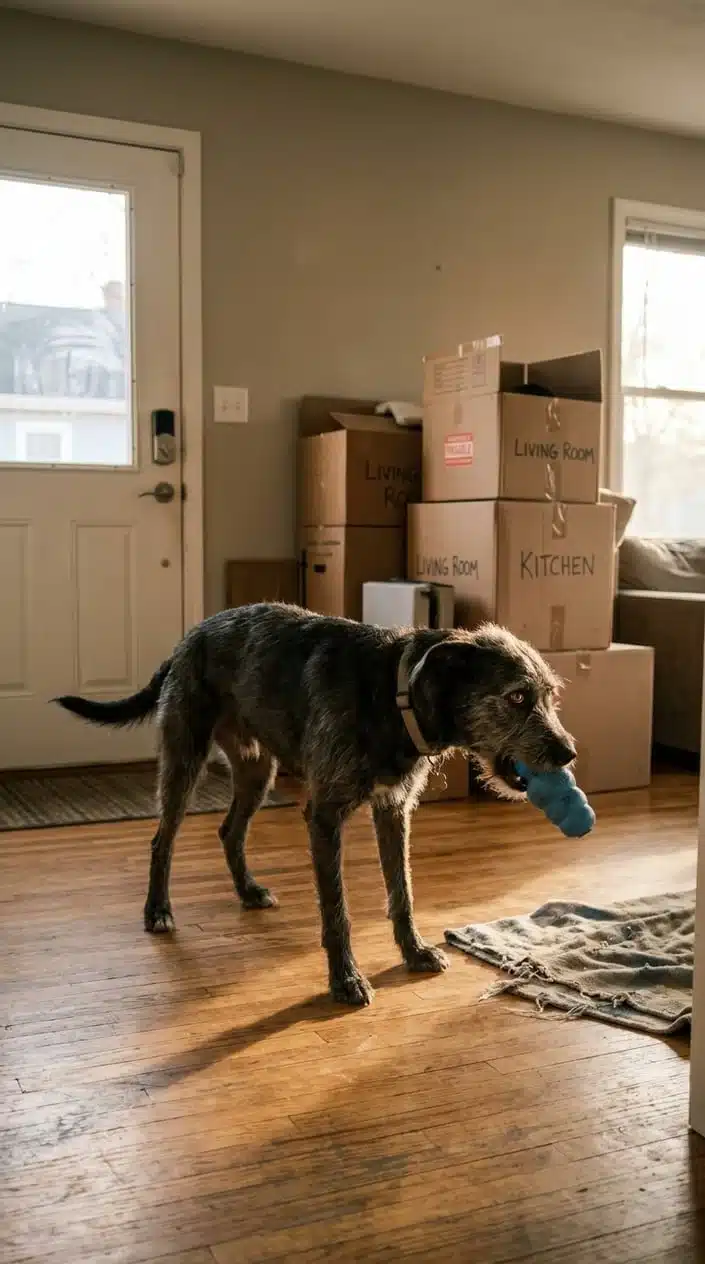
A dog you’ve raised from a puppy comes with a known history. You know what set them off, what calmed them down, and roughly how strong their jaw is.
A rescue dog comes with none of that. You’re often flying blind on bite force, trigger points, and coping style.
Shelter dogs also carry stress forward. Kennel life is loud, unpredictable, and short on control — and many dogs keep grabbing and shaking things even after they’re safely home, simply because that pattern kept them occupied for weeks or months.
Add a brand-new environment, a new routine, and the sudden absence of a person they’ve just started to trust, and chewing becomes the release valve.
None of this means your dog is “bad” or untrainable. It means the first few months call for extra caution and the right tools.
Get Weekly Dog Care Tips Free
Join 10,000+ dog & cat owners. Vet-approved advice every week
🔒 No spam. Unsubscribe anytime.
Anxiety Chewing vs. Boredom Chewing vs. Teething
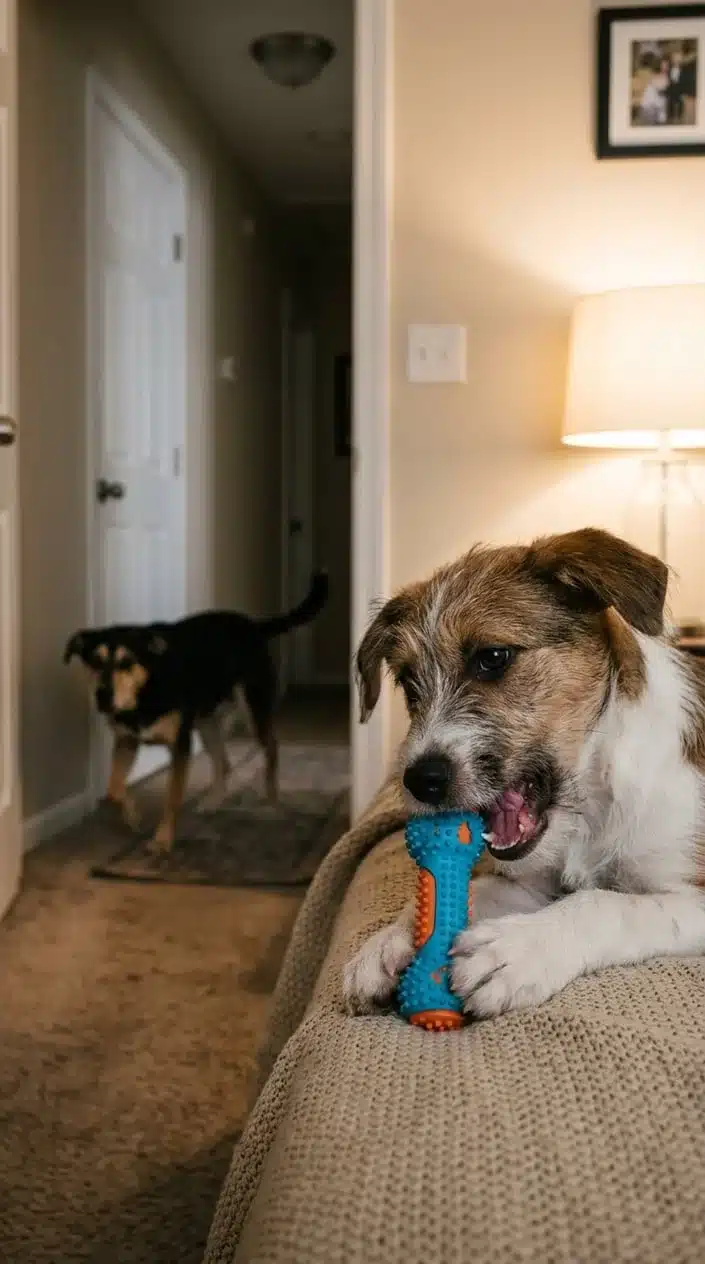
Not all destructive chewing comes from the same place, and the fix looks different depending on the cause.
| Type | When It Happens | What It Looks Like |
|---|---|---|
| Anxiety-driven | Almost always when alone, or right as you’re leaving | Chewing near doors, windows, or exit points; often paired with drooling, pacing, or whining |
| Boredom-driven | Any time, home or not | Random household items targeted, not just exits; settles once the dog is mentally engaged |
| Teething | Puppies, roughly 3–6 months old | Gums look irritated; chewing focuses on anything within reach for relief |
Rescue dogs frequently show a mix of all three, especially in the first few weeks.
A dog who chews only when you leave and calms down the moment you’re back is showing classic anxiety-driven behavior — and that’s exactly what this guide targets.
What “Hard” Actually Means (Material Guide)
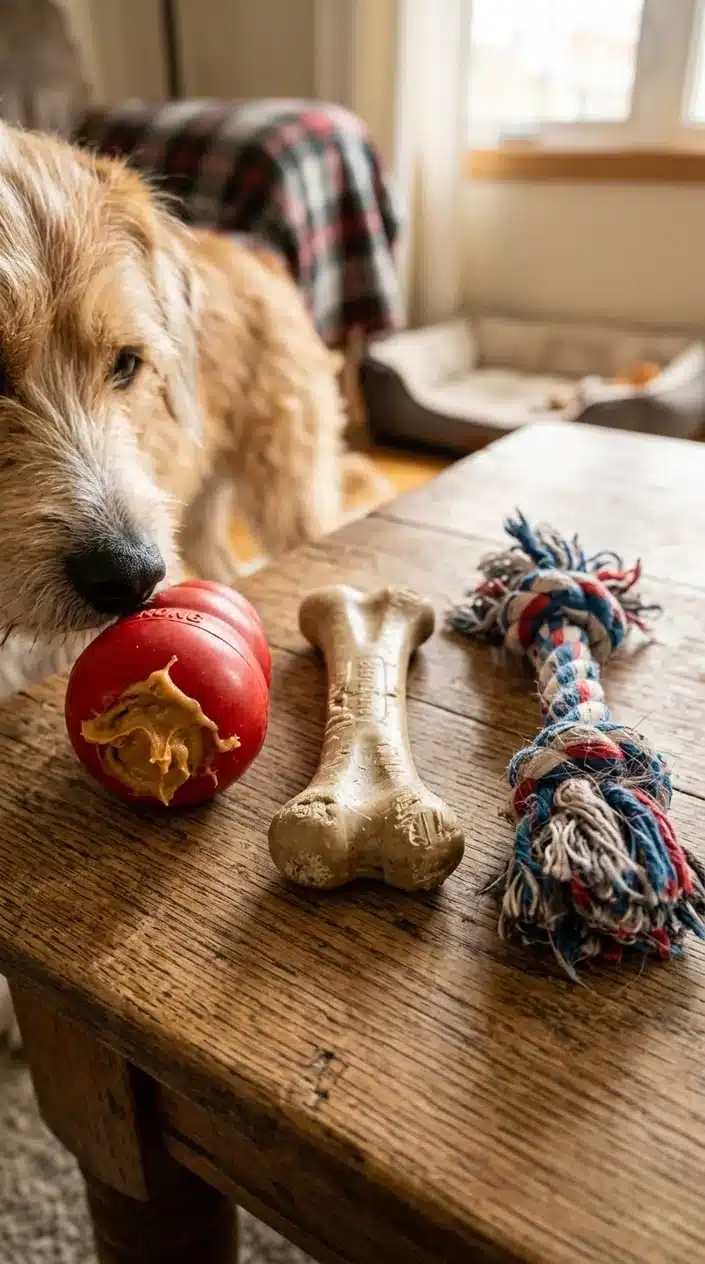
Not every “durable” toy is actually safe for a strong, anxious chewer. Material matters as much as marketing claims.
Natural rubber (KONG-style): Gentle on teeth, holds up to serious pressure, and can be stuffed and frozen for longer engagement.
Nylon: Extremely hard and long-lasting, wears down gradually instead of shredding, but is tougher on teeth than rubber — better for moderate to heavy chewers than for very young or senior rescues.
Rope: Fine for supervised tug play, but not a safe unsupervised chew — loose fibers can be swallowed.
For anxiety-driven chewing specifically, rubber that can be stuffed with food is usually the strongest starting point, since it combines durability with a calming, food-focused activity.
Top Picks for Rescue Dogs With Anxiety-Driven Chewing

Every pick below was chosen for durability first, with anxiety-friendly features (stuffability, easy grip, safe unsupervised use) as the second filter.
1. KONG Extreme — Best Overall
The KONG Extreme is the toy most frequently recommended by trainers and vets across the board for genuinely tough, stress-driven chewers.
It’s stuffable, freezable, and made from KONG’s toughest natural rubber — a good starting point when you don’t yet know how hard your rescue chews.
2. West Paw Zogoflex Tux — Best for Treat-Stuffing Combo
Built specifically for dogs labeled “aggressive chewers,” the Tux is treat-dispensing, floats, and is made in the USA from a proprietary recyclable material.
The dispensing design gives an anxious dog a job to do, which works especially well during the first stretch of alone time in a new home.
3. Nylabone DuraChew XL/Giant 3-Pack — Best Value Multi-Pack
A 3-pack means you can rotate toys, which matters for rescue dogs who lose interest in a single repeated item quickly.
Made in the USA from tough nylon, with a textured surface that also helps control plaque as your dog chews.
4. KONG Extreme Dental — Best Chew + Dental Combo
Same tough KONG Extreme rubber, shaped specifically to clean teeth and gums during chewing sessions.
A smart pick if your rescue’s dental history is as unknown as everything else about them.
5. Nylabone Power Chew Wishbone — Best Easy-Grip Shape
The wishbone shape is easier for nervous or first-time chewers to hold onto than a straight bone, which can help hesitant rescues engage faster.
Made from Nylabone’s toughest nylon, with flavor infused throughout to encourage that first bite.
6. Nylabone DuraChew Original 5-Pack — Best Budget Rotation Pack
Five toys at once means you can offer a fresh option daily during the adjustment period without spending on single toys repeatedly.
A practical choice if you’re not yet sure which shape or size your dog will actually take to.
Budget Pick vs. Splurge Pick
If you’re not ready to commit to a full-price toy before knowing your dog’s chewing style, start with the Nylabone DuraChew 5-Pack — low cost per toy, and enough variety to see what sticks.
If your rescue is already showing serious, sustained chewing power, go straight to the KONG Extreme or West Paw Tux — both are built and tested for that exact chewing intensity.
The Bully Stick Holder: An Overlooked Safety Add-On
One tool most chew toy guides skip entirely: a bully stick holder.
It’s a rubber or nylon grip device that clamps the end of a bully stick and prevents your dog from swallowing the final piece — which is exactly the moment most bully stick accidents happen.
For rescue dogs who are too anxious to engage with puzzle toys but do respond to the simple, repetitive comfort of chewing, a bully stick in a holder can be a safer unsupervised option than the stick alone.
Sizing and Supervision for an Unknown-History Dog
Always size up rather than down when you’re unsure of your rescue’s chewing strength — a toy that’s already bigger than the back of your dog’s mouth is safer and harder to gain damaging leverage on.
For the first week or two, stay in the room during chew sessions no matter how sturdy the toy claims to be.
Once you’ve watched your dog chew safely a few times, you’ll have a much clearer picture of what’s safe to leave them alone with.
When a Toy Isn’t Enough
A chew toy is a tool, not a cure — and that’s worth saying plainly.
If your rescue’s chewing is severe, paired with destroyed furniture, panic at the door, or signs of self-injury from escape attempts, a toy alone won’t resolve it.
That level of anxiety-driven chewing usually needs a certified trainer or veterinary behaviorist involved alongside the right toys, not instead of them.
There’s no shame in reaching out for that support early — it tends to get results faster than waiting to see if the dog “grows out of it.”
Safety Warnings
Weave-check and inspect every toy regularly for cracks, splitting, or small broken-off pieces, and remove immediately if you spot damage.
Introduce any new toy gradually and watch the first few sessions closely, especially with a dog whose chewing history you don’t yet know.
Frequently Asked Questions
How long should a hard chew toy last a rescue dog?
It depends heavily on the individual dog, but a genuinely tough rubber or nylon toy should hold up for weeks to months of regular chewing, not days. If your rescue destroys one within an hour, size up or move to a toy rated for extreme chewers.
Can a chew toy fix separation anxiety on its own?
No — a chew toy helps manage the symptom of destructive chewing, but true separation anxiety usually needs training, routine-building, and sometimes professional behavioral support alongside it.
My rescue dog won’t chew anything at all. Is that normal?
Yes, especially in the first few weeks. Some rescues are too overwhelmed to engage with toys yet. Give it time, keep offering calmly, and don’t force it.
Are rope toys safe to leave with an anxious rescue dog?
Not unsupervised. Rope toys are great for interactive tug play, but the loose fibers can be swallowed if left with a dog alone, so save them for supervised sessions only.
Final Thoughts
Destructive chewing in a rescue dog isn’t a character flaw — it’s a stress response, and it’s genuinely fixable with time, patience, and the right tools.
Start with a durable, stuffable option like the KONG Extreme, watch closely during the first few sessions, and build from there as you learn your dog’s specific chewing style.
🐾 New to rescue dog ownership? A tough chew toy is one piece of the puzzle — the first 30 days set the tone for everything that follows. See our full guide to helping a rescue dog settle in and feel safe.