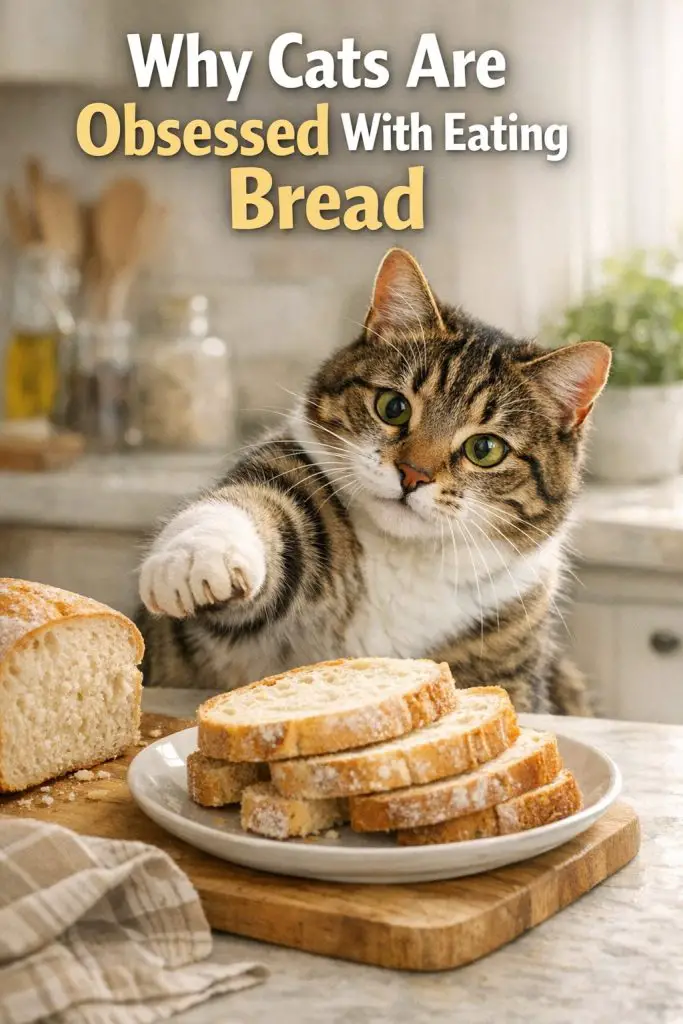
The Mystery of the Missing Loaf
If you’ve ever turned your back for one second and come back to find tiny bite marks in your bread loaf, you’re not alone. Many cat owners have shared the same confused thought: “Why on earth is my cat obsessed with bread?”
I started digging into this topic after my own cat repeatedly tried to steal a sandwich right off the counter. Not tuna. Not chicken. Bread. Just… bread. At first, I laughed it off. Then I realized how common this behavior actually is—and how many cat parents are genuinely worried about it.
So let’s talk about it. In a simple, honest, and cat-parent-friendly way, we’ll unpack why cats are obsessed with eating bread, whether it’s safe, and what you should (and shouldn’t) do about it.
Why Do Cats Even Want Bread in the First Place?
Cats are obligate carnivores, meaning they technically don’t need carbs. So their fascination with bread feels confusing. But the explanation isn’t as strange as it seems.
Here’s the truth: cats aren’t craving bread itself—they’re responding to what’s inside it.
Several factors work together to make bread weirdly irresistible to some cats.
The Smell Factor: Bread Triggers a Cat’s Super Nose
Cats rely heavily on smell when choosing food. Bread, especially fresh or warm bread, releases strong aromas that can grab a cat’s attention fast.
Why does bread smell so appealing?
- Yeast fermentation produces compounds similar to those in meat
- Warm bread releases oils and sugars that smell “rich”
- Some breads contain milk, butter, or eggs
To a cat’s nose, bread doesn’t smell boring at all. It smells complex, savory, and worth investigating.
IMO, this is one of the biggest reasons cats suddenly go wild for baked goods.
Yeast: The Real Star of the Show
Yeast deserves its own spotlight here. Many cats are drawn to yeast specifically—not just bread as a whole.
Why yeast attracts cats:
- It gives off fermented, umami-like scents
- It mimics smells found in some animal proteins
- It can trigger curiosity and food-seeking instincts
This explains why some cats don’t just nibble bread—they obsessively lick, chew, or steal it.
⚠️ Important note: Raw dough with active yeast is dangerous for cats. We’ll cover safety later, but never let your cat near uncooked dough.
Texture Matters More Than You Think
Cats are picky about textures. Bread offers something many cat foods don’t.
Here’s what bread provides:
- Soft and squishy interior
- Chewy resistance
- Crunchy crusts
Some cats enjoy the act of tearing and chewing bread as much as eating it. It’s sensory stimulation, not just hunger.
If your cat kneads bread before biting it, that’s another clue. They’re enjoying the texture and experience, not just the taste.
Learned Behavior: When Curiosity Turns Into a Habit
Cats are incredible learners. If your cat once stole bread and:
- Got your attention
- Found it tasty
- Wasn’t stopped
…that behavior may stick.
Over time, bread-stealing becomes a habit. And habits in cats are hard to break.
FYI, this is especially common in cats who:
- Were fed human food as kittens
- Grew up in food-insecure environments
- Live in multi-pet households with competition
Is Bread Actually Safe for Cats?
This is where many cat owners start to worry—and rightfully so.
The short answer:
Plain bread in tiny amounts isn’t toxic, but it’s not good for cats either.
The longer, more honest answer:
Bread offers no nutritional value for cats and can cause issues if eaten regularly.
Potential problems include:
- Digestive upset (vomiting, gas, diarrhea)
- Weight gain
- Blood sugar spikes
- Reduced appetite for proper food
Bread should never replace real cat food. Think of it as an empty-calorie snack at best.
Bread Ingredients That Are Dangerous for Cats
Not all bread is created equal. Some types are genuinely risky.
🚫 Never allow cats to eat bread with:
- Garlic or onion (even powdered)
- Raisins or grapes
- Chocolate
- Artificial sweeteners (especially xylitol)
- Nuts
- Seeds in large quantities
These ingredients can be toxic or cause serious health issues.
If your cat steals bread often, ingredient awareness is critical.
Why Some Cats Are More Obsessed Than Others
Not every cat cares about bread. So why does your cat act like it’s gold?
Several factors play a role.
Personality
Curious, bold cats are more likely to experiment with new foods.
Diet Quality
Cats lacking certain nutrients may seek unusual items.
Boredom
A bored cat looks for stimulation—and food is exciting.
Routine Exposure
If bread is often left out, your cat learns it’s fair game.
In short, bread obsession is usually a mix of environment, experience, and curiosity.
Does This Mean My Cat Is Hungry?
Not necessarily.
Many cats who eat bread are already well-fed. What they’re seeking is novelty, not calories.
Ask yourself:
- Does my cat eat their regular meals fully?
- Are they stealing food even after eating?
- Do they seem bored or restless?
If yes, the issue might be enrichment—not hunger.
How to Stop Your Cat From Eating Bread
Let’s talk solutions—without stress or guilt.
1. Store Bread Properly
This is the easiest fix.
- Use sealed containers
- Store bread in cabinets, not on counters
- Avoid leaving bread unattended
2. Don’t Reward the Behavior
Laughing or reacting strongly can reinforce stealing.
Stay calm. Redirect gently.
3. Increase Mental Stimulation
A bored cat is a mischievous cat.
Try:
- Puzzle feeders
- Interactive toys
- Short daily play sessions
4. Offer Safe Alternatives
Some cats just want variety.
Occasional cat-safe treats can satisfy curiosity without risk.
Should You Ever Let Your Cat Have Bread?
If you’re wondering whether one tiny bite is okay, here’s the honest answer.
Occasionally? Yes. Regularly? No.
If you allow it:
- Keep portions extremely small
- Make sure it’s plain and fully baked
- Never offer it intentionally as a “treat”
Think of it like junk food for cats—fine once in a blue moon, not a habit.
When Bread Obsession Could Signal a Bigger Issue
Most of the time, bread obsession is harmless curiosity. But sometimes it points to something deeper.
Watch for warning signs like:
- Constant hunger
- Weight loss despite eating
- Eating non-food items
- Sudden behavior changes
These could signal nutritional deficiencies or medical issues. If you notice them, check with a vet.
Better safe than sorry.
The Emotional Side: Why This Behavior Worries Cat Owners
Let’s be real for a second. Seeing your cat eat bread can feel… wrong.
You might worry you’re doing something wrong as a pet parent. You’re not.
Cats are weird. Lovable, confusing, endlessly curious creatures.
Bread obsession doesn’t mean failure—it means your cat is being a cat.
Quick Myths About Cats and Bread (Debunked)
Let’s clear up a few common misconceptions.
- “Cats eat bread because they need carbs.”
❌ False. Cats don’t require carbs. - “Bread is a healthy snack for cats.”
❌ Also false. - “If my cat wants it, it must be good for them.”
❌ Cats also want plastic and string.
Curiosity ≠ nutritional need.
Final Thoughts: Understanding Your Bread-Loving Cat
So, why are cats obsessed with eating bread?
Because it smells interesting.
Because it feels fun to chew.
Because curiosity drives them.
And sometimes… because they can.
The key takeaway is simple: bread obsession is normal but should be managed.
By storing food safely, enriching your cat’s environment, and understanding their instincts, you can keep your cat happy—and your loaf intact.
If nothing else, let this behavior remind you of something important: your cat is endlessly curious, and that curiosity is part of what makes them so lovable.
And hey, if your cat still manages to steal a slice now and then? You’ve got a story to laugh about.