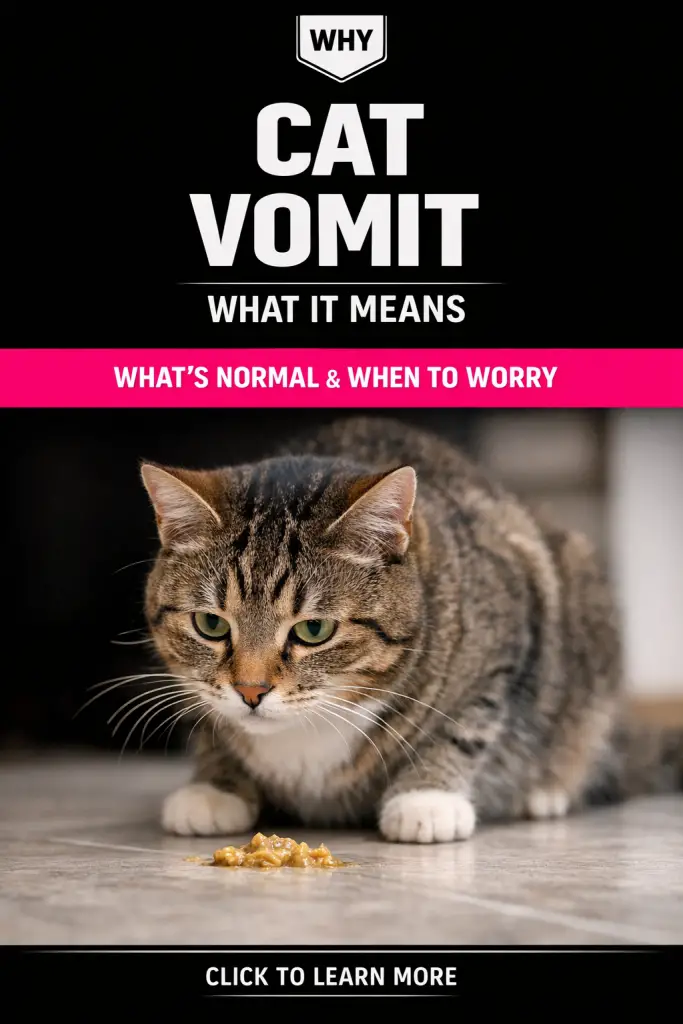
Why Is My Cat Throwing Up Again?
If you’re a cat parent, chances are you’ve asked yourself “why does my cat vomit?” at least once—probably while stepping around a suspicious puddle on the floor before your morning coffee. Trust me, you’re not alone. I’ve lived with cats for years, and I can tell you this upfront: cat vomit is common, but it’s not always normal.
Sometimes it’s harmless. Other times, it’s your cat’s way of saying, “Hey, something isn’t right.” The tricky part is knowing the difference. That’s exactly why I wrote this guide—to help you understand why cats vomit, what different types of vomit can mean, and when you should take action.
Let’s break it down in a simple, stress-free way—friend to friend.
Why Do Cats Vomit in the First Place?
Cats vomit for a wide range of reasons, from totally harmless habits to serious health issues. Vomiting is basically the body’s defense mechanism—it’s trying to get rid of something that doesn’t belong.
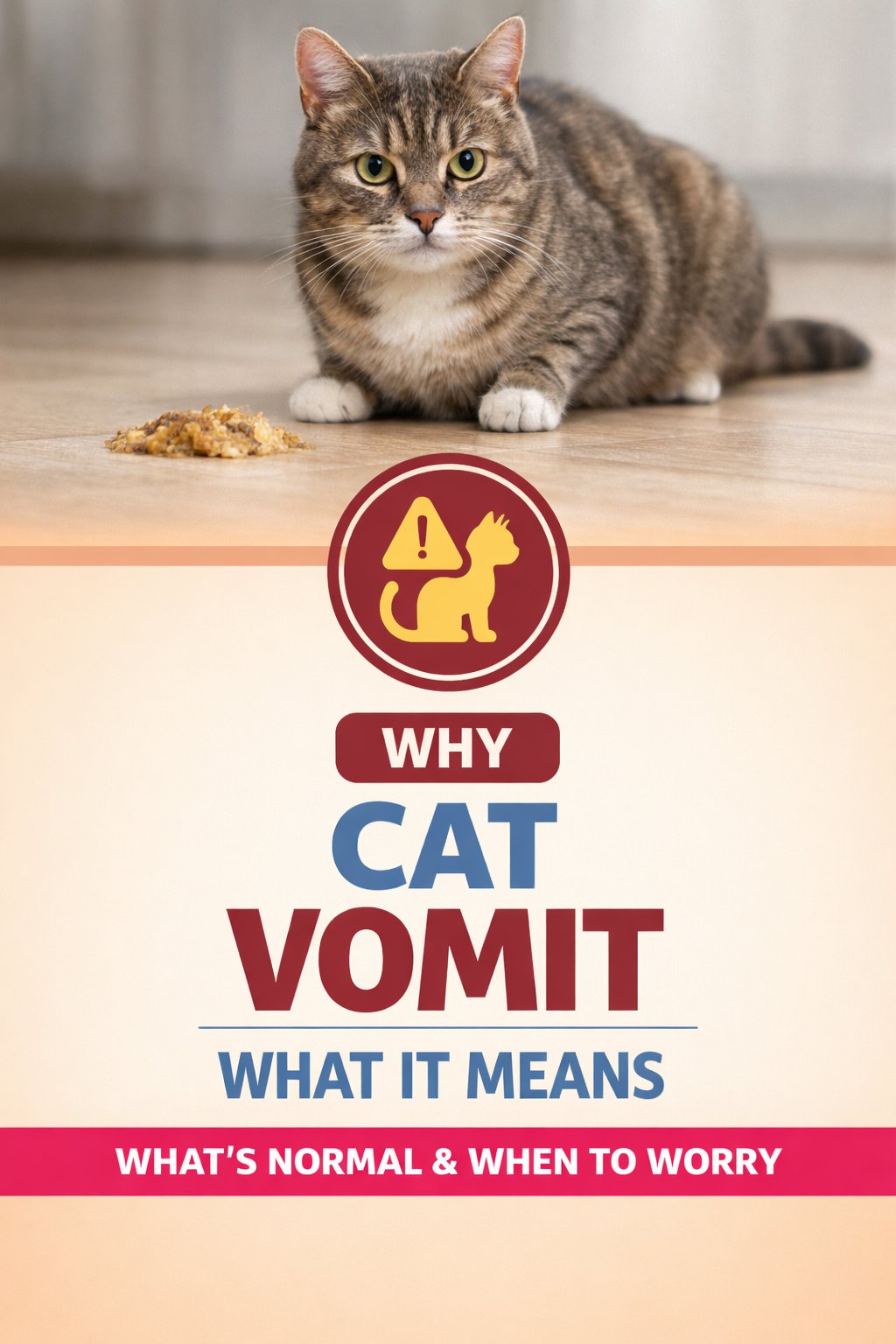
The key is frequency, appearance, and behavior changes. One random episode? Probably fine. Repeated vomiting? That deserves attention.
Hairballs: The Most Common (and Least Scary) Reason
Let’s start with the classic culprit: hairballs.
Cats groom themselves constantly, and all that loose fur has to go somewhere. Most of the time it passes through the digestive system. Sometimes… it doesn’t.
Signs it’s a hairball
- Long, tube-shaped vomit
- Mostly hair with a bit of liquid
- Happens occasionally, not daily
Hairballs are especially common in:
- Long-haired cats
- Heavy shedders
- Cats that groom excessively
Tip: Regular brushing and hairball-control food can reduce these episodes a lot.
Eating Too Fast (Yes, Cats Do That Too)
Some cats eat like they’re in a competitive sport. When food goes down too fast, it often comes right back up.
How to tell
- Vomit happens immediately after eating
- Food looks mostly undigested
- Cat acts totally normal afterward
This is usually regurgitation, not true vomiting. It’s gross—but generally not dangerous.
Easy fixes include:
- Smaller, more frequent meals
- Puzzle feeders or slow-feed bowls
- Spreading food out on a flat plate
IMO, slow feeders are one of the easiest upgrades you can make.
Food Sensitivities and Allergies
Just like humans, cats can react poorly to certain foods. A sudden switch—or even long-term exposure—can irritate their stomach.
Common trigger ingredients
- Beef
- Dairy
- Fish
- Artificial additives
Symptoms may include
- Repeated vomiting
- Diarrhea
- Itchy skin or ear infections
If vomiting started after changing food, that’s a big clue. Always transition foods slowly over 7–10 days.
Sensitive Stomachs: Some Cats Are Just Like That
Some cats have what vets call a sensitive gastrointestinal system. These cats may vomit occasionally even when everything else seems fine.
This often looks like:
- Vomiting once every couple of weeks
- No weight loss
- Normal appetite and energy
While not ideal, this can sometimes be managed with:
- Limited-ingredient diets
- Easily digestible protein sources
- Consistent feeding schedules
Vomiting vs. Regurgitation: Know the Difference
This part is important.
Vomiting
- Happens after digestion starts
- Includes bile, foam, or partially digested food
- Comes with retching or abdominal movement
Regurgitation
- Happens right after eating
- Food looks whole
- No retching—just plop
Why does this matter? Because vomiting points to stomach or intestinal issues, while regurgitation often involves the esophagus.
What the Color of Cat Vomit Can Tell You
Yes, it’s unpleasant—but vomit color is a clue.
Clear or foamy vomit
Often means:
- Empty stomach
- Mild stomach irritation
Yellow vomit
Usually contains bile
- Common if your cat hasn’t eaten for a while
- Can improve with more frequent meals
Brown vomit
This can be serious.
- May indicate digested blood or intestinal blockage
- Needs veterinary attention
Red or bloody vomit
This is always a red flag.
- Call your vet immediately
FYI: Taking a quick photo can actually help your vet diagnose faster.
Grass, Plants, and Things Cats Shouldn’t Eat
Ever notice your cat chewing on plants like a tiny cow?
Cats sometimes eat grass to induce vomiting intentionally. It can help them clear hair or irritants. That said, not all plants are safe.
Dangerous items cats may ingest
- Toxic houseplants
- String, thread, or ribbon
- Plastic or rubber
- Human food scraps
Ingested foreign objects can cause:
- Repeated vomiting
- Lethargy
- Loss of appetite
This is not a “wait and see” situation.
Stress and Anxiety Can Trigger Vomiting
Cats are sensitive creatures. Stress affects their digestive system more than people realize.
Common stress triggers
- Moving to a new home
- New pets or people
- Loud noises
- Changes in routine
Stress-related vomiting often comes with:
- Hiding
- Overgrooming
- Appetite changes
Creating a calm, predictable environment can work wonders here.
Medical Conditions That Cause Cat Vomiting
Now let’s talk about the more serious stuff.
Common medical causes
- Gastroenteritis (stomach inflammation)
- Parasites
- Inflammatory bowel disease (IBD)
- Kidney disease
- Liver disease
- Pancreatitis
If vomiting is frequent or chronic, a vet visit is non-negotiable.
How Often Is “Too Often” When It Comes to Vomiting?
Here’s a simple guideline:
- Once in a while: Usually okay
- Once a week or more: Needs investigation
- Daily or multiple times a day: Urgent
Especially if vomiting comes with:
- Weight loss
- Lethargy
- Dehydration
- Appetite changes
Kittens vs. Adult Cats: Does Age Matter?
Absolutely.
Kittens
- More prone to parasites
- Smaller bodies = faster dehydration
- Vomiting should be taken seriously
Senior cats
- Higher risk of kidney and liver disease
- Vomiting may be an early warning sign
Age changes the context—always keep that in mind.
What You Can Do at Home (Safely)
If your cat vomits once and seems fine, here are some gentle steps:
- Remove food for 6–8 hours (water stays available)
- Offer small amounts of bland food afterward
- Observe behavior closely
Do not give human medications. Ever.
If vomiting continues, stop home treatment and call your vet.
When to Call the Vet Immediately
Please don’t wait if you see any of the following:
- Blood in vomit
- Severe lethargy
- Repeated vomiting within 24 hours
- Signs of pain
- Known ingestion of a toxic item
Early care often means easier treatment and better outcomes.
How Vets Diagnose Chronic Vomiting
If vomiting becomes a pattern, your vet may recommend:
- Blood tests
- Stool exams
- X-rays or ultrasound
- Food trials
This isn’t overkill—it’s about finding the root cause instead of guessing.
Preventing Vomiting: Practical Tips That Actually Help
Here’s what works long-term:
- Feed consistent, high-quality food
- Avoid frequent diet changes
- Brush regularly to reduce hairballs
- Use slow feeders if needed
- Schedule routine vet checkups
Small changes add up more than you’d expect.
Conclusion: Understanding Your Cat Is the Real Solution
So, why does your cat vomit? Sometimes it’s hairballs. Sometimes it’s food. Sometimes it’s stress—or something more serious. The difference lies in patterns, frequency, and behavior.
Your cat can’t explain what’s wrong, but their body gives signals. Learning to read those signals is one of the most important parts of being a great cat parent.
If something feels off, trust your instincts. Ask questions. Get help when needed. Your cat is counting on you—and honestly, they’d probably thank you… if they weren’t busy being mysterious.
If you want to go deeper, keep learning and don’t hesitate to talk to your vet. A little knowledge goes a long way in keeping your cat happy, healthy, and vomit-free (or at least close to it).