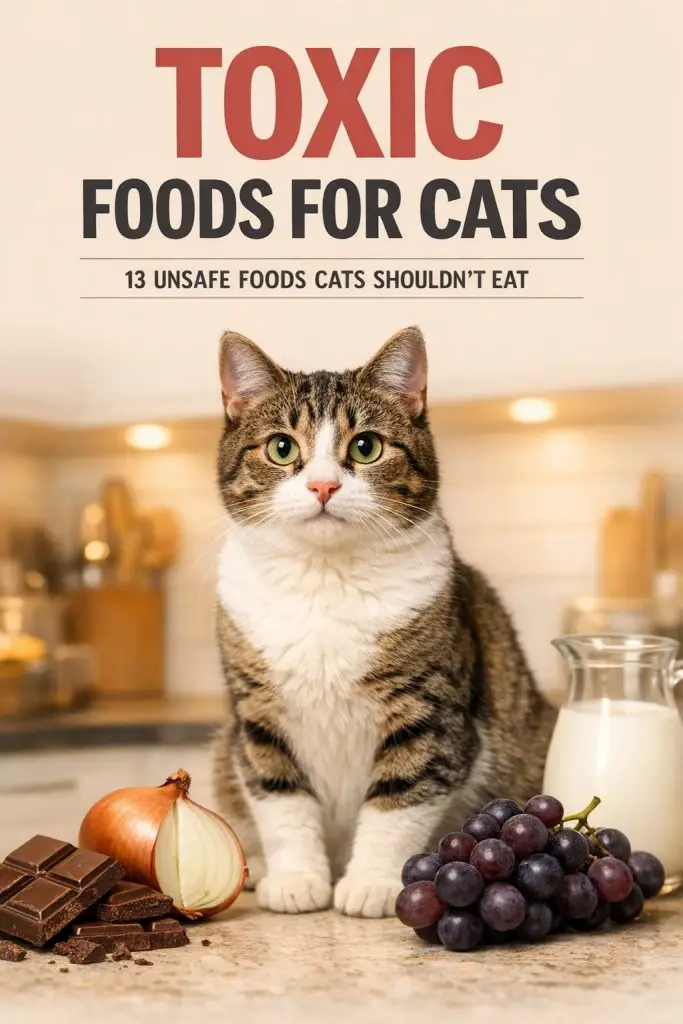
Have you ever been in the kitchen, turned your back for two seconds, and suddenly your cat is sniffing something they absolutely shouldn’t be? Yeah… same here. Cats are curious little creatures, and IMO they have a talent for finding danger where you least expect it. When I first learned how many toxic foods for cats were hiding in my own pantry, I was honestly shocked.
This article is here to save you from that panic moment. We’re talking about 13 unsafe foods cats shouldn’t eat, why they’re dangerous, and what to watch for if your cat gets sneaky. Think of this as a friendly chat between cat lovers who just want to keep their fur babies safe and healthy.
Why Human Food Can Be Dangerous for Cats
Cats aren’t tiny humans, even though they act like they own the house. Their bodies process food very differently from ours. Something that’s harmless—or even healthy—for you can be extremely dangerous for them.
Here’s the big issue:
- Cats lack certain enzymes needed to break down human foods
- Their liver processes toxins much more slowly
- Small amounts can cause big problems due to their size
That’s why understanding what foods are bad for cats isn’t optional—it’s essential.
1. Chocolate
Chocolate is one of the most well-known foods poisonous to cats, yet accidents still happen. Even small amounts can be harmful.
Why it’s dangerous:
- Contains theobromine and caffeine
- Cats can’t metabolize these compounds
- Dark chocolate is especially toxic
Symptoms may include vomiting, tremors, rapid heartbeat, and seizures. FYI, chocolate toxicity can escalate fast.
2. Onions and Garlic
Onions, garlic, shallots, and leeks are all part of the same toxic family. They damage a cat’s red blood cells, which can lead to anemia.
Forms that are dangerous:
- Raw
- Cooked
- Powdered (yes, seasoning counts)
This makes leftovers and seasoned foods especially risky.
3. Grapes and Raisins
Even vets can’t fully explain why grapes and raisins are so dangerous, but the risk is very real. Some cats may show symptoms after a small amount.
Possible effects:
- Sudden kidney failure
- Lethargy and loss of appetite
- Vomiting within hours
When it comes to grapes, zero is the safe amount.
4. Alcohol
It might sound obvious, but alcohol is extremely toxic to cats. They don’t need to drink a glass—just a few licks can cause harm.
Alcohol exposure can cause:
- Disorientation
- Breathing problems
- Coma in severe cases
Never leave unattended drinks around curious paws.
5. Caffeine
Coffee, tea, energy drinks, and even coffee grounds are dangerous for cats. Caffeine overstimulates their nervous system.
Signs of caffeine toxicity include:
- Restlessness
- Rapid breathing
- Muscle tremors
Yes, that includes iced coffee cups left on your desk.
6. Raw Eggs
Raw eggs carry bacteria like Salmonella and E. coli. They also contain avidin, which blocks vitamin B absorption.
Long-term risks:
- Digestive upset
- Skin and coat issues
- Nutrient deficiencies
Cooked eggs are safer, but always ask your vet first.
7. Raw Meat and Fish
Raw diets are trendy, but they’re risky if not properly formulated. Raw fish can also contain enzymes that destroy thiamine.
Potential problems include:
- Bacterial infections
- Vitamin deficiencies
- Weakened immune system
This is one of those cases where “natural” doesn’t always mean safe.
8. Dairy Products
Contrary to cartoons, most cats are lactose intolerant. Milk, cheese, and cream can cause digestive distress.
Common reactions:
- Diarrhea
- Gas
- Stomach cramps
A small lick might not be toxic, but it’s definitely not ideal.
9. Xylitol (Artificial Sweetener)
Xylitol is extremely dangerous and often hidden in sugar-free products. While it’s more commonly associated with dogs, cats are still at risk.
You’ll find it in:
- Sugar-free gum
- Baked goods
- Some peanut butters
When in doubt, read labels like your cat’s life depends on it—because it does.
10. Bones and Fat Trimmings
Cooked bones splinter easily and can cause choking or internal injuries. Fat trimmings are just as risky.
Possible consequences:
- Pancreatitis
- Intestinal blockages
- Mouth injuries
Sharing table scraps might feel loving, but it’s not worth the risk.
11. Salty Snacks
Chips, pretzels, and processed foods are packed with sodium. Cats don’t handle excess salt well.
Too much salt can lead to:
- Excessive thirst
- Vomiting
- Sodium ion poisoning
If it’s heavily salted, it’s a hard no.
12. Yeast Dough
Raw yeast dough expands in the stomach and produces alcohol as it ferments. That’s a double threat.
Why it’s dangerous:
- Stomach bloating and pain
- Alcohol toxicity
- Risk of rupture in severe cases
Bread dough should always stay out of reach.
13. Certain Fruits (Like Citrus)
While not always lethal, citrus fruits can irritate a cat’s digestive system. The oils and acids are the real issue.
Fruits to avoid:
- Oranges
- Lemons
- Limes
Most cats dislike the smell anyway, which is kind of a blessing 🙂
What to Do If Your Cat Eats Something Toxic
Panic is natural, but quick action matters more. If you think your cat ate something unsafe, don’t wait it out.
Here’s what to do:
- Remove access to the food immediately
- Note what and how much was eaten
- Call your vet or an emergency clinic
Never induce vomiting unless a professional tells you to.
How to Cat-Proof Your Kitchen
Prevention is always easier than treatment. A few simple habits can make your home much safer.
Smart tips include:
- Store food in sealed containers
- Don’t leave plates unattended
- Educate guests about unsafe foods
Think of it as child-proofing, but sneakier.
Signs of Food Poisoning in Cats
Cats are experts at hiding discomfort, which makes this tricky. Watch for subtle changes.
Common warning signs:
- Vomiting or diarrhea
- Lethargy or hiding
- Loss of appetite
If something feels “off,” trust your instincts.
Conclusion
Knowing the toxic foods for cats can literally be lifesaving. From chocolate and onions to yeast dough and caffeine, many everyday items are far more dangerous than they look. The good news is that awareness alone prevents most accidents.
So next time your cat gives you that “just one bite?” stare, you’ll know exactly when to say no. Keep your pantry safe, your counters clean, and your cat healthy—because they rely on us, even when they pretend they don’t 😉