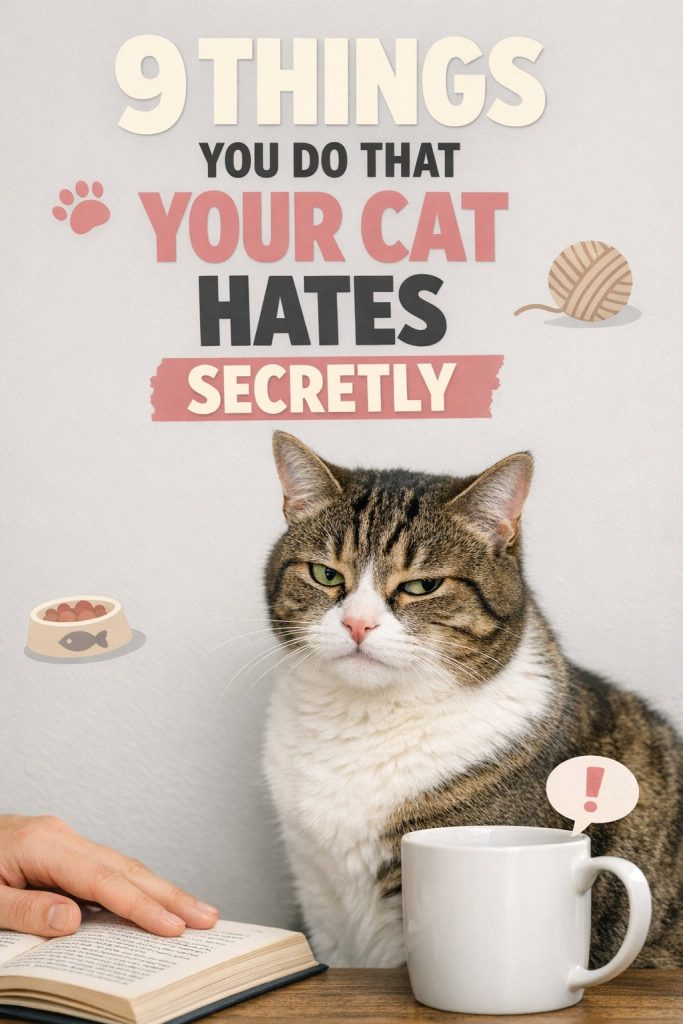
Your Cat Loves You… But Not Everything You Do
Let me start with a gentle truth most cat parents don’t want to hear: your cat might adore you, but there are probably a few things you do every day that drive them absolutely crazy. And the wild part? They often don’t show it in obvious ways.
I started digging into this topic after realizing my own cat would suddenly leave the room whenever I sat next to her. No hissing. No drama. Just a slow, offended walk away. Sound familiar? That quiet retreat was my first clue that cats communicate annoyance very differently than dogs—or humans.
Cats are polite… but they’re also judgmental. They tolerate a lot. However, they never forget. So let’s talk about the nine common habits humans do that cats secretly hate, and more importantly, how to fix them without hurting your bond.
1. Ignoring Your Cat’s Body Language
Cats are constantly talking—you just might not be listening.
Unlike dogs, cats don’t always growl or bark when they’re uncomfortable. Instead, they rely on subtle signals that many owners miss completely.
Signs your cat is silently annoyed:
- Tail flicking or whipping
- Flattened or sideways ears
- Dilated pupils
- Sudden grooming during interaction
- Turning their head away
When these signals are ignored, your cat learns one thing: you don’t respect their boundaries.
Why cats hate this:
Cats value control and predictability. When their signals are ignored, they feel trapped or disrespected, which damages trust over time.
What to do instead:
Pause interactions the moment you notice discomfort. Giving your cat space builds long-term trust faster than forcing affection ever will.
2. Forcing Physical Affection
Yes, your cat is soft. Yes, you love hugging them. No, they do not feel the same way about surprise cuddles.
Many cats tolerate affection rather than enjoy it. That tolerance has limits.
Common affection mistakes:
- Picking them up when they didn’t ask
- Holding them longer than they want
- Kissing their face repeatedly
- Pinning them down for “just one more hug”
Why cats hate this:
Cats prefer affection on their terms. Forced contact makes them feel powerless.
Better approach:
Let your cat initiate touch. When they rub against you or settle nearby, that’s your green light. IMO, earned affection always feels better anyway.
3. Overstimulation While Petting
Have you ever been petting your cat peacefully, only to get suddenly swatted or bitten? That wasn’t “random.”
It was overstimulation.
Common overstimulation triggers:
- Long petting sessions
- Sensitive areas like the belly or tail base
- Repetitive motion in one spot
Warning signs before the snap:
- Skin rippling
- Tail twitching
- Ears turning sideways
- Tense posture
Why cats hate this:
Their nervous system becomes overwhelmed, even if they initially enjoyed the attention.
Fix it:
Keep petting sessions short and focus on safe zones like the cheeks, chin, and head. Stop before the warning signs escalate.
4. Making Loud, Sudden Noises
Cats hear frequencies humans can’t even detect. That means everyday sounds to you can feel overwhelming to them.
Noise cats secretly hate:
- Vacuum cleaners
- Loud music
- Shouting
- Dropping objects
- Slamming doors
Why cats hate this:
Sudden noise triggers their fight-or-flight response. Chronic exposure leads to anxiety and stress.
What helps:
Create quiet escape zones and introduce noisy activities gradually. FYI, a calm environment makes a huge difference in feline confidence.
5. Moving or Rearranging Their Stuff
You might think you’re “freshening up the house,” but your cat thinks you’ve committed a crime.
Cats rely heavily on scent mapping. Their environment isn’t just visual—it’s emotional.
Items cats don’t want moved:
- Litter boxes
- Food bowls
- Sleeping spots
- Scratching posts
- Favorite blankets
Why cats hate this:
Sudden changes disrupt their sense of security and control.
Better strategy:
If changes are necessary, make them gradually. Move items a few inches per day and let your cat re-scent the space at their own pace.
6. Inconsistent Feeding Times
Cats are creatures of routine. They know when dinner is supposed to happen—and they take it personally when you’re late.
Effects of inconsistent feeding:
- Anxiety
- Excessive meowing
- Food obsession
- Irritability
Why cats hate this:
Unpredictable feeding feels unsafe. In the wild, routine equals survival.
Simple fix:
Feed your cat at the same times daily or use an automatic feeder. Consistency builds trust faster than treats alone.
7. Punishing “Bad” Behavior
Yelling, spraying water, or scolding might make you feel better—but it doesn’t teach your cat anything useful.
Why punishment fails:
- Cats don’t associate punishment with past actions
- Fear replaces trust
- Stress-related behaviors increase
Why cats hate this:
Punishment feels random and threatening, not corrective.
What works instead:
Redirect behavior. Provide scratching posts, enrichment, and positive reinforcement. Calm consistency always beats fear.
8. Staring at Them Too Long
In human culture, eye contact feels friendly. In cat culture? It can feel like a challenge.
A prolonged stare can signal dominance or aggression to your cat.
Why cats hate this:
They may interpret it as threatening, especially if they’re already unsure.
Try this instead:
Use slow blinking. Gently close your eyes and reopen them. Many cats will blink back—it’s basically a love letter in feline language.
9. Ignoring Their Need for Mental Stimulation
A bored cat is not a relaxed cat.
Indoor cats especially need mental outlets to prevent frustration.
Signs of boredom:
- Excessive sleeping
- Destructive behavior
- Over-grooming
- Attention-seeking at odd hours
Why cats hate this:
Without stimulation, their natural hunting instincts have nowhere to go.
Easy enrichment ideas:
- Interactive toys
- Window perches
- Puzzle feeders
- Short daily play sessions
Even 10 minutes of focused play can completely change your cat’s mood.
Final Thoughts: Love Is About Listening
Here’s the good news: most of the things cats hate are easy to fix once you’re aware of them.
To recap, cats secretly hate:
- Ignored boundaries
- Forced affection
- Overstimulation
- Loud environments
- Sudden changes
- Inconsistent routines
- Punishment
- Intense staring
- Boredom
None of this means you’re a bad cat parent. It just means you’re human.
The moment you start seeing the world through your cat’s eyes, everything changes. Your bond grows stronger, your cat becomes more relaxed, and those quiet walk-aways? They happen a lot less often.
So next time your cat chooses to sit near you instead of on you, remember—that’s still love. And IMO, it’s one of the most honest forms there is.