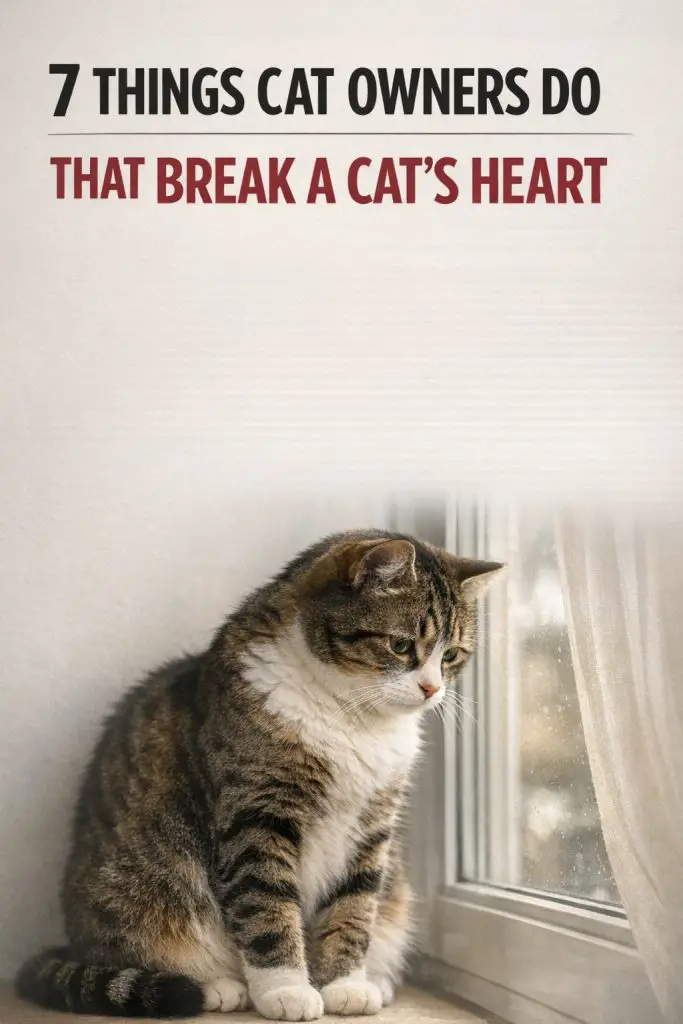
Most cat owners genuinely believe they’re doing everything right. We buy the best food we can afford, snap cute photos, and proudly tell people “my cat is spoiled.” But here’s the uncomfortable truth: some everyday habits can quietly crush a cat’s emotional well-being without us even realizing it.
I’ve been there. Years ago, I thought love meant constant cuddles, playful teasing, and “training” my cat like a dog. Spoiler alert: my cat was not impressed. Over time, I noticed subtle changes—less purring, more hiding, and a look that screamed betrayal. That’s when I learned something important: a cat’s heart is fragile, and its spirit remembers everything.
So let’s talk honestly, friend to friend. No guilt. No judgment. Just awareness. Because once you know better, you do better.
1. Ignoring a Cat’s Need for Personal Space
Cats are affectionate, yes—but on their terms, not ours.
When Love Turns Into Pressure
Ever scoop up your cat mid-nap because they look cute? Or force a cuddle when they clearly want to be left alone? IMO, this is one of the fastest ways to damage trust.
Cats show boundaries in subtle ways:
- Tail flicking
- Flattened ears
- Turning their head away
- Quietly walking off
When we ignore those signs, cats don’t “get used to it.” They learn they’re not being listened to.
Why This Hurts Their Spirit
A cat that feels trapped or ignored emotionally may:
- Withdraw from affection
- Hide more often
- Become irritable or anxious
Respecting space isn’t cold—it’s deeply loving.
2. Using Punishment Instead of Understanding
Here’s a hard truth: cats don’t understand punishment the way humans think they do.
The Myth of “Teaching a Lesson”
Yelling, spraying water, or scolding a cat for scratching furniture doesn’t teach discipline. It teaches fear. FYI, cats connect experiences with feelings, not moral lessons.
When punished, a cat doesn’t think:
“I shouldn’t do that.”
They think:
“My human is unpredictable.”
Emotional Fallout
Punishment can lead to:
- Anxiety and stress behaviors
- Litter box avoidance
- Loss of trust
Positive reinforcement works because it builds confidence—not fear.
3. Neglecting Emotional Stimulation
Food and shelter keep a cat alive. Mental engagement keeps a cat happy.
Boredom Is More Damaging Than You Think
Indoor cats especially need stimulation. Without it, boredom turns into frustration, and frustration turns into sadness.
Signs your cat is emotionally under-stimulated:
- Over-grooming
- Excessive sleeping
- Sudden aggression
- Destructive habits
Easy Ways to Enrich Their World
You don’t need fancy gadgets. Simple changes help:
- Interactive play sessions
- Window perches
- Rotating toys
- Puzzle feeders
A stimulated cat is a content, confident cat.
4. Being Inconsistent With Routine
Cats are creatures of habit. Chaos stresses them out.
Why Routine Equals Safety
Feeding at random times, constantly changing sleeping spots, or frequent loud disruptions make cats feel unstable. To them, routine equals security.
When routines vanish, cats may:
- Become clingy or distant
- Show anxiety behaviors
- Act “off” without obvious cause
Small Changes Matter
Try to keep consistent:
- Feeding times
- Play schedules
- Quiet hours
Consistency doesn’t mean boring—it means emotionally safe.
5. Overlooking Subtle Signs of Emotional Distress
Cats don’t cry. They whisper.
The Quiet Signals We Miss
Many owners expect obvious signs of sadness. But emotional pain often shows up quietly:
- Reduced grooming
- Avoiding eye contact
- Less vocalization
- Sudden disinterest in play
These aren’t “bad moods.” They’re emotional messages.
Why Ignoring This Breaks Trust
When emotional needs go unmet, cats stop communicating. And once that happens, rebuilding trust takes time—and patience.
6. Treating Cats Like They’re “Low-Effort Pets”
This one stings a little, but it matters.
The Harmful Stereotype
Cats are often labeled as independent and low-maintenance. While they are self-sufficient, they still crave:
- Attention
- Respect
- Interaction
Assuming a cat “doesn’t need much” can make them feel emotionally invisible.
What Cats Really Need
Cats thrive when they feel:
- Seen
- Heard
- Valued
Even quiet companionship—sitting nearby without touching—means everything to them.
7. Failing to Build Trust Through Gentle Interaction
Trust is the foundation of a cat’s spirit.
Trust Is Earned, Not Assumed
Forcing interactions, ignoring boundaries, or being emotionally unavailable damages trust. And once broken, trust doesn’t magically return.
How to Strengthen the Bond
Simple habits go a long way:
- Let your cat initiate contact
- Speak softly
- Move slowly
- Respect “no” signals
A trusting cat is relaxed, playful, and emotionally secure 😺
Conclusion
Loving a cat isn’t about perfection—it’s about awareness and intention. The things we’ve talked about—ignoring boundaries, punishing behavior, neglecting stimulation, and overlooking emotional cues—can slowly break a cat’s heart without us meaning to.
But here’s the good news: cats are incredibly forgiving when given patience and respect. Small changes can rebuild trust faster than you think.
So next time your cat walks away, pauses before cuddling, or just sits quietly near you, ask yourself—what are they trying to tell me? Listen closely. Their heart is always speaking.