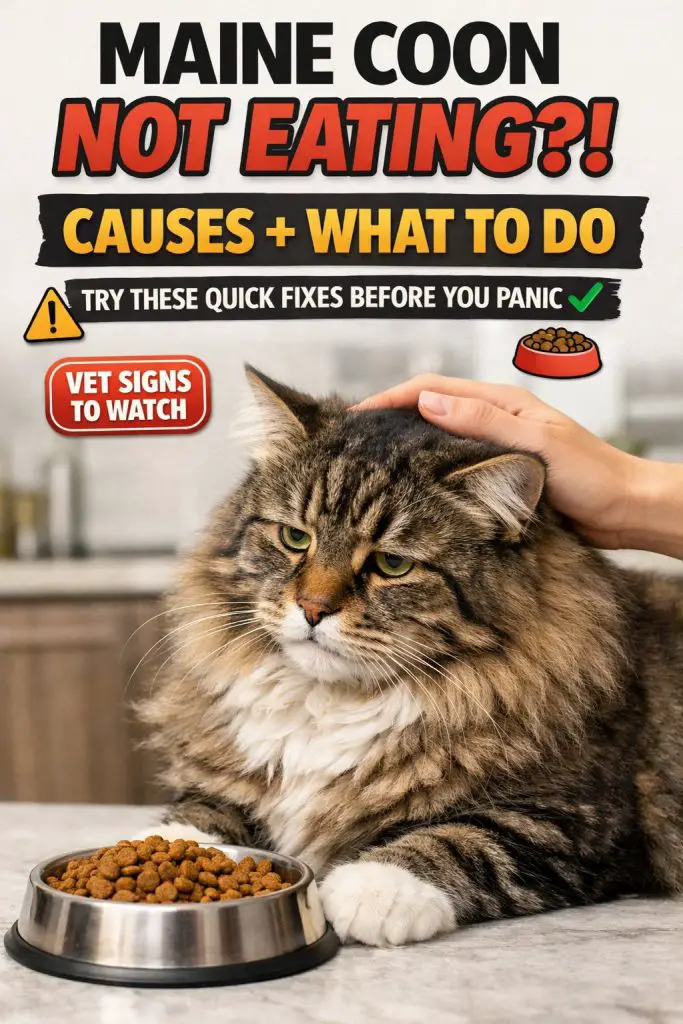
If your Maine Coon cat is not eating, it can feel scary fast—especially because these gentle giants usually have a healthy appetite (and a big personality to match). One minute they’re begging at the kitchen like a fluffy little lion, and the next they’re sniffing the bowl and walking away like you offered them cardboard. When a Maine Coon stops eating, it’s not always an emergency… but it’s always something worth paying attention to.
I’ve been around cats for years, and I’ve seen this happen more times than I can count. In my opinion, it’s one of the most stressful moments as a cat parent because your mind immediately jumps to worst-case scenarios. I think the hardest part is that cats are pros at hiding discomfort, so when they stop eating, it often means something is actually bothering them. The good news? A lot of causes are fixable, and there are clear steps you can take.
So don’t worry—this article will walk you through the most common reasons a Maine Coon won’t eat, what you can do at home, and when it’s time to call the vet. By the end, you’ll feel more confident, more calm, and ready to help your big floof get back to normal.
Why Maine Coons Stop Eating (And Why It Matters)
A Maine Coon skipping one meal isn’t always a crisis. But refusing food for longer than expected can become a real problem because cats can develop fatty liver disease (hepatic lipidosis) when they don’t eat enough—especially if they’re overweight.
Here’s a simple way to look at it:
- Not eating for a few hours → usually not a big deal
- Not eating for 24 hours → monitor closely and start troubleshooting
- Not eating for 48 hours → vet visit strongly recommended
Maine Coons are large cats, but they still have sensitive systems. A loss of appetite is your cat’s way of saying: “Something’s off.”
Quick First Check: Is Your Maine Coon Truly Not Eating?
Before you panic, let’s confirm what’s really happening. Sometimes a cat is eating… just not the food you want them to eat.
Look for these signs:
- Food level stays untouched all day
- They sniff the food and walk away
- They chew and drop food (possible mouth pain)
- They lick gravy but won’t eat chunks
- They eat treats but refuse meals
- They hide more than usual
Also check the basics:
- Is the food bowl clean?
- Did you recently change food brands or flavors?
- Is another pet blocking them from the bowl?
- Are they drinking water normally?
Important takeaway: A Maine Coon who won’t eat and acts “off” (sleepy, withdrawn, painful, vomiting) needs extra attention.
Common Causes of a Maine Coon Cat Not Eating
Let’s break down the most common reasons, from “simple fix” to “vet-needed.”
Stress, Anxiety, or a Change in Routine
Maine Coons are social and sensitive. They often bond deeply with their people, so even small changes can throw them off.
Common stress triggers include:
- Moving to a new home
- New pet in the house
- Visitors or loud noises
- New litter type or litter box location
- Rearranged furniture
- Owner traveling or schedule changing
A stressed cat may stop eating because they don’t feel safe enough to relax.
What it looks like: hiding, less playful, eating less, watching the room carefully.
Dental Pain or Mouth Problems
This is a big one—and many cat owners miss it.
If eating hurts, your Maine Coon may avoid food even if they feel hungry. Dental issues are very common and can include:
- Gingivitis
- Tooth decay
- Broken tooth
- Mouth ulcers
- Stomatitis
Signs you might notice:
- Drooling or bad breath
- Pawing at the mouth
- Chewing on one side
- Cracking sounds while chewing
- Food falling out of their mouth
If your Maine Coon suddenly stops eating hard kibble, mouth pain is high on the list.
Upset Stomach, Hairballs, or Nausea
Maine Coons have long, thick coats, which means hairballs can be a frequent issue.
Your cat may stop eating if they feel nauseous, constipated, or “blocked up.”
Common symptoms:
- Gagging or dry heaving
- Licking lips a lot
- Swallowing repeatedly
- Vomiting foam
- Sitting in a “meatloaf” position
FYI—cats don’t always vomit when they’re nauseous. Sometimes they just stop eating.
Food Boredom (Yes, It’s a Thing)
Maine Coons can be picky in a surprisingly dramatic way.
Sometimes your cat is healthy… they’re just over that flavor. Or they dislike the texture.
This is especially common with:
- Fish flavors every day
- Dry food that’s gone stale
- Wet food left out too long
- Large chunky pieces (some cats prefer pâté)
If they still eat treats, boredom becomes more likely.
Illness or Fever
A sick cat often stops eating simply because they feel awful—just like humans do.
Possible illness-related causes:
- Viral infection (like a cold)
- Fever
- Gastrointestinal inflammation
- Parasites
- Kidney disease
- Liver problems
- Diabetes
- Pancreatitis
Signs your Maine Coon may be sick:
- Low energy
- Warm ears or body
- Breathing faster than usual
- Sleeping more than normal
- Not grooming
- Vomiting or diarrhea
If your cat isn’t eating and seems physically unwell, don’t wait too long.
Recent Vaccination or Medication Side Effects
If your Maine Coon recently got vaccines or started a new medication, appetite loss can happen.
Common after-vaccine reactions:
- Mild tiredness
- Less interest in food for 12–24 hours
- Soreness near injection site
This usually improves within a day, but if it continues past 24 hours—or includes vomiting or swelling—call your vet.
Pain Somewhere Else (Not Just the Mouth)
Sometimes a Maine Coon won’t eat because they’re in pain elsewhere, like:
- Arthritis or joint pain
- Injury (jumped wrong, fell)
- Abdominal pain
- Urinary issues
Maine Coons are prone to joint stress simply because they’re heavy, and older ones may have stiffness that affects appetite.
Signs:
- Walking slowly
- Not jumping up
- Sitting oddly
- Growling when touched
Urinary Tract Issues (Emergency Warning)
This is especially critical for male cats, but it can happen to any cat.
A blocked urinary tract can quickly become life-threatening.
Red flags:
- Straining in the litter box
- Crying or yowling while peeing
- Frequent litter trips with little output
- Licking genitals constantly
- Hiding and refusing food
If you see these signs, go to an emergency vet ASAP.
What To Do When Your Maine Coon Cat Won’t Eat (Step-by-Step)
Okay, let’s get practical. Here’s exactly what I’d do at home to help a Maine Coon start eating again.
Step 1: Check Hydration First
If your cat won’t eat, hydration becomes your first priority.
Look for:
- Dry or sticky gums
- Sunken-looking eyes
- Weakness or wobbling
- Skin doesn’t “snap back” quickly when gently pinched
Encourage drinking by:
- Offering fresh water in multiple bowls
- Using a cat fountain
- Adding a little water or broth to wet food (no onion/garlic)
If your cat isn’t drinking either, that’s urgent.
Step 2: Warm Up the Food (Seriously Works)
Warm food smells stronger, and smell is a huge part of a cat’s appetite.
Try this:
- Scoop a small amount of wet food into a bowl
- Microwave for 5–8 seconds (just warm, not hot)
- Stir well and test temperature with your finger
- Offer immediately
This simple trick works surprisingly often.
Step 3: Offer Strong-Smelling, Soft Options
If your Maine Coon is refusing regular meals, test with something tempting.
Good choices:
- Wet food pâté
- Tuna in water (small amount only)
- Plain cooked chicken (no seasoning)
- Sardines in water (tiny portion)
- Prescription recovery foods (if vet-approved)
Avoid:
- Milk (many cats get diarrhea)
- Spicy, salty, or seasoned meat
- Onion/garlic ingredients (toxic)
Goal: get calories in first, then return to a balanced diet.
Step 4: Create a Calm “Private Dining” Spot
Sometimes the problem is stress, not food.
Try setting up a quiet feeding area:
- Away from other pets
- Away from loud rooms (TV, kids, kitchen chaos)
- With a clean mat + clean bowl
- Same location daily
IMO this is underrated—many sensitive cats eat better when they feel safe.
Step 5: Watch for Nausea or Hairball Signs
If your Maine Coon acts nauseous (lip licking, hunched posture), don’t keep forcing food.
Instead:
- Offer small bites, not big meals
- Use hairball gel (if your vet approves)
- Brush your cat more often to reduce swallowed fur
- Monitor litter box output carefully
If vomiting continues or your cat can’t keep anything down, call the vet.
Step 6: Try Hand-Feeding (Yes, You Can Spoil Them a Little)
Maine Coons are affectionate and often respond well to attention.
You can try:
- Offering a tiny bite on a spoon
- Letting them lick a small amount from your finger
- Sitting nearby while they eat
This can help anxious cats feel secure enough to eat again.
Step 7: Do NOT Keep Switching Foods All Day
This is a common trap. You keep offering new foods every hour, and your cat becomes even more picky and confused.
Instead, pick a plan:
- Offer one food choice
- Leave it for 20–30 minutes
- Remove it and try again later
This keeps your cat on a routine and prevents food from going stale.
When To Call the Vet (Don’t Wait Too Long)
Here’s the truth: if your Maine Coon is not eating, you’re allowed to call your vet even if you’re “not sure yet.” That’s what they’re there for.
Call your vet immediately if:
- No food for 24 hours (especially in kittens)
- No food for 48 hours (adult cats)
- Vomiting repeatedly
- Diarrhea + dehydration signs
- Lethargy or hiding unusually
- Trouble breathing
- Straining to pee or not peeing
- Mouth swelling or drooling heavily
A vet may check:
- Teeth and gums
- Temperature
- Bloodwork (kidney/liver markers)
- X-rays or ultrasound
- Hydration level
Sometimes appetite loss is minor… and sometimes it’s the first visible sign of something bigger. Getting ahead of it matters.
Special Situations: Maine Coon Kitten Not Eating
Kittens are a different story. They have less body reserve and can decline quickly.
If your Maine Coon kitten won’t eat, watch closely for:
- Low energy
- Weak crying or quiet behavior
- Not nursing/eating for several hours
- Diarrhea or parasites
If a kitten skips multiple meals, call a vet the same day.
Don’t “wait it out” with kittens.
How To Prevent Appetite Issues in Maine Coons
Prevention won’t cover everything, but it helps a lot.
Here are smart habits that reduce appetite problems long-term:
- Feed on a consistent schedule
- Use fresh, sealed food storage
- Clean bowls daily (cats can be dramatic about smells)
- Offer a mix of textures (wet + dry)
- Brush regularly to reduce hairballs
- Schedule dental checks yearly
- Keep litter boxes clean and easy to access
- Reduce stress with calm routines and safe spaces
A Maine Coon thrives on routine, comfort, and attention—like a tiny furry roommate with strong opinions.
Frequently Asked Questions (FAQ)
1) How long can a Maine Coon go without eating?
Most adult cats should not go more than 24 hours without eating normally. If your Maine Coon refuses food for 48 hours, it becomes much more concerning. Prolonged lack of eating can lead to fatty liver disease, dehydration, and rapid weakness. If your cat hasn’t eaten in a full day and seems unwell, contact your vet.
2) Why is my Maine Coon not eating but still drinking water?
This often suggests nausea, dental pain, stress, or a mild illness. Drinking water is a good sign, but it doesn’t mean everything is fine. If your Maine Coon is drinking but refusing all food for more than 24 hours, you should monitor closely and consider a vet visit—especially if they also seem tired or are vomiting.
3) What home remedies can help a Maine Coon eat again?
Safe, helpful options include warming wet food, offering soft strong-smelling foods, creating a calm feeding area, and feeding smaller portions more frequently. You can also try plain cooked chicken (no seasoning) or a small amount of tuna water to encourage eating. Avoid forcing food aggressively, and never use toxic ingredients like onion or garlic.
4) Could dental problems cause my Maine Coon to stop eating?
Yes—dental pain is one of the top reasons cats stop eating. A Maine Coon may want to eat but can’t handle chewing due to gum inflammation, a broken tooth, or mouth ulcers. Signs include drooling, bad breath, chewing slowly, or dropping food. A vet dental exam can quickly confirm if the mouth is the problem.
5) When is it an emergency if my Maine Coon won’t eat?
It’s urgent if your cat is not eating and also shows vomiting, extreme lethargy, dehydration, difficulty breathing, or urinary straining. If your cat seems weak, hides constantly, or has not eaten for 48 hours, you should seek vet care as soon as possible. For urinary blockage signs, go to an emergency vet immediately.