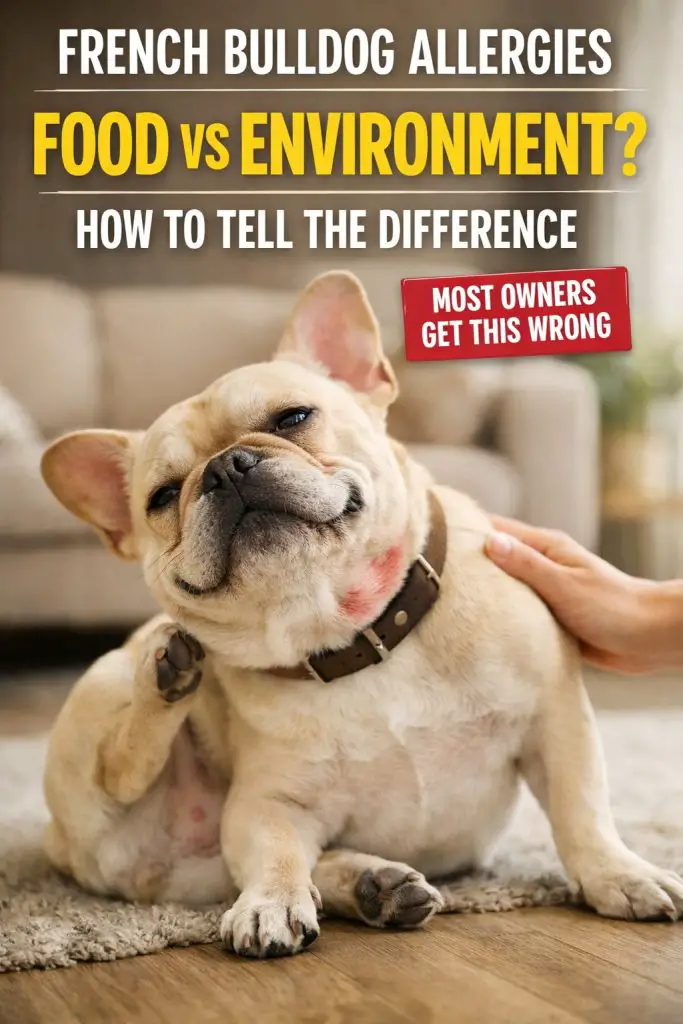
French Bulldogs are adorable, affectionate, and honestly… a little dramatic sometimes. But if your Frenchie is constantly itching, licking paws, getting ear infections, or developing red skin, it can feel frustrating and confusing fast. The biggest problem most owners face is figuring out what’s actually causing the allergy — is it food, or is it something in the environment like pollen or dust? Without knowing the difference, it’s easy to waste time, money, and energy trying random solutions that don’t work.
I’ve seen this confusion happen so many times with Frenchie owners. I think one of the hardest parts is that food and environmental allergies often look very similar at first. In my opinion, that’s why people get stuck — they change foods repeatedly or buy expensive shampoos without real improvement. The good news? Once you understand the patterns and clues, it becomes much easier to narrow down the cause.
By the end of this article, you’ll have a clear, practical way to tell whether your French Bulldog’s allergies are food-related or environmental. More importantly, you’ll know what steps to take next so your pup can finally feel comfortable again.
Quick Answer: Food vs Environmental Allergies in French Bulldogs
Food allergies usually cause year-round symptoms, digestive issues, and ear infections, while environmental allergies are often seasonal and triggered by things like pollen, grass, dust, or mold.
Here’s a quick breakdown:
- Food allergies: Constant itching, ear infections, diarrhea, gas, paw licking
- Environmental allergies: Seasonal itching, red skin, watery eyes, sneezing
- French Bulldogs are genetically prone to both types
- Symptoms can overlap, making diagnosis tricky
- The most reliable test for food allergies is an elimination diet
- Environmental allergies are often confirmed through pattern tracking or vet testing
Immediate actions you can take:
- Wipe paws after outdoor walks
- Switch to a limited-ingredient diet (with vet guidance)
- Use hypoallergenic shampoo
- Wash bedding weekly
- Schedule a vet exam if symptoms persist
Why French Bulldogs Are So Prone to Allergies
French Bulldogs unfortunately rank among the most allergy-prone dog breeds. This isn’t your fault — it’s largely genetics.
Several factors contribute:
- Short coat with sensitive skin barrier
- Immune system overreactions
- Skin folds that trap moisture and bacteria
- Breeding history increasing sensitivities
Their immune system sometimes treats harmless substances like threats. That triggers inflammation, itching, and infections.
Food Allergies in French Bulldogs
Food allergies occur when the immune system reacts to a specific ingredient — usually a protein.
Common Food Allergy Triggers
The most frequent culprits include:
- Chicken
- Beef
- Dairy
- Wheat
- Eggs
- Soy
- Corn
Interestingly, dogs usually become allergic to foods they’ve eaten for a long time, not new ones.
Typical Symptoms of Food Allergies
Food allergies tend to produce consistent, year-round symptoms:
- Chronic ear infections
- Paw chewing or licking
- Face rubbing
- Anal gland issues
- Diarrhea or soft stool
- Gas or bloating
- Skin infections
Digestive symptoms are a major clue. Environmental allergies rarely cause stomach problems.
Environmental Allergies in French Bulldogs
Environmental allergies (also called atopic dermatitis) happen when dogs react to substances in their surroundings.
Common Environmental Triggers
- Pollen (trees, grass, weeds)
- Dust mites
- Mold spores
- Cleaning chemicals
- Fabrics or detergents
- Fleas
These triggers often vary depending on the season or home environment.
Typical Symptoms of Environmental Allergies
Environmental allergies often cause:
- Seasonal itching (spring or fall flare-ups)
- Red belly or armpits
- Watery eyes
- Sneezing
- Paw licking after walks
- Skin rashes
- Hair thinning
If symptoms worsen after outdoor activity, that’s a strong hint.
Key Differences: Food vs Environmental Allergies
Here’s the part most owners want — how to actually tell them apart.
Symptom Timing
- Food allergies: Symptoms happen all year
- Environmental: Symptoms may worsen seasonally
Digestive Problems
- Food allergies: Often present
- Environmental: Rare
Ear Infections
- Food allergies: Very common
- Environmental: Possible but less consistent
Age of Onset
- Food allergies: Can start anytime
- Environmental: Often begin between 6 months and 3 years
Response to Diet Changes
- Food allergies: Improve with elimination diet
- Environmental: No major change with food
IMO, timing patterns are one of the biggest clues owners overlook.
How to Tell Which Allergy Your Frenchie Has (Step-by-Step)
If you’re unsure, here’s a practical approach.
- Track symptoms for 4–6 weeks
Note itching, seasons, foods, and flare-ups. - Check for digestive signs
Loose stool or gas strongly suggests food allergy. - Observe seasonal patterns
Worse during pollen seasons? Environmental is likely. - Try an elimination diet
This is the gold standard for food allergy diagnosis. - Consult your veterinarian
They may recommend testing or medication trials.
Consistency matters. Random food switching doesn’t help — it actually makes diagnosis harder.
The Elimination Diet: Gold Standard for Food Allergies
This method sounds intimidating, but it’s very effective.
How It Works
You feed a novel protein diet your dog has never eaten before for 8–12 weeks.
Examples:
- Duck and potato
- Venison and pea
- Hydrolyzed protein veterinary diets
Important rules:
- No treats
- No flavored medications
- No table scraps
If symptoms improve, food allergy is confirmed.
FYI — many over-the-counter “limited ingredient” foods still contain hidden allergens, so vet guidance is best.
Treatment Options for Food Allergies
Once you identify the trigger, treatment becomes simple.
Common solutions include:
- Permanent diet change
- Prescription hypoallergenic food
- Omega-3 supplements
- Probiotics
- Medicated shampoos for skin support
Most dogs improve dramatically once the offending ingredient is removed.
Treatment Options for Environmental Allergies
Environmental allergies usually require ongoing management rather than a single fix.
Options may include:
- Antihistamines
- Apoquel or Cytopoint injections
- Medicated baths
- Allergy immunotherapy (allergy shots)
- Air purifiers at home
- Frequent paw cleaning
Some dogs need seasonal treatment only, while others need year-round support.
Home Care Tips That Help Both Allergy Types
Regardless of the cause, these strategies help reduce symptoms:
- Wash bedding weekly in fragrance-free detergent
- Vacuum frequently to reduce allergens
- Wipe paws after walks
- Use hypoallergenic shampoo every 1–2 weeks
- Keep skin folds clean and dry
- Add omega-3 fatty acids to diet
Small routine changes can make a huge difference.
When to See a Veterinarian
You should consult a vet if:
- Itching is severe
- Skin infections develop
- Ears smell or discharge
- Symptoms persist longer than 2–3 weeks
- Your dog seems uncomfortable or restless
Early treatment prevents chronic skin damage.
Can French Bulldogs Have Both Types of Allergies?
Yes — and this happens more often than people realize.
A Frenchie might have:
- Mild food sensitivity
- PLUS environmental allergies
That’s why treatment sometimes requires a combination approach.
If symptoms partially improve but don’t fully resolve, dual allergies may be the reason.
Long-Term Outlook for Allergic French Bulldogs
The good news? Most French Bulldogs with allergies live happy, comfortable lives once managed properly.
Key success factors:
- Identifying triggers early
- Consistent routine
- Veterinary partnership
- Skin barrier support
Allergies aren’t curable, but they are very manageable.
FAQ: French Bulldog Allergies (Food vs Environmental)
1. How can I tell if my French Bulldog has a food allergy or environmental allergy?
The most reliable way is through symptom patterns and elimination diet testing. Food allergies usually cause year-round itching and digestive issues, while environmental allergies often follow seasonal patterns and do not cause gastrointestinal symptoms.
2. What is the most common food allergy in French Bulldogs?
Protein sources such as chicken, beef, and dairy are the most frequently reported allergens. However, any ingredient can potentially trigger a reaction depending on the individual dog’s immune response.
3. How long does it take to diagnose a food allergy in dogs?
A proper elimination diet requires 8–12 weeks to evaluate accurately. Improvement during this period followed by symptom return when the original food is reintroduced confirms a food allergy diagnosis.
4. Can environmental allergies in French Bulldogs be cured?
Environmental allergies cannot be cured, but they can be effectively managed with medications, immunotherapy, skin care routines, and environmental control measures. Many dogs achieve excellent quality of life with treatment.
5. Are allergy tests accurate for French Bulldogs?
Blood and skin tests are helpful primarily for identifying environmental allergens, not food allergies. Food allergy diagnosis still relies on elimination diet trials rather than laboratory testing.
If your Frenchie is struggling with itching or skin problems, remember — you’re not alone, and solutions absolutely exist. With the right approach, your pup can feel comfortable again.