Pet food planning helps pet owners take control of daily meals with clarity and care. A Pet Food Planner brings structure to feeding routines and supports steady nutrition across ages, sizes, and activity levels. It fits both simple schedules and more detailed meal planning needs.

A Pet Food Planner helps ensure pets get the right amount of food each day based on their basic needs. It supports meal timing, portion awareness, and balanced choices while allowing room for different feeding models and multi-pet homes. The article explores how these tools work, why they matter, and what to consider for effective use.

1) Dog Feeding Schedule Planner
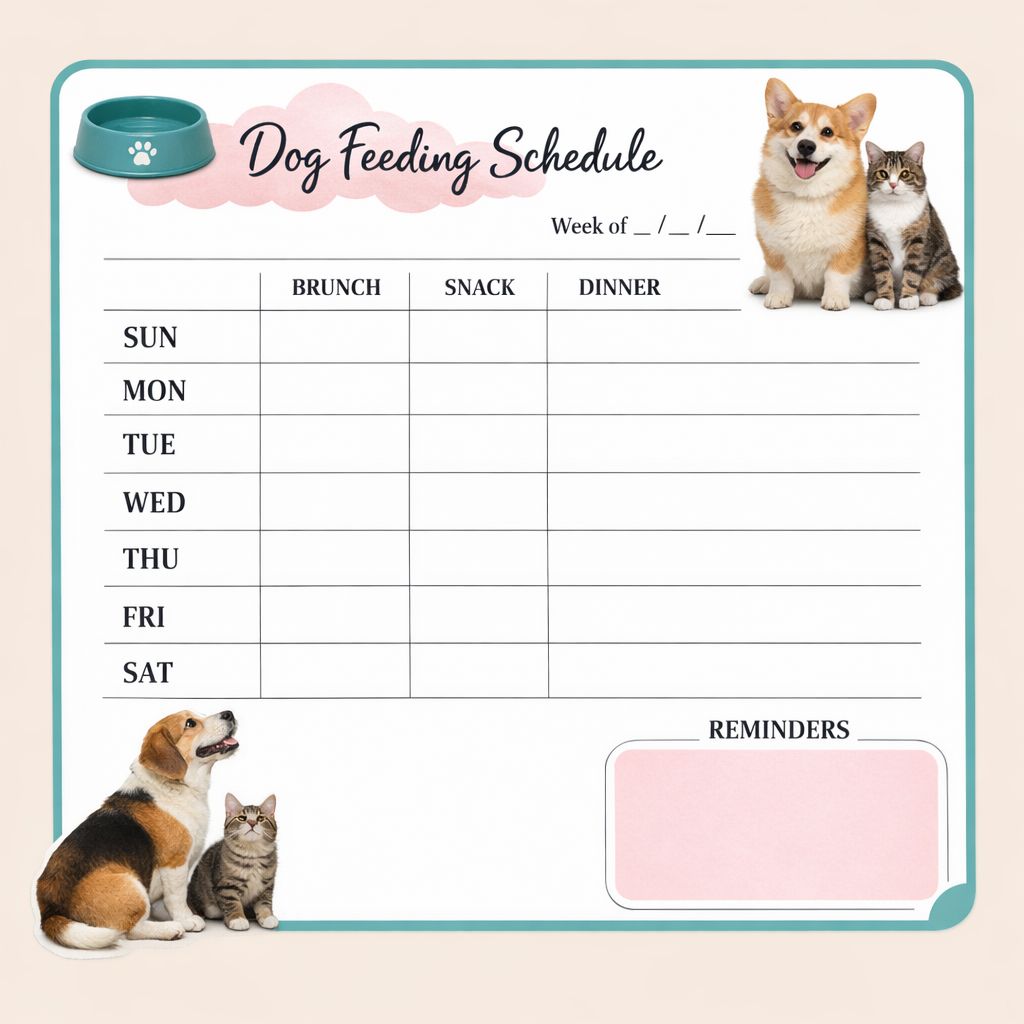
A dog feeding schedule planner helps owners set clear meal times and portions. It uses details like age, size, and daily activity to guide choices.
Many planners pair schedules with food calculators. These tools help prevent overfeeding and support steady nutrition.

Some planners also track changes over time. Owners can note appetite, weight, and food type to adjust meals as needed.
A consistent schedule supports routine and makes daily care easier to manage.
2) DogFoodCalc: BARF model compliant meal planner with multi-pet support
DogFoodCalc helps plan raw meals that follow the BARF feeding model. It checks ingredients against BARF rules as users build meals. The tool estimates daily food weight based on age and other basics.
It supports planning for more than one dog at the same time. Users can plan meals by day, week, or longer periods. The planner works with items from its database or custom foods added by the user.
Benefits of Using a Pet Food Planner

A pet food planner helps owners feed pets with care and accuracy. It supports health goals, saves time, and adapts meals to each pet’s real needs.
### Supports Balanced Nutrition
A pet food planner helps ensure pets get the right nutrients each day. It uses details like age, weight, breed, activity level, and health needs to guide food choices. This approach reduces guesswork and avoids nutrient gaps or excess calories.
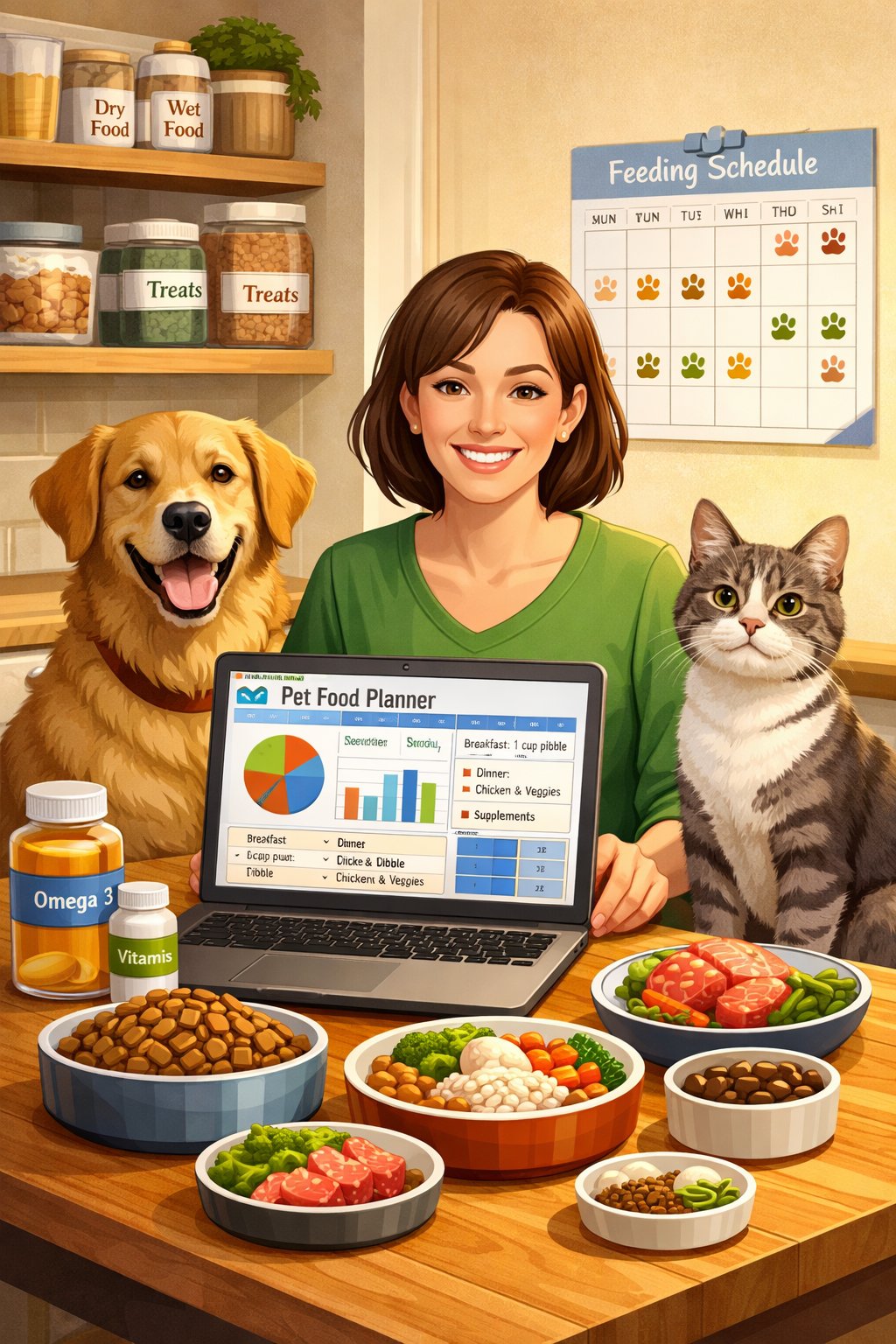
Many planners track key nutrition targets. These targets help owners stay consistent over time.
| Nutrient Focus | Why It Matters |
|---|---|
| Protein | Supports muscle and energy |
| Fat | Aids skin, coat, and calories |
| Fiber | Helps digestion and stool quality |
| Vitamins | Supports immune function |
The planner also adjusts meals as pets change. Weight gain, aging, or health issues trigger updates, not fixed rules.
### Simplifies Mealtime Routines
A pet food planner turns feeding into a repeatable routine. It sets clear portions, schedules, and food types. Owners spend less time measuring, guessing, or switching foods without a plan.
Many planners track meals and intake. This record helps spot missed meals or sudden changes in appetite. It also supports better talks with vets since owners can share clear feeding data.
Simple tools reduce daily effort:
- Pre-set meal times
- Exact portion sizes
- Food history by date
With structure in place, feeding stays steady even on busy days.
### Customizes Portions and Ingredients
A pet food planner adjusts meals to fit each pet, not a generic chart. It sets portions based on body condition, not just weight. This method helps manage weight without extreme cuts or overfeeding.
Ingredient control also matters. Planners help owners avoid problem foods for pets with allergies or sensitivities. They support elimination diets by tracking reactions over time.
Customization often includes:
- Breed and size differences
- Activity level changes
- Health needs like weight control
These controls help owners make small, precise changes that match real life.
Key Considerations for Effective Pet Meal Planning

A strong pet food planner accounts for health limits and expert input. It balances daily needs with safe ingredients and clear feeding rules.
Addressing Dietary Restrictions
Pets often need meals that avoid certain ingredients or limit nutrients. Common issues include food allergies, weight gain, kidney disease, and diabetes. A planner should flag risky foods and adjust portions to match the condition.
Short ingredient lists help reduce reactions. Novel proteins, such as duck or fish, can support pets with allergies. Low-sodium or low-phosphorus diets support pets with kidney issues.
Common restrictions and planning focus:
| Condition | Key Adjustment |
|---|---|
| Food allergy | Remove trigger proteins |
| Obesity | Reduce calories, increase fiber |
| Diabetes | Control carbs, fixed meal times |
| Kidney disease | Lower protein and phosphorus |
The planner should track treats and table scraps. Small extras can break a careful plan. Consistent meals support stable digestion and energy.
Incorporating Veterinary Guidance
Veterinary input keeps a meal plan safe and complete. Vets base advice on age, breed, weight, activity, and medical history. They also confirm calorie targets and nutrient balance.
Commercial diets often meet standards set by veterinary nutrition experts. These foods undergo testing for safety and consistency. Homemade diets need careful formulation to avoid gaps.
A good planner uses vet-approved data, such as calorie formulas and portion guides. It should update plans after checkups or lab results.
Best practices include:
- Follow vet-set calorie ranges
- Adjust meals after weight changes
- Review diets during life stage changes
This approach helps pets receive steady nutrition without guesswork.