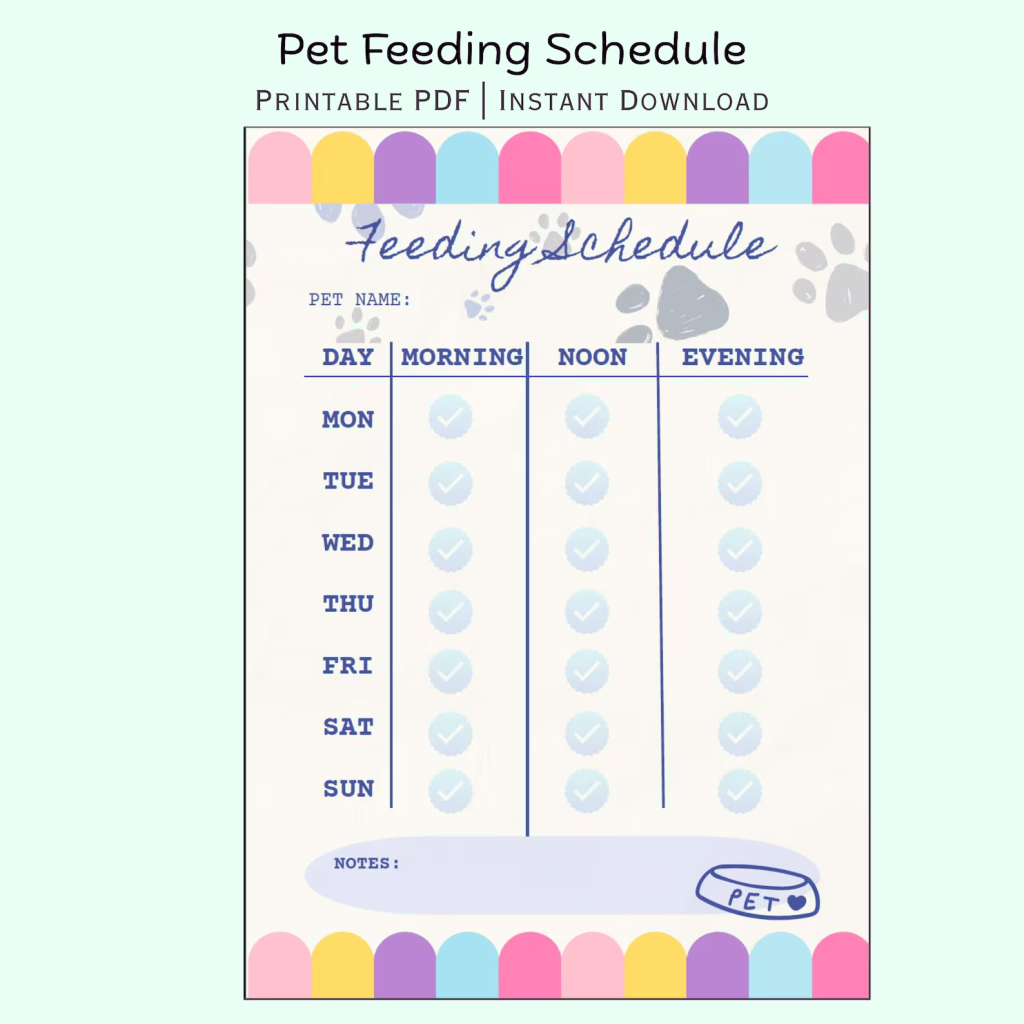
If you’ve ever stood in your kitchen holding a measuring cup like it’s a complicated science experiment, you’re not alone. One of the biggest struggles dog parents face is figuring out how much to feed their dog without accidentally underfeeding (and feeling guilty) or overfeeding (and stressing about weight gain). And honestly? Dog food labels can be confusing, online advice often contradicts itself, and every dog seems to have different needs. That’s exactly why a Dog Feeding Chart Printable can feel like such a lifesaver.
I’ve been around dogs for years, and I’ve seen this same question pop up over and over again: “Am I feeding my dog the right amount?” In my opinion, feeding shouldn’t feel like guesswork. I think most people truly want to do the best for their dog… they just want a simple system that actually makes sense. That’s why I’m going to help you build a reliable routine using a printable chart (and I’ll show you how to adjust it for your dog’s age, weight, and lifestyle).
So if you’re ready to stop second-guessing every scoop, you’re in the right place. By the end of this guide, you’ll have a clear, printable feeding chart, a simple schedule you can stick to, and a smarter understanding of what your dog really needs each day.
What Is a Dog Feeding Chart Printable (And Why You’ll Love It)
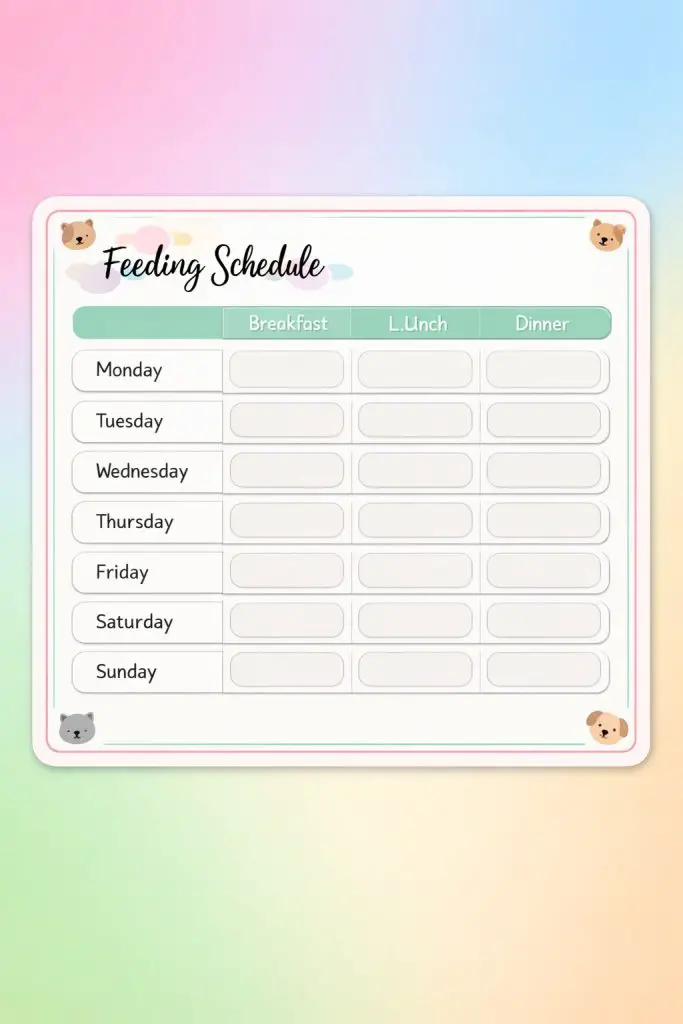
A Dog Feeding Chart Printable is basically a quick-reference guide you can print out and keep in your kitchen, pantry, fridge, or pet feeding station.
It usually includes things like:
- Your dog’s weight
- Meals per day
- Daily food amount
- Notes for puppy vs adult vs senior feeding
- Space to track changes or adjustments
The biggest benefit? Consistency. And consistency is a huge part of healthy feeding.
Why a printable chart is better than “just guessing”
Let’s be real—most of us aren’t weighing kibble every day.
A printable chart helps you:
- Create a steady routine
- Reduce overfeeding and random extra snacks
- Keep everyone in the house feeding the same amount (no double meals!)
- Monitor changes when your dog gains or loses weight
And IMO, anything that makes pet care simpler while improving health is a win.
The Real Reason Feeding Amounts Feel So Confusing
If you’ve been searching online, you’ve probably noticed something frustrating:
Two people can feed the same dog breed totally different amounts… and both can be correct.
That’s because feeding depends on a few key things, not just weight.
The 5 biggest factors that change how much your dog should eat
Here’s what impacts feeding the most:
- Age (puppies eat differently than adult dogs)
- Weight and body condition
- Activity level (lazy couch buddy vs active runner)
- Food type (kibble, wet food, raw, homemade)
- Calories per cup (this one is HUGE)
So when you use a Dog Feeding Chart Printable, it works best when you treat it as a smart starting point, not a strict forever rule.
Dog Feeding Chart Printable (Daily Amount by Weight)
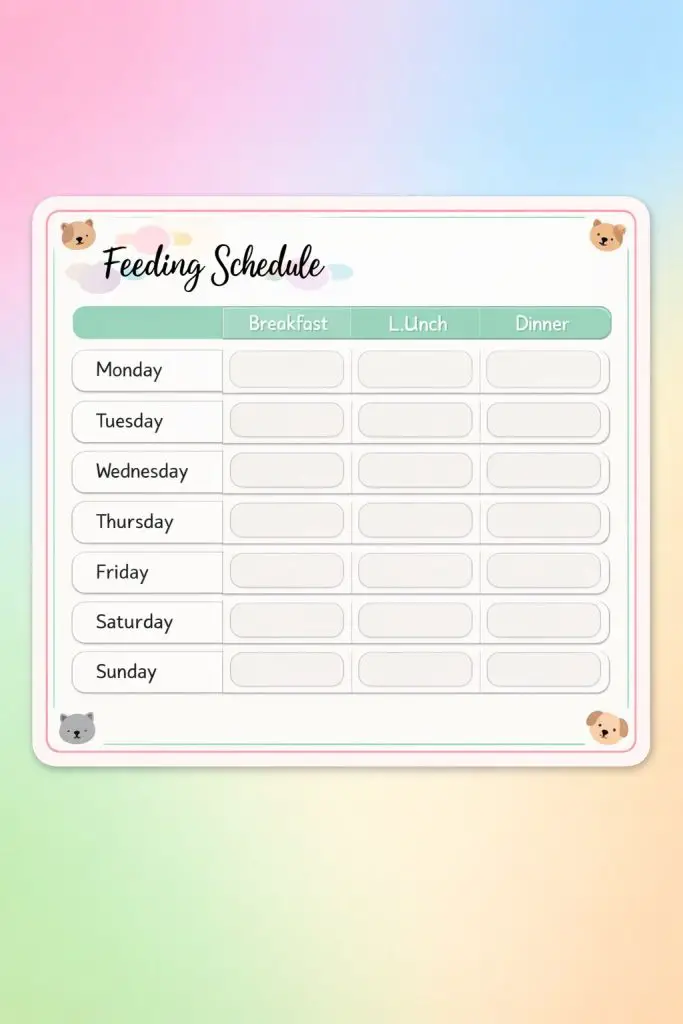
Below is a general, easy-to-follow feeding chart for adult dogs eating dry kibble.
✅ Important: This chart assumes average activity level and typical kibble calorie density. Always check your bag’s “calories per cup” because it can vary a lot.
Adult Dog Feeding Chart (Daily Total)
| Dog Weight | Daily Food Amount | Meals Per Day |
|---|---|---|
| 5 lb (2.3 kg) | 1/3 – 1/2 cup | 2 |
| 10 lb (4.5 kg) | 1/2 – 3/4 cup | 2 |
| 15 lb (6.8 kg) | 3/4 – 1 cup | 2 |
| 20 lb (9 kg) | 1 – 1 1/4 cups | 2 |
| 30 lb (13.6 kg) | 1 1/2 – 2 cups | 2 |
| 40 lb (18 kg) | 2 – 2 1/2 cups | 2 |
| 50 lb (22.7 kg) | 2 1/2 – 3 cups | 2 |
| 60 lb (27 kg) | 3 – 3 1/2 cups | 2 |
| 70 lb (31.8 kg) | 3 1/2 – 4 cups | 2 |
| 80 lb (36.3 kg) | 4 – 4 1/2 cups | 2 |
| 90 lb (40.8 kg) | 4 1/2 – 5 cups | 2 |
| 100 lb (45.4 kg) | 5 – 5 1/2 cups | 2 |
Pro Tip: If your dog eats twice a day, simply divide the daily amount in half.
Example:
If your dog needs 2 cups/day, feed 1 cup morning + 1 cup evening.
Puppy Feeding Chart Printable (Because Puppies Are a Whole Different Story)
Puppies grow fast. Like… shockingly fast. And they need more frequent meals to support development and prevent blood sugar dips.
Puppy feeding schedule by age (simple printable version)
| Puppy Age | Meals Per Day | Notes |
|---|---|---|
| 6–12 weeks | 4 meals | Small portions, consistent timing |
| 3–6 months | 3 meals | Gradually reduce meal count |
| 6–12 months | 2 meals | Most pups transition here |
Puppy feeding amount tips (so you don’t overdo it)
Instead of focusing on “cups only,” watch:
- Body condition
- Energy level
- Stool quality
- Growth rate
A healthy puppy should look “filled out” but not round like a balloon.
Big takeaway: Puppies usually need more food per pound than adult dogs because they burn energy like crazy.
Senior Dog Feeding Chart Printable (Gentle Adjustments Matter)
Senior dogs often slow down, and that means their calorie needs can drop—even if their appetite doesn’t.
Typical senior changes include:
- Less activity
- Slower metabolism
- More joint stiffness
- Possible digestive sensitivity
Feeding tips for senior dogs
Here’s what I recommend for most seniors:
- Stick to 2 meals per day
- Use slightly smaller portions
- Focus on high-quality protein
- Choose food that supports joints and digestion
If your senior dog is gaining weight easily, the printable chart still works—you just adjust downward by 10–15% and monitor results.
How to Use Your Dog Feeding Chart Printable the Right Way
This part is where the chart becomes truly useful.
Step 1: Start with your dog’s current weight
Use a reliable number, not just an estimate.
If your dog hates the vet scale, try this trick:
- Weigh yourself alone
- Pick up your dog and weigh again
- Subtract the difference
Boom. Instant dog weight.
Step 2: Pick the correct life stage
Choose one:
- Puppy
- Adult
- Senior
This matters because feeding needs shift a lot.
Step 3: Decide meals per day
Most dogs do best with:
- Puppies: 3–4 meals
- Adults: 2 meals
- Seniors: 2 meals
Some dogs do fine with 1 meal daily… but honestly, most dogs feel better with 2.
Step 4: Divide the daily total into meals
Example:
If chart says 3 cups/day, and you feed twice daily:
- 1.5 cups morning
- 1.5 cups evening
Step 5: Track results for 2–3 weeks
This is important.
Your goal is not just “following the chart.”
Your goal is: healthy weight + good energy + stable digestion.
Printable Dog Feeding Schedule Example (Morning + Evening Routine)
If you like structure (and most dogs love structure), here’s a simple schedule:
Sample feeding schedule
Morning (7:00–9:00 AM)
- Breakfast portion
- Fresh water refill
Evening (5:00–7:00 PM)
- Dinner portion
- Light walk after (great for digestion!)
Optional:
- Treats only after training or good behavior
- Avoid heavy snacks late at night
FYI, dogs thrive when feeding is predictable. It helps with energy, mood, and even potty habits.
Dry Food vs Wet Food vs Raw: Why the Chart Changes
Not all food is equal in calorie density.
Dry food (kibble)
- Easy to measure
- Usually higher calories per cup
- Works well with most printables
Wet food (canned)
- More moisture
- Often lower calories per serving
- Dogs may need larger portions by volume
Raw or fresh food
- Feeding is often based on percentage of body weight
- Common starting point: 2%–3% of adult body weight daily
Example:
A 50 lb dog eating 2.5% daily = 1.25 lb of food per day
Why “calories per cup” matters more than brand
One cup of Food A could be 320 calories…
One cup of Food B could be 450 calories.
That difference adds up fast.
So if your Dog Feeding Chart Printable is based on cups, always check the bag and adjust if needed.
Signs You’re Feeding Too Much (Or Not Enough)
This is the section every dog owner needs because charts aren’t perfect.
Signs you might be overfeeding
Watch for:
- Weight gain over a few weeks
- No visible waistline
- Heavy breathing after light activity
- Constant begging (yes, even this sometimes happens from habit)
- Soft stool or frequent poop
Signs you might be underfeeding
Look for:
- Ribs showing too clearly
- Low energy or weakness
- Dull coat
- Constant hunger + food anxiety
- Weight loss without explanation
The sweet spot: Your dog should have a visible waist from above and you should be able to feel ribs under light pressure, not see them popping out.
Common Feeding Mistakes (And Simple Fixes)
Let’s avoid the most common “oops” moments.
Mistake 1: Free-feeding all day
Leaving food out 24/7 can lead to:
- overeating
- picky eating
- weight gain
- messy routines
✅ Fix: Switch to scheduled meals.
Mistake 2: Not measuring food
Eyeballing portions gets bigger over time. It just happens.
✅ Fix: Use a real measuring cup or kitchen scale.
Mistake 3: Too many treats
Treats count as calories, even if they’re tiny.
✅ Fix: Treats should stay around 10% of daily calories.
Mistake 4: Feeding based on breed alone
Breed matters, but your dog’s lifestyle matters more.
✅ Fix: Use breed as a clue, not a final answer.
How to Adjust Your Printable Feeding Chart for Your Dog
Here’s the good stuff: the “customization” section.
If your dog is super active
Examples:
- hiking dog
- working dog
- daily runner
✅ Increase food by 10–20%, depending on weight changes.
If your dog is less active
Examples:
- older dog
- apartment dog
- low-energy dog
✅ Reduce food by 10–15% and recheck after 2 weeks.
If your dog was spayed/neutered recently
Some dogs gain weight easily after this.
✅ Start with the chart amount, but monitor closely and adjust slightly lower if needed.
If your dog is gaining weight fast
✅ Do this:
- reduce portion by 10%
- increase walks slightly
- limit treats
What to Include on Your Dog Feeding Chart Printable (Checklist)
If you’re making your own printable, include these sections:
- Dog’s name
- Weight
- Age or life stage
- Meals per day
- Food brand
- Calories per cup (optional but helpful)
- Daily total amount
- Per-meal amount
- Treat limits
- Notes section
This makes your printable useful for the whole family.
Where to Put Your Printable (So You Actually Use It)
This sounds small, but it matters.
Best locations:
- On the fridge
- Inside pantry door
- On the dog food container
- On a wall above the feeding station
- In a pet binder (if you’re extra organized)
The goal is simple: make it impossible to ignore.
FAQ: Dog Feeding Chart Printable
1) How accurate is a dog feeding chart printable?
A dog feeding chart printable is a reliable starting point, but it’s not perfect for every dog. Activity level, metabolism, and food calorie density can change the ideal portion. The best way to confirm accuracy is to track weight, body condition, and energy for 2–3 weeks and adjust as needed.
2) How many times a day should I feed my dog?
Most adult dogs do best with 2 meals per day. Puppies usually need 3–4 meals depending on age, and senior dogs typically stay at 2 meals. Feeding twice daily helps with digestion and keeps energy stable.
3) Can I use the same printable feeding chart for wet food?
You can use the same structure, but the amounts will change because wet food often has different calorie density than kibble. Always check the feeding guide on the can and adjust your printable to reflect the correct daily total.
4) What if my dog is always hungry even after eating?
Constant hunger can be caused by habit, boredom, high activity, or too-small portions, but it can also be medical (like parasites or certain health issues). First, confirm your portion is correct and reduce extra snacks. If hunger seems extreme or sudden, it’s smart to consult a vet.
5) Should I feed based on my dog’s current weight or ideal weight?
For most dogs, you should feed based on their ideal weight, especially if they are overweight. Feeding based on current weight can maintain the problem. If you’re unsure what the ideal weight is, look at body condition and ask your vet for a target range.