Dog crochet patterns add warmth and charm to any handmade collection. This article explores how crafters can create dogs with different looks, sizes, and personalities, from lifelike figures to soft toys meant for play.
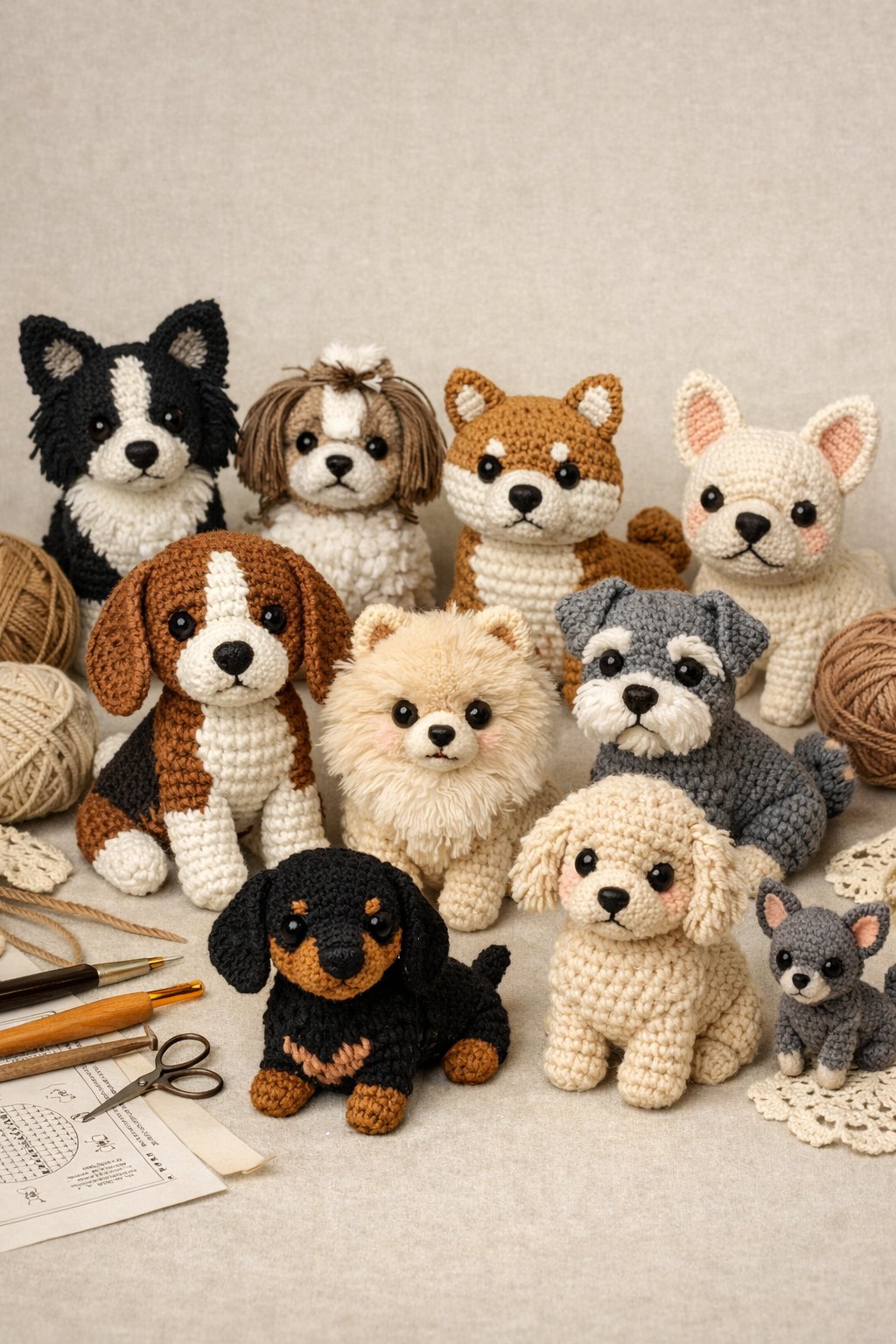
It shows how a single collection can include realistic designs, playful shapes, and beginner-friendly options while sharing core skills and simple ways to customize each piece. Along the way, it highlights techniques and creative choices that help each finished dog feel complete and personal.
1) Realistic Amigurumi Labrador Retriever Pattern
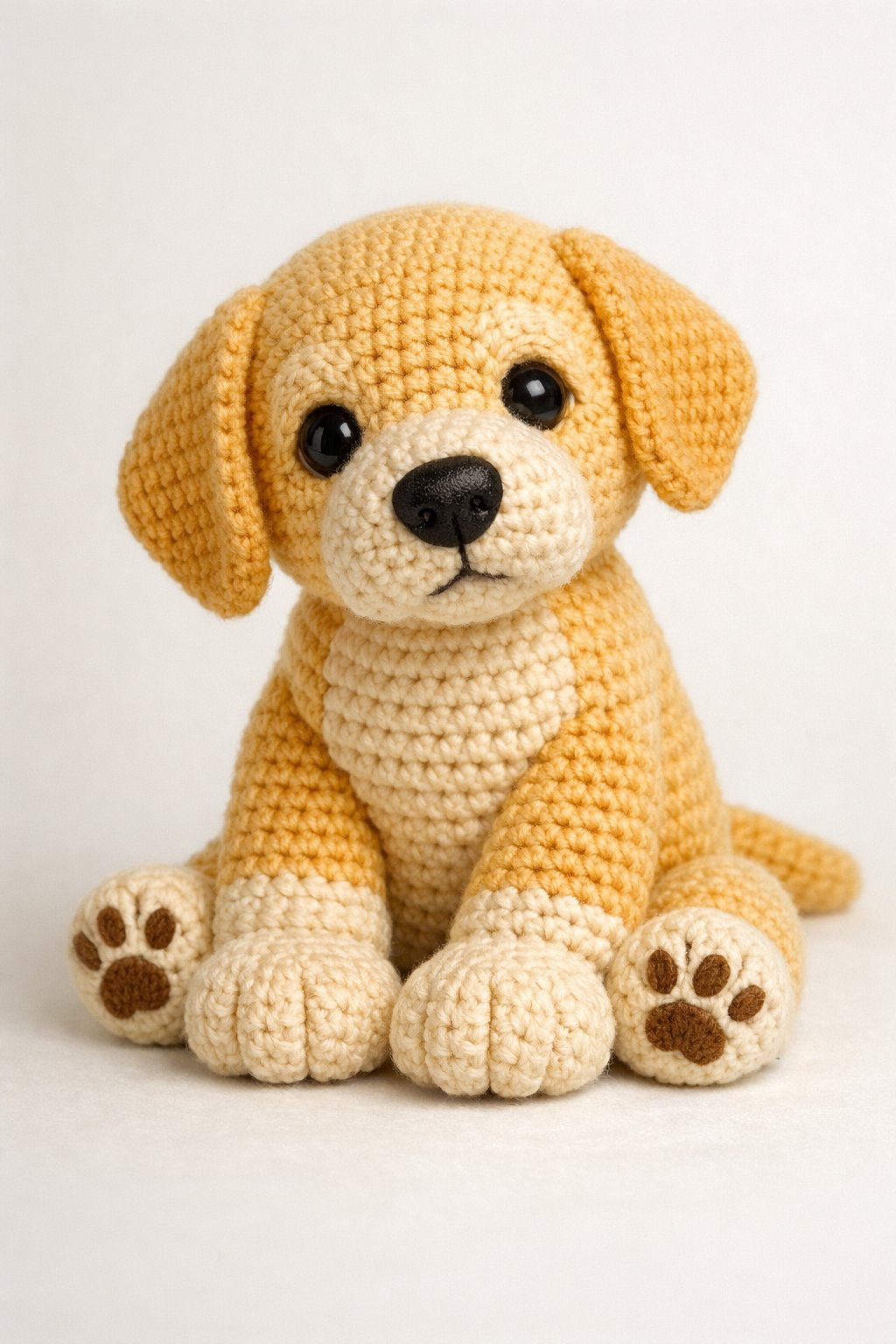
A realistic amigurumi Labrador retriever pattern adds detail and character to a crochet collection. It focuses on natural proportions, a shaped muzzle, and a calm expression.
Most patterns include floppy ears, a sturdy body, and a thick tail. Designers often aim for a lifelike look while keeping the piece soft and huggable.
These patterns suit intermediate crocheters, though clear instructions help beginners follow along. Finished sizes vary, from small display pieces to larger toys.
2) Playful Miniature Dachshund Crochet Design
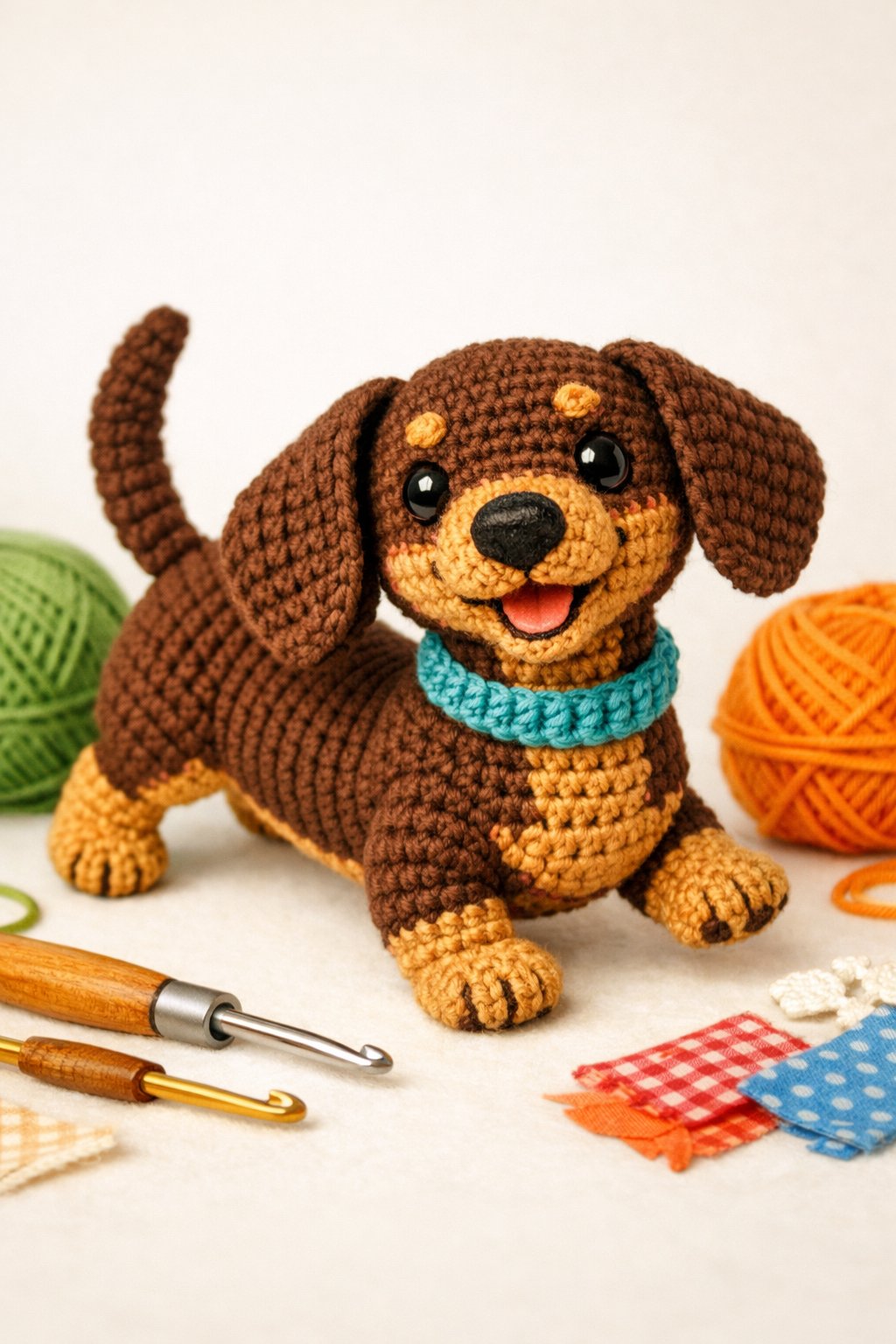
The miniature dachshund crochet design features a long body, short legs, and floppy ears. Many patterns use amigurumi style to create a small stuffed dog. Makers often choose this design for gifts or small displays.
Several free patterns guide crafters through a simple build. Some designs work in one piece and finish at about 14 cm tall. Clear steps make these patterns friendly for beginners.
This design fits well in a dog-themed crochet collection. It adds variety without taking much time or yarn.
3) Snuggly French Bulldog Plush Pattern
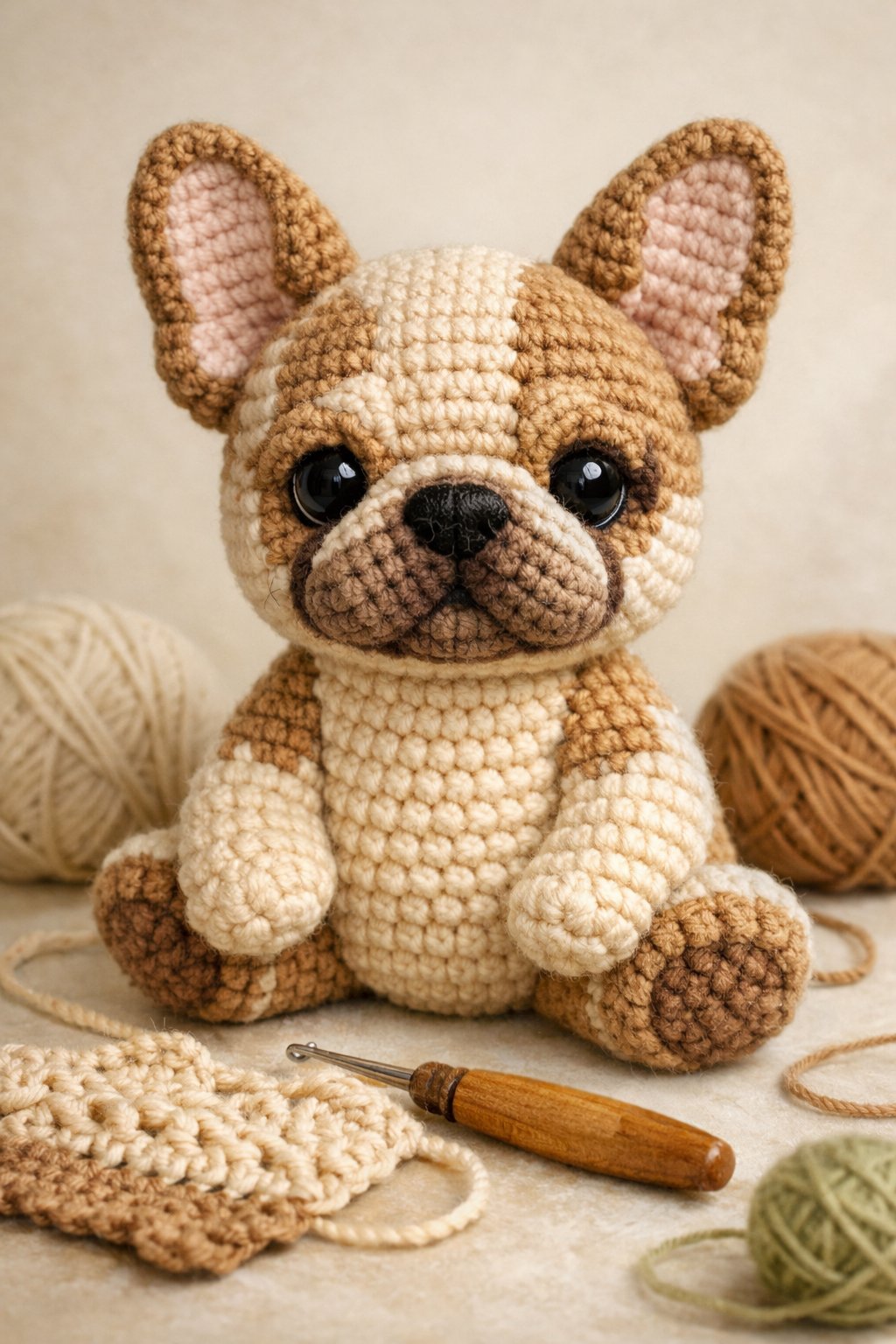
This snuggly French Bulldog plush pattern adds a compact, friendly dog to a crochet collection. Many free patterns focus on a rounded body, short legs, and wide ears to match the breed’s look.
Designers often use simple stitches and clear steps, which helps beginners and steady crafters alike. Some patterns include photos and use standard US terms.
Crafters can change yarn colors, eye styles, or ear size to personalize the plush. Finished sizes often range from small desk toys to soft cuddle dolls.
4) Stackable Crochet Corgi Toy Tutorial
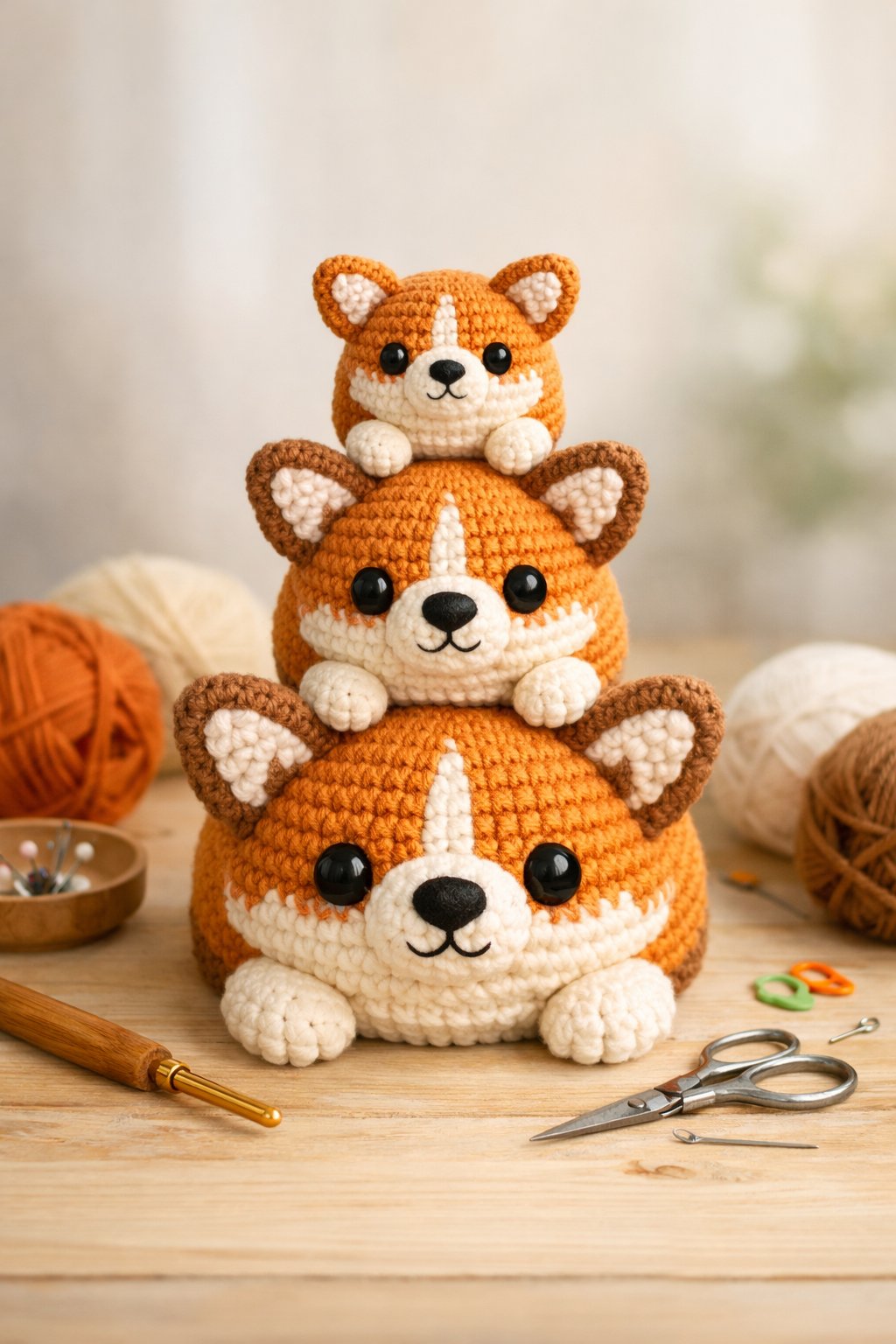
This tutorial guides makers through a stackable corgi toy built from soft crochet rings. Each piece stacks to form a small dog that works as a toy or display item.
Most patterns use basic stitches and simple shaping. Many designs keep the head, body, and tail in one piece to reduce sewing.
The corgi style features short legs, a long body, and small ears. Color changes help define the face and body without complex steps.
Several free patterns and PDFs include photos or videos. These tools help beginners follow each step with clear results.
5) Beginner-Friendly Teddy Poodle Pattern
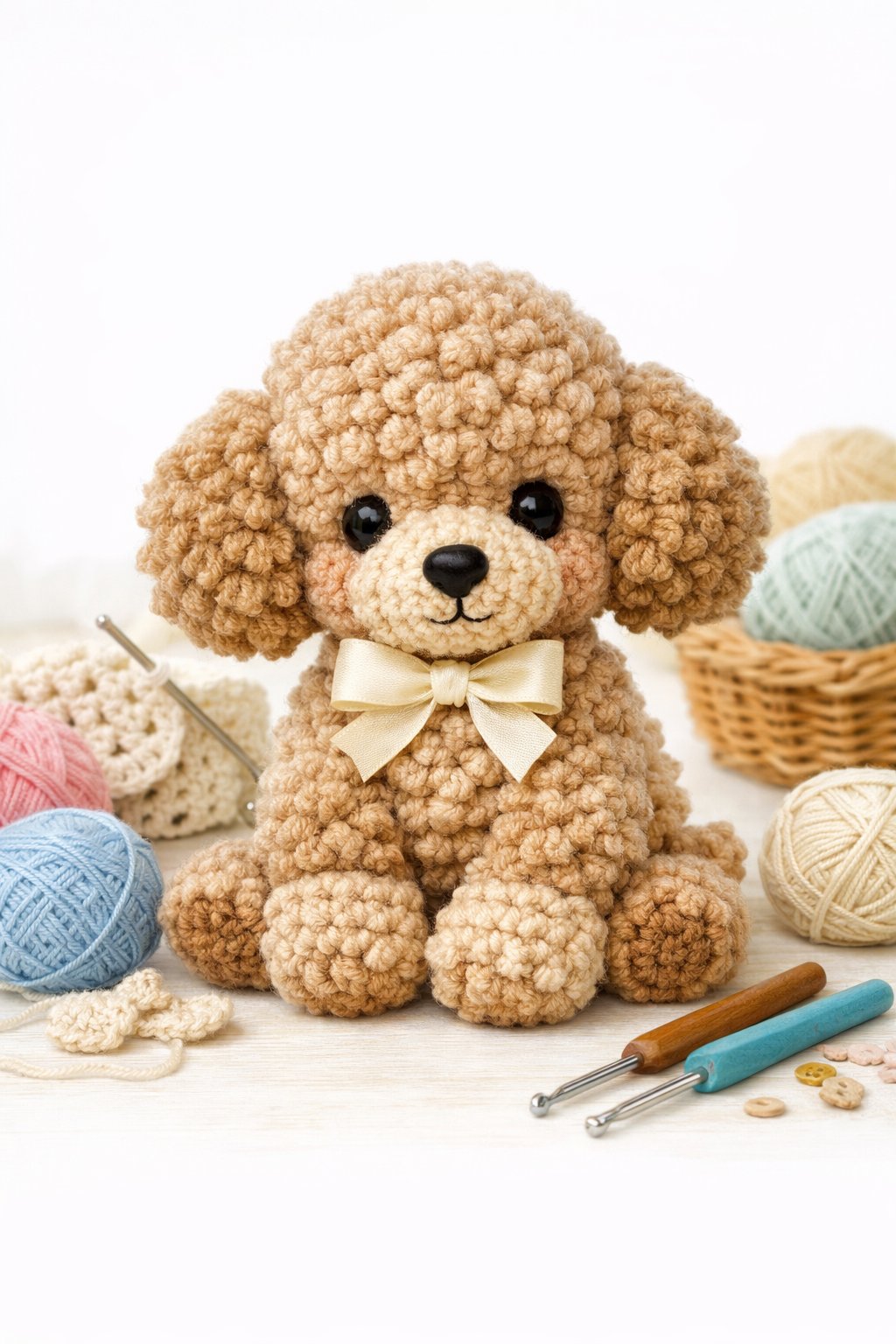
This teddy poodle pattern suits new crocheters who want a clear project. It uses basic stitches and simple shaping, which helps build confidence.
Many versions rely on worsted weight yarn and a small hook. The pattern avoids complex color changes and keeps parts easy to join.
Some designs add soft curls with simple loops or light texture. Step-by-step photos often guide each stage, from the head to the legs.
The finished poodle looks friendly and compact. It fits well in a growing dog-themed crochet collection.
Essential Techniques for Dog Crochet Patterns
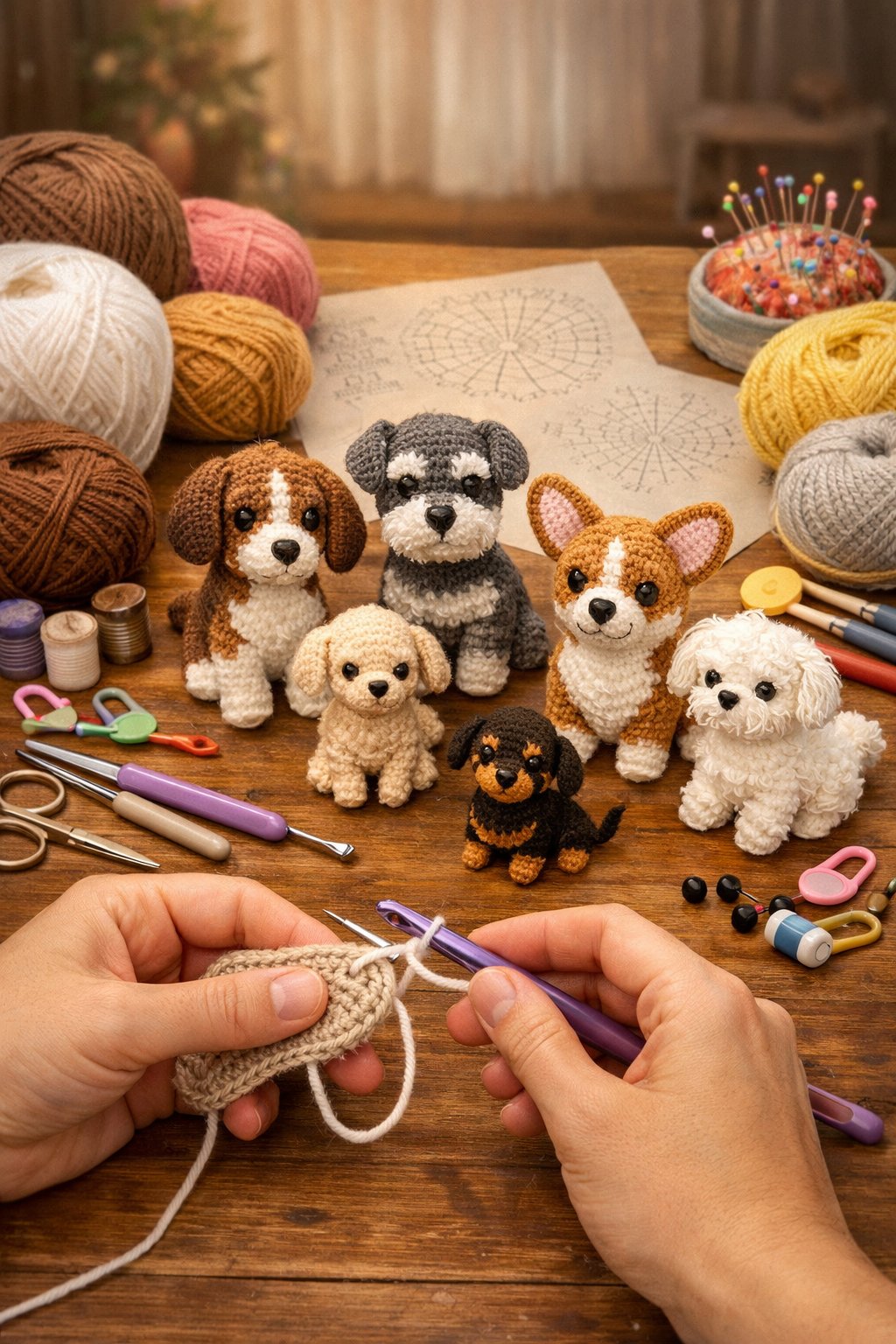
Strong dog crochet projects depend on smart material choices, a clear match between skill level and pattern, and careful assembly. These techniques shape the size, texture, and durability of finished dogs, from simple toys to detailed figures.
Choosing the Right Yarn and Hooks
Yarn choice affects stitch clarity and shape. Most dog patterns use medium-weight acrylic or cotton yarn because it holds form and shows detail well. Acrylic resists wear, while cotton gives a clean, firm look.
Hook size controls tightness. Amigurumi dogs often need a smaller hook than the yarn label suggests to prevent gaps. Tight stitches keep stuffing inside and help parts stay firm.
Common pairings
| Yarn Weight | Hook Size | Best Use |
|---|---|---|
| Worsted | 3.25–4 mm | Amigurumi dogs |
| DK | 2.75–3.5 mm | Small dogs |
| Bulky | 5–6 mm | Plush toys |
Smooth yarn works better than fuzzy yarn. It helps crafters count stitches and spot mistakes early.
Understanding Pattern Difficulty Levels
Patterns often list difficulty as beginner, intermediate, or advanced. These labels reflect stitch types, shaping, and assembly steps.
Beginner dog patterns focus on single crochet, simple rounds, and basic parts. They suit first-time amigurumi makers. Intermediate patterns add color changes, shaping, and small details like ears or tails. Advanced patterns use tight stitch counts, short rows, and realistic features.
Before starting, readers should check for:
- Stitch abbreviations used
- Number of separate parts
- Assembly steps
- Need for gauge accuracy
Choosing the right level saves time and reduces frustration. It also improves results and confidence.
Finishing Touches and Assembly
Assembly gives the dog its final shape and expression. Most patterns require sewing legs, heads, and ears in place. Crafters should pin parts first to check balance before stitching.
Secure seams matter. Tight whip stitches or mattress stitches keep parts from shifting. Stuffing should feel firm but not hard, with extra fill in the head and neck for support.
Details bring dogs to life:
- Safety eyes add clean, even placement
- Embroidered noses allow size control
- Light surface stitching defines toes or fur
Careful finishing turns separate pieces into a polished dog figure.
Tips for Customizing Your Crochet Dog Creations
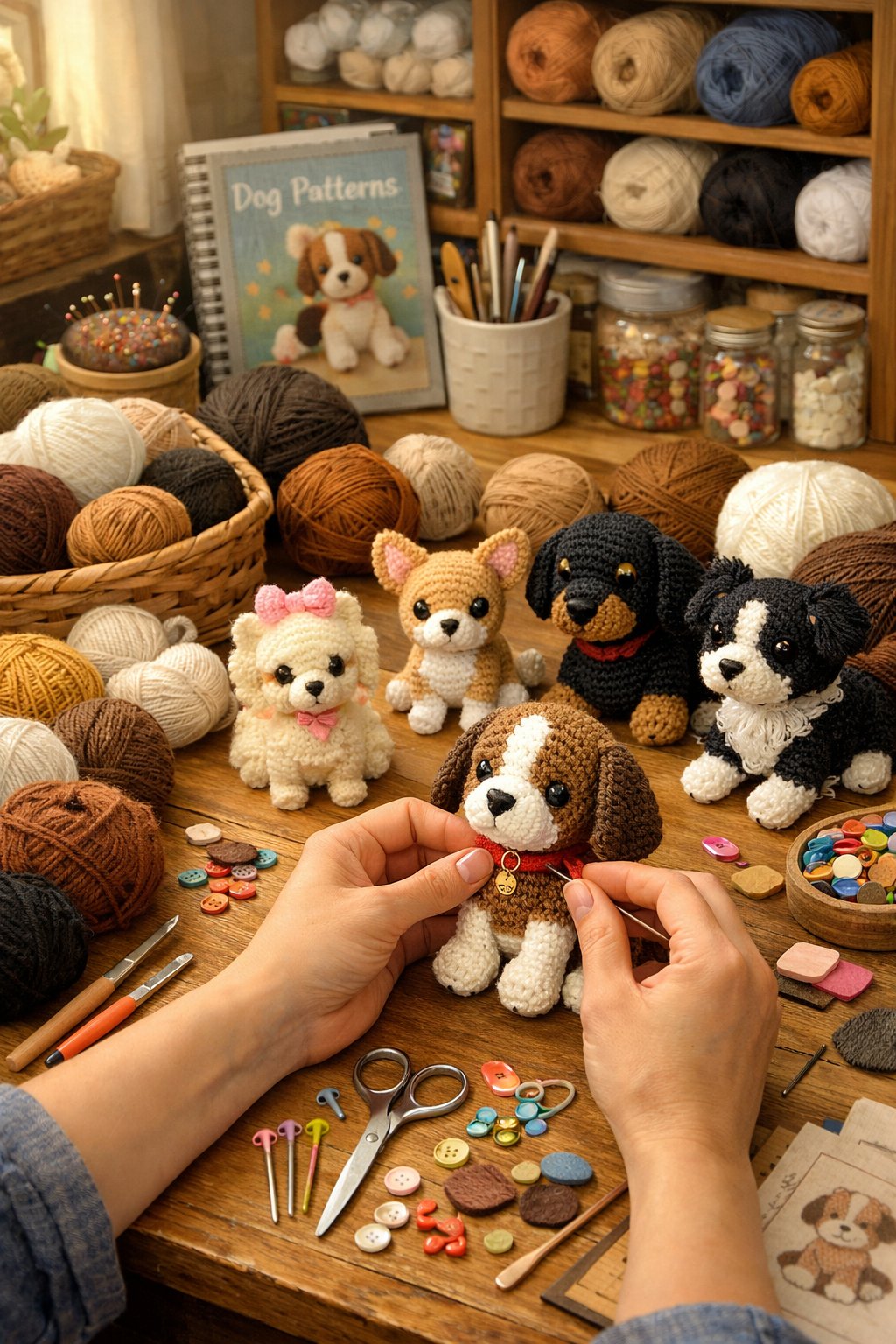
Crafters can shape each crochet dog to match a real pet or a fun idea. Color choices, stitch changes, and small details help turn a basic pattern into a one-of-a-kind piece.
Personalizing Colors and Textures
Color sets the mood and breed look. Solid shades work well for simple designs, while color blocks fit spotted or patched dogs. Crafters often study photos of real dogs to match fur patterns.
Texture comes from yarn choice and stitch style. Plush yarn gives a soft, toy-like feel. Smooth acrylic or cotton creates clean lines and sharp shapes. Stitch size also matters. Tight stitches hold shape, while looser stitches add flexibility.
Useful options to try:
- Yarn weight: DK for detail, bulky for plush looks
- Stitches: single crochet for firm bodies, half double for softer fur
- Color placement: muzzle, paws, tail tip, and ears
Small test swatches help confirm texture and color before starting the full piece.
Adding Accessories and Unique Features
Accessories add personality and scale. Simple items like collars or bows make a big impact and take little time. Crafters can crochet these pieces or use fabric and ribbon.
Facial features define expression. Safety eyes create a clean finish, while embroidered eyes allow more control. Nose shape and stitch length affect how friendly or alert the dog appears.
Common add-ons include:
- Collars with stitched names
- Sweaters sized to the body
- Floppy or upright ears adjusted by stitch count
Minor changes, such as ear angle or tail curl, can shift the entire look without changing the main pattern.