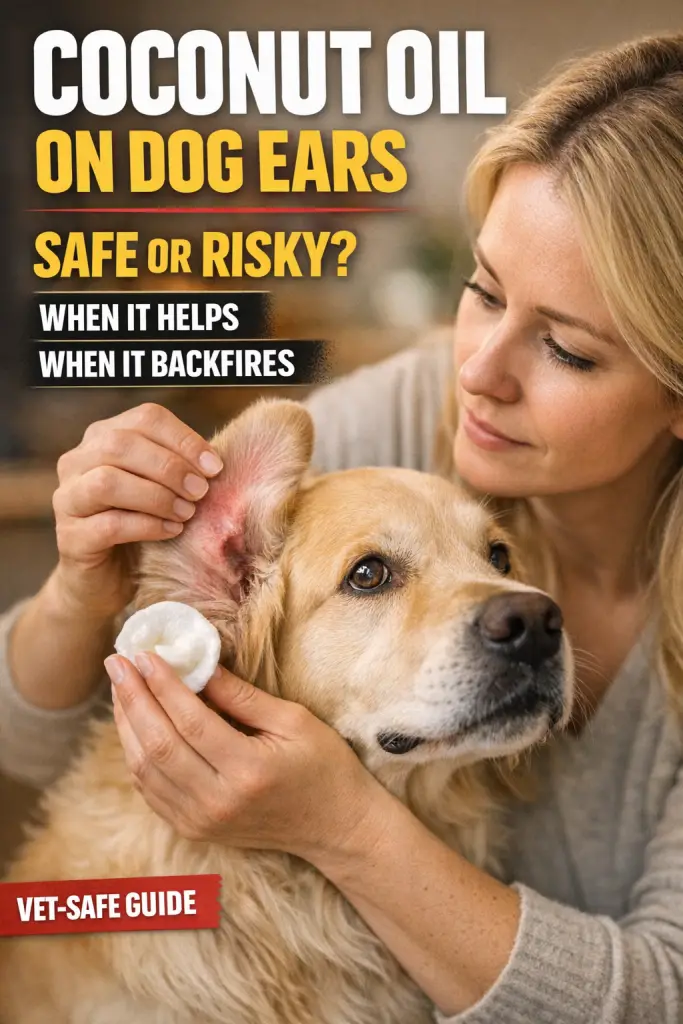
If you’ve ever noticed your dog scratching their ears nonstop, shaking their head, or smelling a weird odor coming from their ears, you probably felt that mix of worry and confusion. You want to help fast — and coconut oil often pops up as a “natural remedy” online. But then the questions start… Is it safe? Will it actually help? Could it make things worse?
In my experience, coconut oil can be helpful in some situations, but it’s definitely not a cure-all. I’ve seen dog owners accidentally worsen ear infections by using home remedies when veterinary treatment was really needed. That’s why understanding when coconut oil is appropriate — and when it isn’t — matters so much.
This guide will walk you through exactly when coconut oil can help your dog’s ears, when it can backfire, and how to use it safely if you choose to try it. You’ll get practical steps, vet-informed safety tips, and clear signs that it’s time to call your veterinarian.
Can You Put Coconut Oil On Dog Ears? (Quick Answer)
Yes — you can use coconut oil on dog ears in certain mild situations, such as dry skin or minor irritation. However, it can make infections worse if bacteria or yeast are present.
Key facts:
- Coconut oil has mild antibacterial and antifungal properties
- It may soothe dry, itchy ear skin
- It should NOT replace veterinary treatment for infections
- Oil can trap moisture, potentially worsening yeast growth
- Dogs with chronic ear problems need proper diagnosis
- Always use small amounts and monitor closely
Immediate safe action:
If your dog has pain, discharge, swelling, or a strong odor, skip home remedies and contact your vet first.
Why Dogs Develop Ear Problems in the First Place
Dog ears are surprisingly delicate. Their ear canals are shaped like an “L,” which traps moisture and debris more easily than human ears.
Common causes include:
- Allergies (very common — especially in Bully breeds and French Bulldogs)
- Yeast infections
- Bacterial infections
- Moisture from swimming or baths
- Ear mites (more common in puppies)
- Foreign objects like grass seeds
- Hormonal or immune conditions
According to the American Kennel Club, up to 20% of dogs experience ear disease at some point in their lives, with floppy-eared breeds at higher risk.
If your dog has recurring ear problems, you may also find our guide on natural remedies for dog ear irritation helpful:
When Coconut Oil CAN Help Dog Ears
Let’s talk about the situations where coconut oil may actually be useful.
Mild Dryness or Flaky Skin
Sometimes ears look irritated simply because the skin is dry.
Signs:
- Light flaking
- Mild itchiness
- No strong smell
- No discharge
- Dog isn’t in pain
In these cases, coconut oil can act as a gentle moisturizer.
Minor Surface Irritation
Small scratches from scratching or grooming can cause redness. Coconut oil may soothe the skin barrier.
Post-Cleaning Moisture Support
After using a proper ear cleaner, a tiny amount of coconut oil on the outer ear flap can prevent dryness.
Important: This applies to the outer ear only, not deep inside the canal unless advised by a vet.
When Coconut Oil Can Backfire (Very Important)
This is where many dog owners make mistakes.
Coconut oil can worsen problems if:
- There is a yeast infection
- There is a bacterial infection
- The ear is moist or inflamed
- There is pus or discharge
- Your dog has chronic ear disease
Why?
Oil creates a warm, moist environment — exactly what yeast loves.
Dr. Lisa Radosta, a veterinary dermatologist, explains that untreated ear infections can quickly become painful and chronic when home remedies delay proper care.
Red flag symptoms:
- Strong smell (often yeasty or foul)
- Brown, yellow, or black discharge
- Swelling
- Pain when touched
- Head tilting
- Excessive scratching
- Crying or sensitivity
If you see these signs, skip coconut oil and call your vet.
You can also read our detailed guide on recognizing infections here:
Benefits of Coconut Oil for Dogs (When Used Correctly)
Coconut oil contains lauric acid, which has mild antimicrobial properties.
Potential benefits include:
- Moisturizing dry skin
- Soothing irritation
- Supporting skin barrier healing
- Mild antimicrobial effect
- Natural and generally safe if licked in small amounts
That said, it’s not as powerful as veterinary medications.
The American Veterinary Medical Association notes that natural remedies can support comfort, but they should never replace proper diagnosis for infections.
How To Safely Use Coconut Oil On Dog Ears (Step-By-Step)
If your dog only has mild dryness or irritation, here’s a safe approach.
Step 1: Choose High-Quality Coconut Oil
Use:
- Organic
- Virgin or cold-pressed
- No additives
Why it helps: Pure oil reduces irritation risk and contamination.
Step 2: Warm Slightly (Optional)
Rub a small amount between your fingers to soften it.
Never microwave it hot.
Step 3: Apply Only a Tiny Amount
- Use a cotton pad or fingertip
- Apply to outer ear flap
- Avoid deep insertion into canal
Step 4: Massage Gently
Massage base of ear for 10–15 seconds.
Step 5: Monitor Closely
Watch for:
- Increased redness
- Odor
- Discharge
- More scratching
If symptoms worsen — stop immediately.
Common Mistakes Dog Owners Make
I’ve seen these happen often.
Avoid:
- Using coconut oil instead of vet treatment
- Pouring oil into the ear canal
- Treating chronic infections at home
- Ignoring bad smell or discharge
- Using dirty cotton swabs
- Applying too much oil
More is NOT better.
Expert Tip: Allergies Are Often the Real Cause
Many recurring ear problems are actually allergy-related.
Food allergies and environmental allergies can trigger inflammation inside the ears.
If your dog has repeated ear infections, you may want to explore:
- Diet changes
- Allergy management
- Veterinary testing
Our readers often find this resource helpful:
When To See a Veterinarian
Contact your vet if you notice:
- Pain or sensitivity
- Head shaking
- Discharge
- Odor
- Swelling
- Recurring issues
- No improvement after 48 hours
Ear infections can progress quickly. Early treatment prevents chronic damage.
Prevention Tips for Healthy Dog Ears
Prevention is easier than treatment.
Helpful habits:
- Clean ears regularly with vet-approved cleaner
- Dry ears after swimming
- Manage allergies early
- Keep ear hair trimmed if needed
- Feed balanced nutrition
- Check ears weekly
If you need guidance on overall skin health, you may enjoy our article on supporting dog skin and coat health naturally:
Simple Coconut Oil Safety Checklist
Use this quick checklist before applying coconut oil:
✔ No discharge
✔ No strong odor
✔ Dog not in pain
✔ Only mild dryness or irritation
✔ First-time or minor issue
✔ You can monitor closely
If any box is unchecked → skip coconut oil.
Frequently Asked Questions
Can coconut oil cure a dog ear infection?
No. Coconut oil does not cure infections. It may soothe mild irritation but infections require veterinary medication.
Is coconut oil safe inside dog ears?
Small amounts can be safe in mild cases, but deep application without diagnosis can worsen infections. Outer ear use is safer.
How often can I use coconut oil on my dog’s ears?
Once daily for 1–3 days is usually enough for mild dryness. If symptoms persist, stop and seek veterinary advice.
What if my dog licks the coconut oil?
Small amounts are generally safe if ingested, but excessive licking may cause stomach upset.
Can coconut oil help yeast infections in dogs?
Not reliably. Yeast often thrives in oily environments, so coconut oil may worsen symptoms.
Are there better alternatives than coconut oil?
Yes. Veterinary ear cleaners and medications are more effective for infections and chronic conditions.
Final Thoughts: Gentle Help, Not a Cure
Wanting to help your dog quickly is completely natural. Coconut oil can sometimes provide comfort for mild irritation or dryness, and I’ve found it helpful in those limited situations. But it’s important to remember that ear problems often have deeper causes — allergies, yeast, or bacteria — that need proper treatment.
The safest mindset is this:
Coconut oil = comfort support, not medical treatment.
If you’re ever unsure, trust your instincts and talk to your vet. Early care prevents pain and long-term problems.
Your dog depends on you to make safe choices — and the fact that you’re researching this already means you’re doing a great job. ❤️