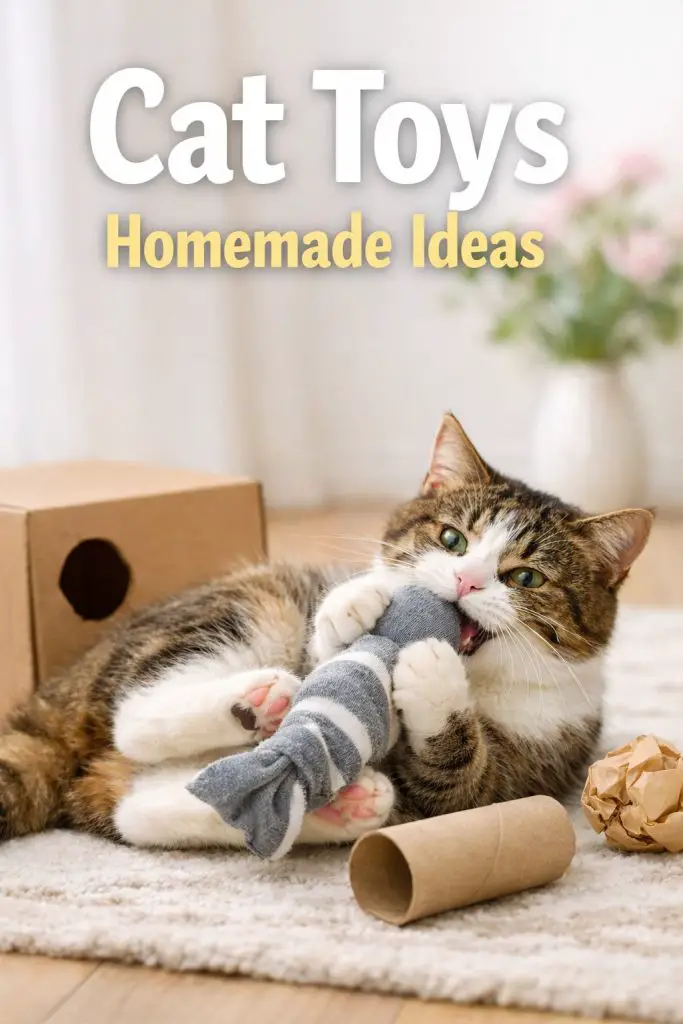
If you’ve ever watched your cat ignore a pricey store-bought toy and instead go wild over a crumpled receipt or an empty box, you’re not alone. I’ve been there too. That moment is exactly what pushed me to explore cat toys homemade ideas—because why spend money when your cat clearly has different priorities?
Homemade cat toys aren’t just about saving cash (though that’s a nice bonus). They’re about creativity, bonding, and enrichment. Plus, there’s something incredibly satisfying about watching your cat genuinely enjoy something you made with your own hands. So grab a cup of tea, get comfy, and let’s talk through easy, fun, and safe DIY toy ideas your cat will actually love.
Why Homemade Cat Toys Are Totally Worth It
Before we dive into ideas, let’s talk about why homemade toys are such a win—for both you and your cat.
First, cats don’t need fancy toys. What they really crave is stimulation: movement, texture, sound, and the thrill of the “hunt.” Homemade toys check all those boxes.
Second, you’re in full control of materials. That means:
- No mystery chemicals
- No choking hazards (if made properly)
- No overpriced gimmicks
And honestly? Making toys can be fun for you too. IMO, it feels more like a creative break than a chore.
Safety First: What to Keep in Mind Before You Start
I know DIY projects are exciting, but let’s pause for a quick safety chat. Cats explore with their mouths and claws, so toy safety matters a lot.
Keep these rules in mind:
- Avoid small parts that can be swallowed (buttons, beads, loose strings).
- Skip toxic materials like glue fumes, rubber bands, or treated wood.
- Always supervise when introducing a new toy.
- If it starts to fall apart, it’s time to toss it.
FYI, no toy—DIY or store-bought—is 100% indestructible. Regular checks go a long way.
Simple Sock Toys Cats Go Crazy For
Let’s start with one of the easiest and most popular homemade toys: the sock toy.
Why cats love sock toys
They’re soft, easy to grab, and perfect for bunny-kicking. Plus, they smell like you, which many cats find comforting.
How to make a basic sock toy
You’ll need:
- One clean sock
- Catnip or crinkly paper
- Cotton or fabric scraps
Steps:
- Fill the sock with stuffing and catnip.
- Tie the open end tightly (double knot it).
- Give it a shake and let your cat investigate.
Pro tip: Old fuzzy socks work best. Trust me on this one.
Cardboard Creations: Boxes, Tubes, and More
If cats had a top-ten list, cardboard boxes would be #1.
Easy cardboard toy ideas
- Box maze: Cut holes in a box and hide treats inside.
- Paper towel tube puzzle: Fold the ends and drop treats inside.
- Peek-a-paw box: Cut small paw-sized holes for batting games.
These toys are amazing for mental stimulation and boredom prevention. And the best part? They’re basically free.
Feather and String Wand Toys (The Right Way)
Wand toys are fantastic for interactive play—but they need to be made carefully.
DIY feather wand toy
You’ll need:
- A wooden stick or ruler
- Sturdy string or yarn
- Feathers or fabric strips
How to assemble:
- Tie the string securely to the stick.
- Attach feathers or fabric at the other end.
- Tug firmly to make sure nothing comes loose.
Important: Never leave string toys out unattended. When playtime is over, put them away.
Crinkle Toys That Trigger Natural Instincts
That crunchy sound cats love? It mimics prey movement.
How to make a crinkle toy
You’ll need:
- Paper or snack packaging (clean and non-toxic)
- Fabric scraps
- Needle and thread (or strong knots)
Wrap the crinkly material inside fabric and sew or tie it shut. Simple, fast, and wildly entertaining.
DIY Treat-Dispensing Toys for Smart Cats
If your cat loves food puzzles, this one’s for you.
Bottle treat toy
You’ll need:
- Empty plastic bottle (label removed)
- Scissors
- Cat treats
Steps:
- Cut a few small holes in the bottle.
- Drop treats inside.
- Let your cat roll it around to release snacks.
This toy encourages problem-solving and slows down fast eaters.
Yarn Balls (With a Safe Twist)
Yarn balls look adorable—but loose yarn can be dangerous if swallowed.
A safer version
Instead of pure yarn:
- Wrap yarn tightly around a core (like a cork).
- Secure the ends firmly with knots.
- Supervise playtime.
If your cat starts chewing, remove it immediately.
Paper Bag Fun (Yes, Really)
Paper bags are simple but endlessly entertaining.
How to upgrade a paper bag
- Cut out side holes for peeking.
- Toss in a toy or two.
- Lay it on its side for easy access.
Never use plastic bags, and always remove handles.
Homemade Toys for Kittens vs Adult Cats
Not all cats play the same way.
For kittens
- Lightweight toys
- Soft textures
- Short play sessions
For adult cats
- Interactive wand toys
- Puzzle toys
- Kickers and chewable toys
Adjust toy size and durability based on your cat’s age and energy level.
Rotating Toys to Prevent Boredom
Here’s a trick I swear by: toy rotation.
Instead of leaving all toys out:
- Keep 2–3 available at a time.
- Swap them weekly.
- Reintroduce “old” toys as if they’re new.
Cats thrive on novelty. This simple habit keeps playtime exciting without extra effort.
How Homemade Toys Strengthen Your Bond
This part doesn’t get talked about enough.
When you:
- Make a toy
- Play together
- Observe what your cat loves
You’re building trust and connection. Interactive play reduces stress, improves behavior, and helps shy cats come out of their shells.
IMO, it’s one of the easiest ways to improve your relationship with your cat—no training required.
Common Mistakes to Avoid With DIY Cat Toys
Let’s save you some frustration.
Avoid these common issues:
- Using weak knots or cheap glue
- Leaving toys unsupervised too early
- Ignoring your cat’s preferences
- Making toys too complicated
Cats are simple creatures. If it moves, crinkles, or smells interesting, you’re on the right track.
Budget-Friendly Toy Ideas Using Household Items
Still need inspiration? Try these:
- Bottle caps (supervised only)
- Wine cork kickers
- Ice cubes in summer
- Rolled-up paper balls
Sometimes the simplest ideas bring the biggest reactions.
How Often Should You Make or Replace Toys?
A good rule of thumb:
- Inspect toys weekly
- Replace damaged ones immediately
- Introduce something new every 1–2 weeks
This keeps play safe and exciting without overwhelming your cat.
Final Thoughts: Have Fun With It
Homemade cat toys don’t need to be perfect. They just need to be safe, engaging, and made with love. Your cat won’t judge your crafting skills—they’ll judge how much fun they’re having.
So experiment. Observe. Laugh when your cat ignores your “best” toy and falls in love with a cardboard tube instead.
If you’ve been on the fence about trying cat toys homemade ideas, consider this your sign to start. Pick one simple project today and see how your cat reacts. You might be surprised just how happy it makes both of you