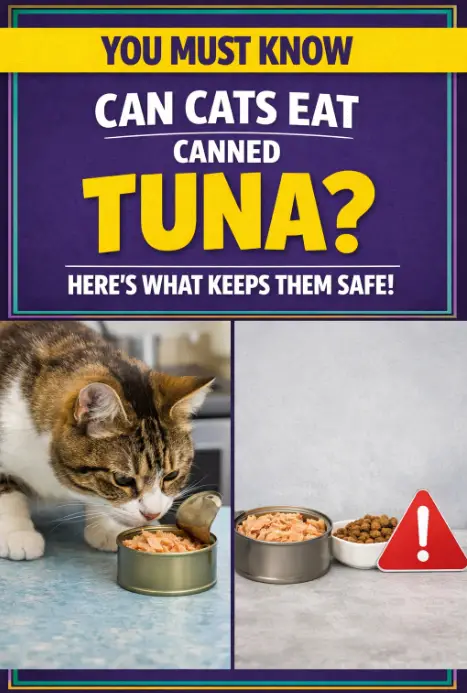
If you’ve ever opened a can of tuna and suddenly felt a pair of intense eyes staring into your soul… you’re not alone. 😄 Cats love tuna. The smell, the texture, the way it instantly grabs their attention — it’s basically feline kryptonite.
But here’s the big question most cat parents quietly wonder: can cats eat canned tuna safely, or are we accidentally putting their health at risk?
I decided to write this because I’ve been there myself — standing in the kitchen, my cat weaving around my legs like I owe her tuna, wondering if giving in is a loving treat or a bad habit. If you’ve ever asked the same question, you’re in the right place.
Let’s break this down in a clear, honest, and cat-parent-friendly way so you know exactly what’s safe, what’s not, and how to keep your furry friend healthy.
Can Cats Eat Canned Tuna at All?
Short answer? Yes — but only in moderation and only the right kind.
Canned tuna isn’t toxic to cats, which is why so many cats go wild for it. However, that doesn’t automatically make it a healthy or complete food choice.
Think of tuna like fast food for cats. It’s tasty, tempting, and fine once in a while — but not something they should eat regularly or rely on.
Cats are obligate carnivores, meaning they need specific nutrients that tuna alone simply doesn’t provide in the right balance.
Why Cats Are So Obsessed With Tuna
Ever notice how tuna gets a stronger reaction than most cat foods? There’s a reason for that.
Tuna is:
- Extremely aromatic, especially when canned
- High in protein and fats cats naturally crave
- Soft and easy to eat, even for picky cats
IMO, tuna smells like a gourmet feast to cats, even if nutritionally it’s incomplete.
The problem? That obsession can quickly turn into overfeeding if we’re not careful.
Is Canned Tuna Safe for Cats?
Yes — plain canned tuna can be safe, but safety depends on how often, how much, and what type you’re offering.
Here’s what determines whether tuna is okay or problematic:
- Type of tuna
- Ingredients in the can
- Portion size
- Frequency of feeding
Let’s look at these one by one.
The Best Type of Canned Tuna for Cats
Not all tuna is created equal. Some types are far safer for cats than others.
Safest option:
- Canned tuna in water
- No salt added
- No seasonings, oils, or flavorings
Tuna types to avoid:
- Tuna in oil (too fatty)
- Tuna with salt added
- Tuna with garlic, onion, or spices
- Flavored tuna packets meant for humans
If you wouldn’t feed the ingredients to a baby, don’t feed them to your cat.
How Much Canned Tuna Can Cats Eat?
Portion control is everything here.
Safe serving guideline:
- 1–2 teaspoons
- Once or twice per week max
That’s it.
Giving your cat half a can “just this once” might feel harmless, but repeated over time, it can cause nutritional imbalances.
FYI, even cats that seem fine after eating tuna regularly can slowly develop issues under the surface.
Can Kittens Eat Canned Tuna?
This is where extra caution is needed.
Kittens should not eat canned tuna regularly.
Their bodies are still growing, and they need very specific nutrients for:
- Bone development
- Brain growth
- Vision health
Tuna lacks essential nutrients like taurine when fed alone, and kittens are especially vulnerable to deficiencies.
If you must give tuna to a kitten:
- Only plain tuna in water
- Very tiny amount (pea-sized)
- Rarely, not weekly
Kitten-formulated food should always be the main diet.
Why Too Much Tuna Is Bad for Cats
Even though tuna smells amazing, too much can lead to real health problems.
Potential risks include:
1. Nutritional Deficiencies
Tuna doesn’t provide balanced nutrition for cats. Over time, it can lead to:
- Taurine deficiency
- Vitamin E deficiency
- Poor coat and skin health
2. Mercury Exposure
Tuna is a large fish, which means it can contain mercury. While small amounts are usually fine, frequent exposure can build up over time.
3. Tuna Addiction
Yes, it’s a real thing.
Some cats become so hooked on tuna that they:
- Refuse regular cat food
- Skip nutritionally balanced meals
- Become extremely picky eaters
Once a cat turns into a “tuna-only” eater, it can be hard to reverse.
Signs Your Cat Is Eating Too Much Tuna
Keep an eye out for these warning signs:
- Loss of appetite for regular cat food
- Weight loss or weight gain
- Dull coat or excessive shedding
- Digestive upset (vomiting or diarrhea)
- Lethargy or weakness
If you notice any of these, it’s time to cut back and talk to your vet.
Can Cats Eat Tuna Every Day?
This is one of the most common questions — and the answer is no.
Even small daily amounts can cause problems over time. Tuna should never replace:
- Complete commercial cat food
- Vet-approved homemade diets
Think of tuna as an occasional treat, not a daily snack.
Is Tuna-Based Cat Food the Same as Canned Tuna?
Great question — and this is where many cat owners get confused.
Tuna-flavored cat food:
- Formulated for cats
- Nutritionally balanced
- Contains added vitamins and taurine
- Safe for regular feeding
Human canned tuna:
- Not nutritionally complete
- May contain salt or additives
- Not designed for long-term feeding
They are not interchangeable.
If your cat loves tuna flavor, choosing tuna-based cat food is a much safer option.
Healthier Alternatives to Canned Tuna for Cats
If you’re looking for safer treats that still make your cat happy, here are better options.
Cat-safe protein treats:
- Cooked plain chicken (no seasoning)
- Cooked plain turkey
- Commercial cat treats with real fish
- Freeze-dried meat treats
These options provide protein without the risks associated with tuna.
How to Serve Tuna Safely to Your Cat
If you decide to offer tuna, follow these safety tips every time.
Safe tuna checklist:
- Plain tuna in water only
- Drain excess liquid
- Serve at room temperature
- Mix with regular cat food
- Limit frequency
Never give tuna straight from the fridge, and never use it to replace meals.
Can Cats Eat Other Types of Fish?
Yes, but the same moderation rules apply.
Safer fish options:
- Salmon (fully cooked, plain)
- Sardines in water (no salt)
- Whitefish in cat food form
Avoid raw fish and fish with bones unless specifically prepared for cats.
When Should You Avoid Tuna Completely?
In some cases, tuna isn’t worth the risk.
Avoid tuna if your cat:
- Has kidney disease
- Has food allergies
- Is overweight
- Is pregnant or nursing
- Is a kitten under 6 months
Always check with your vet if your cat has medical conditions.
Common Tuna Myths (Busted)
Let’s clear up a few common misconceptions.
“Cats need fish to survive.”
Nope. Cats need protein and nutrients, not fish specifically.
“If my cat loves it, it must be good.”
Unfortunately, taste ≠ nutrition.
“A little tuna every day is harmless.”
Over time, even small daily amounts can add up.
The Bottom Line: Should You Feed Your Cat Canned Tuna?
So, can cats eat canned tuna?
Yes — occasionally, carefully, and in small amounts.
Tuna can be a fun treat, a food topper, or a special reward. But it should never become a dietary staple or replacement for balanced cat food.
If you’re ever unsure, the safest approach is simple: treat tuna like dessert, not dinner.
Final Thoughts
Being a great cat parent doesn’t mean saying “yes” to every adorable meow — sometimes it means setting healthy boundaries. Your cat may think tuna is the greatest thing on earth, but their long-term health matters more.
Next time those eyes lock onto your tuna can, you’ll know exactly how to handle it — confidently, safely, and without guilt.
If you found this helpful, consider learning more about cat-safe foods and nutrition. Your cat will thank you… even if they still beg for tuna.